Introduction
Nuclear thermal propulsion (NTP) represents a transformative technology for deep-space exploration, offering significantly higher specific impulse than chemical rockets. DARPA's DRACO (Demonstration Rocket for Agile Cislunar Operations) program, in partnership with NASA, aims to flight-demonstrate a nuclear thermal rocket engine. For aerospace electronics engineers and PCB manufacturers, these systems introduce extreme challenges in radiation tolerance, high-temperature operation, power management, thermal control, and long-term reliability in space environments.
DRACO Program Overview and Agency Roles
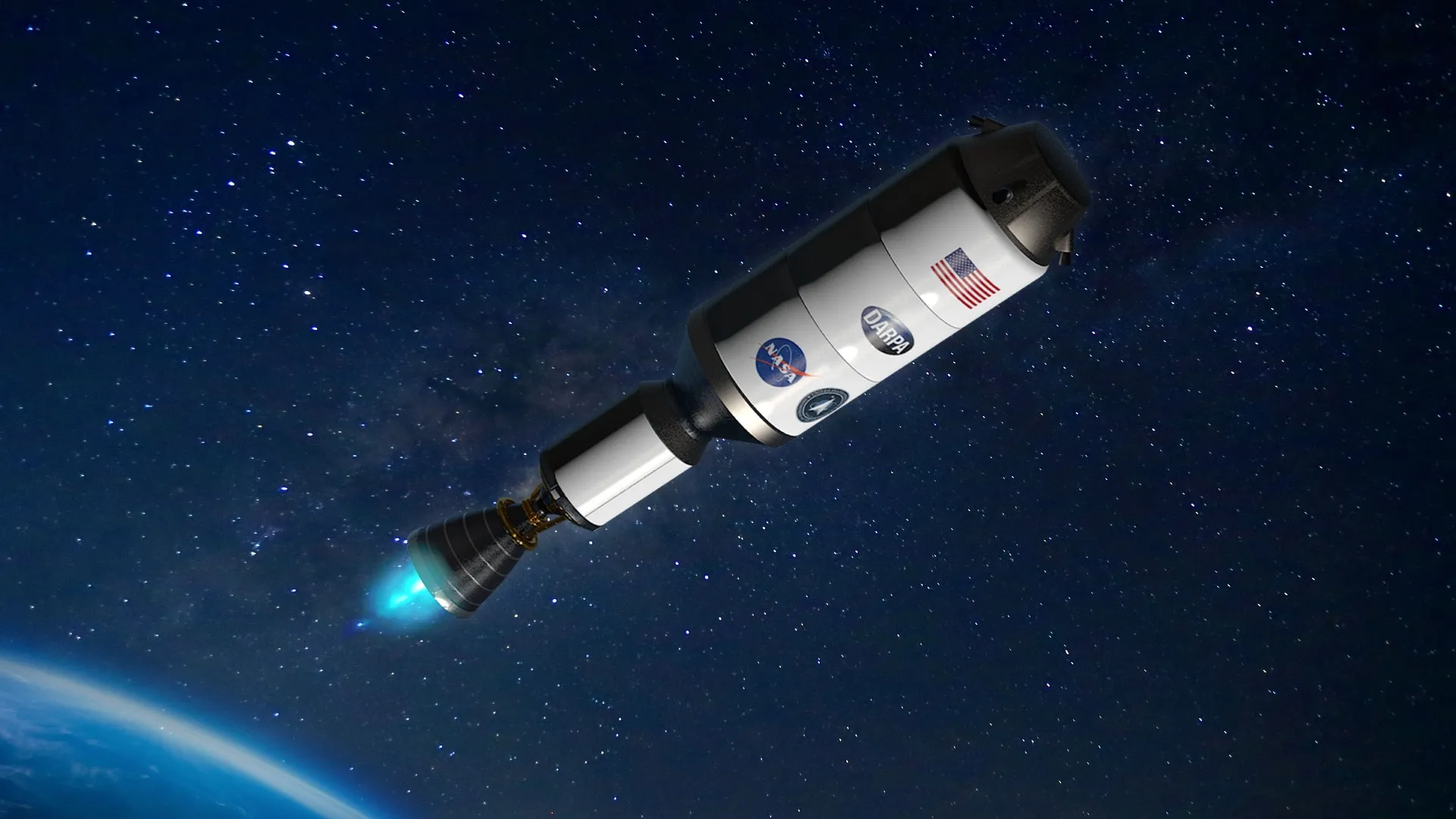
The DRACO program, initiated by DARPA in 2021 with NASA joining in 2023, targets an in-orbit demonstration of nuclear thermal propulsion as early as late 2025 or 2026. Lockheed Martin was selected to develop the spacecraft. DARPA leads reactor and engine development for the experimental vehicle (X-NTRV), while NASA holds final authority on the nuclear thermal rocket engine. The technology promises to reduce Mars transit times dramatically, enabling more efficient crewed missions.
Historical Background: NERVA and Rover Programs
Nuclear rocket development dates back to the 1950s. The joint NASA-Atomic Energy Commission Rover and NERVA (Nuclear Engine for Rocket Vehicle Application) programs produced groundbreaking test reactors (Kiwi series) and engines (NRX, XE). These systems used nuclear fission to heat liquid hydrogen propellant, achieving superior performance compared to chemical rockets. Although ground testing was successful, the programs were canceled in the early 1970s due to budget constraints and shifting priorities. Lessons from these efforts continue to inform modern NTP initiatives.
Key Technical Challenges in Nuclear Thermal Propulsion
Nozzle Cooling and Thermal Management
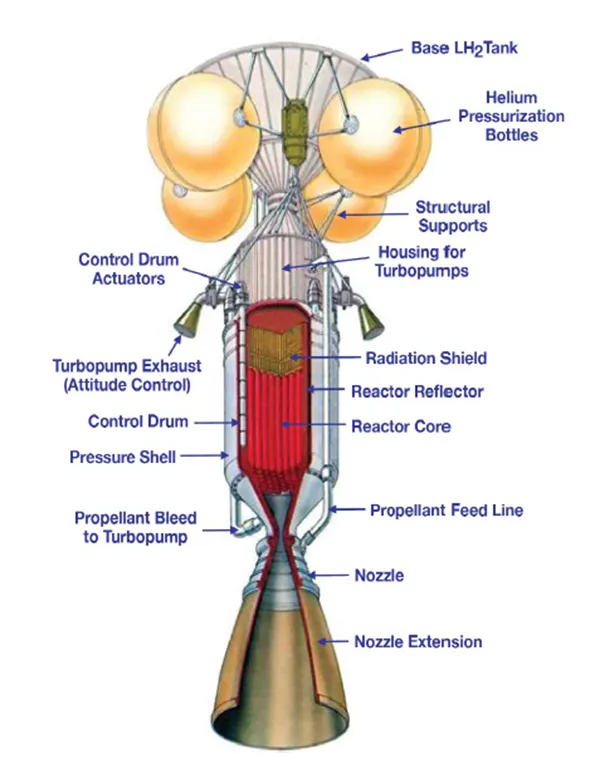
Nuclear engines operate at extremely high temperatures. Regenerative cooling using liquid hydrogen channels is essential, particularly around the nozzle throat. Research has focused on heat transfer modeling, injector geometry optimization, and material performance under intense thermal loads.
Moderator Cooling and Heat Exchangers
Moderators slow neutrons for efficient fission. Heat exchangers transfer energy from moderator systems to propellant, but icing and flow instabilities pose risks during startup and low-flow conditions. Extensive testing has refined designs to mitigate these issues.
Turbopump and Restart Capabilities
Reliable throttling and multiple restarts without external power are critical for long-duration missions. Turbopump systems (axial and centrifugal designs) were rigorously tested for startup transients, fluid instabilities, and mechanical reliability under cryogenic conditions.
Advanced Concepts
Beyond fission-based NTP, fusion-driven rockets and nuclear electric propulsion systems like VASIMR (Variable Specific Impulse Magnetoplasma Rocket) offer even greater potential for fast interplanetary travel, though they face significant power-to-mass ratio and reactor development hurdles.
PCB Design and Electronics Manufacturing Considerations for Nuclear Rockets
Nuclear propulsion systems impose stringent requirements on avionics, control electronics, and supporting hardware:
- Radiation Hardening: Electronics must withstand intense neutron and gamma radiation from the reactor. This demands radiation-hardened components, shielding strategies, and layout techniques that minimize single-event effects (SEEs).
- High-Temperature and Thermal Management: Proximity to the reactor core and high-heat-flux areas requires high-Tg laminates, advanced thermal vias, copper balancing, and robust heat dissipation designs for control boards and sensors.
- Power Electronics and Distribution: Reliable power conversion, distribution, and management for reactor controls, turbopumps, and instrumentation call for heavy copper layers, efficient DC-DC converters, and redundant architectures.
- Signal Integrity and EMI/EMC: High-power systems generate significant electromagnetic interference. Careful partitioning, shielding, and controlled-impedance routing on multilayer PCBs are essential for flight control, telemetry, and instrumentation.
- Vibration, Shock, and Reliability: Launch stresses and operational dynamics necessitate ruggedized assemblies, rigid-flex solutions, conformal coatings, and extensive environmental qualification testing to aerospace standards.
- Miniaturization and Integration: Compact satellite/vehicle designs drive high-density interconnect (HDI) and lightweight PCB solutions while maintaining mission-critical reliability.
Industry Trends and Future Outlook
Successful DRACO demonstration could accelerate NTP adoption for cislunar operations and Mars missions. Combined with advances in materials, reactor design, and electronics, nuclear propulsion will enable faster, more capable deep-space exploration. Ongoing challenges include regulatory approval, public acceptance, and achieving required power-to-mass ratios for electric variants.
Supporting Nuclear Propulsion Electronics Through Advanced PCB Manufacturing
Nuclear rocket programs like DRACO demand the highest levels of electronics reliability and performance. Expertise in radiation-tolerant PCB design, high-temperature materials, power integrity, and space-grade manufacturing is essential to support reactor control systems, instrumentation, and vehicle avionics that operate reliably under extreme thermal, radiation, and mechanical conditions. From historical NERVA-era testing to modern flight demonstrations, precision electronics manufacturing underpins the success of next-generation nuclear propulsion technologies.
FAQs
Q1: What is the DRACO program?
A1: DARPA's DRACO initiative aims to demonstrate nuclear thermal propulsion (NTP) in space, offering higher efficiency for future crewed Mars and cislunar missions.
Q2: How does nuclear thermal propulsion differ from chemical rockets?
A2: NTP uses a nuclear reactor to heat propellant (typically liquid hydrogen) to much higher temperatures, delivering significantly higher specific impulse and efficiency.
Q3: Why are specialized PCBs critical for nuclear rocket systems?
A3: They must endure extreme radiation, high temperatures, vibration, and power demands while maintaining signal integrity and reliability for mission-critical control and instrumentation systems.