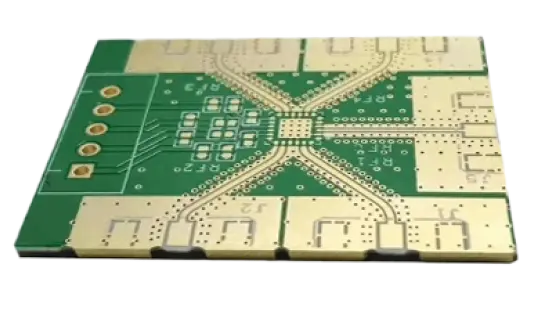
Multilayer Rogers PCBs use Rogers high-frequency laminates to achieve stable dielectric constant and low loss in RF and microwave circuits. Supports pure Rogers or hybrid Rogers-FR4 stackups. Optimized for controlled impedance and low insertion loss.
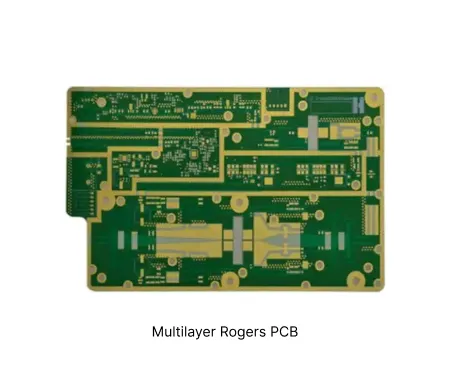
| Parameter | Typical Range |
|---|---|
| Layer count | 4 to 12+ layers |
| Material type | Rogers 4350B, RO4003C, hybrid with FR-4 |
| Surface finish | ENIG, Immersion Silver |
| Thickness | 0.8mm - 2.0mm |
| Solder mask | Green, Black |
| Copper thickness | 0.5oz - 2oz |
| Special features | Hybrid stackup, controlled impedance, tight registration |
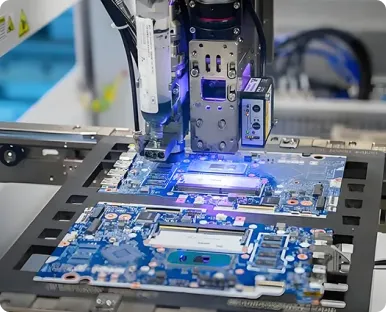
Material Preparation and Stackup: Rogers cores and bondply are prepared under controlled humidity. Hybrid constructions combine Rogers with FR-4 cores where cost or mechanical strength is required.
Lamination Process: Special low-flow or no-flow bondply is used. Press cycles follow Rogers-recommended temperature and pressure profiles to avoid resin starvation.
Drilling Technology: Mechanical drilling requires sharp bits and controlled feed rates. PTFE-based materials need careful parameter adjustment to prevent smearing.
Plating and Patterning: Plasma or sodium etch treatment improves copper adhesion on PTFE surfaces. Fine-line imaging maintains impedance accuracy.
Surface Finish Application: ENIG is applied with controlled nickel thickness to minimize RF loss. Process windows are tightened for consistent surface roughness.
Key Process Risks: Delamination and adhesion failure are controlled through bondply selection and post-lamination inspection.
| Order Quantity | Order Proportion | Estimated Price Level | Typical Lead Time |
|---|---|---|---|
| Prototype (<=30 pcs) | 60% | High | 7-12 days |
| Small volume (30-200 pcs) | 30% | Medium | 12-18 days |
| Mass production (>200 pcs) | 10% | Lower | 20-28 days |
| Order ID | PCB Type | Layers | Dimensions | Solder Mask | Surface Finish | Quantity | Action |
|---|---|---|---|---|---|---|---|
| Loading... | |||||||
AIVON provides high-reliability PCBs designed for civil aviation and aerospace applications, built to perform under extreme conditions such as vibration, temperature variation, and high-altitude environments. These PCBs are widely used in avionics systems, flight control modules, communication equipment, and satellite technologies. With advanced multilayer structures, heavy copper options, and high-temperature materials, our solutions are engineered to meet stringent reliability standards such as IPC-6012 Class 3.
AIVON automotive electronics PCBs are designed for demanding vehicle environments. They withstand extreme temperatures, vibration, and harsh conditions, supporting ECUs, ADAS, infotainment, and EV modules. Featuring multilayer, rigid-flex, and high-frequency designs, AIVON PCBs meet IATF 16949 standards for safe and reliable automotive performance.
AIVON telecommunication PCBs are high-performance boards designed for fast and stable signal transmission. Used in base stations, routers, satellite systems, and 5G infrastructure, they feature advanced materials and precision manufacturing to ensure low signal loss, accurate impedance control, and reliable high-frequency performance.
AIVON specializes in multilayer Rogers PCBs. We control lamination and layer registration with high precision. Dielectric thickness and impedance are tightly managed. Copper profile and plated through holes remain consistent. This ensures excellent signal integrity and low insertion loss. Our process delivers stable high-frequency performance for RF, microwave, and 5G applications.
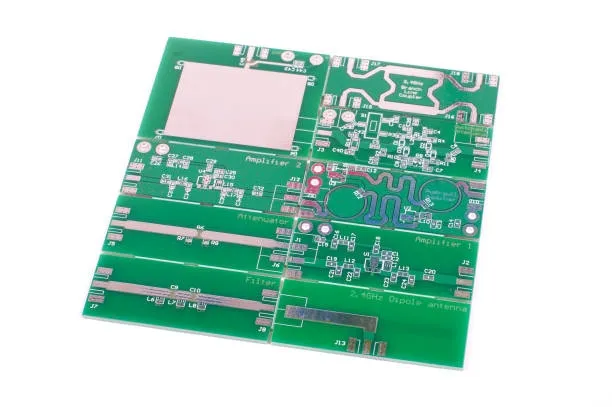
Master Rogers PCB selection with our expert guide. Explore RO4000, RO3000, and RT/duroid properties for 5G, radar, and aerospace. Learn best practices for Rogers PCB design, manufacturing, and strategic high-frequency applications to optimize signal integrity.
Read More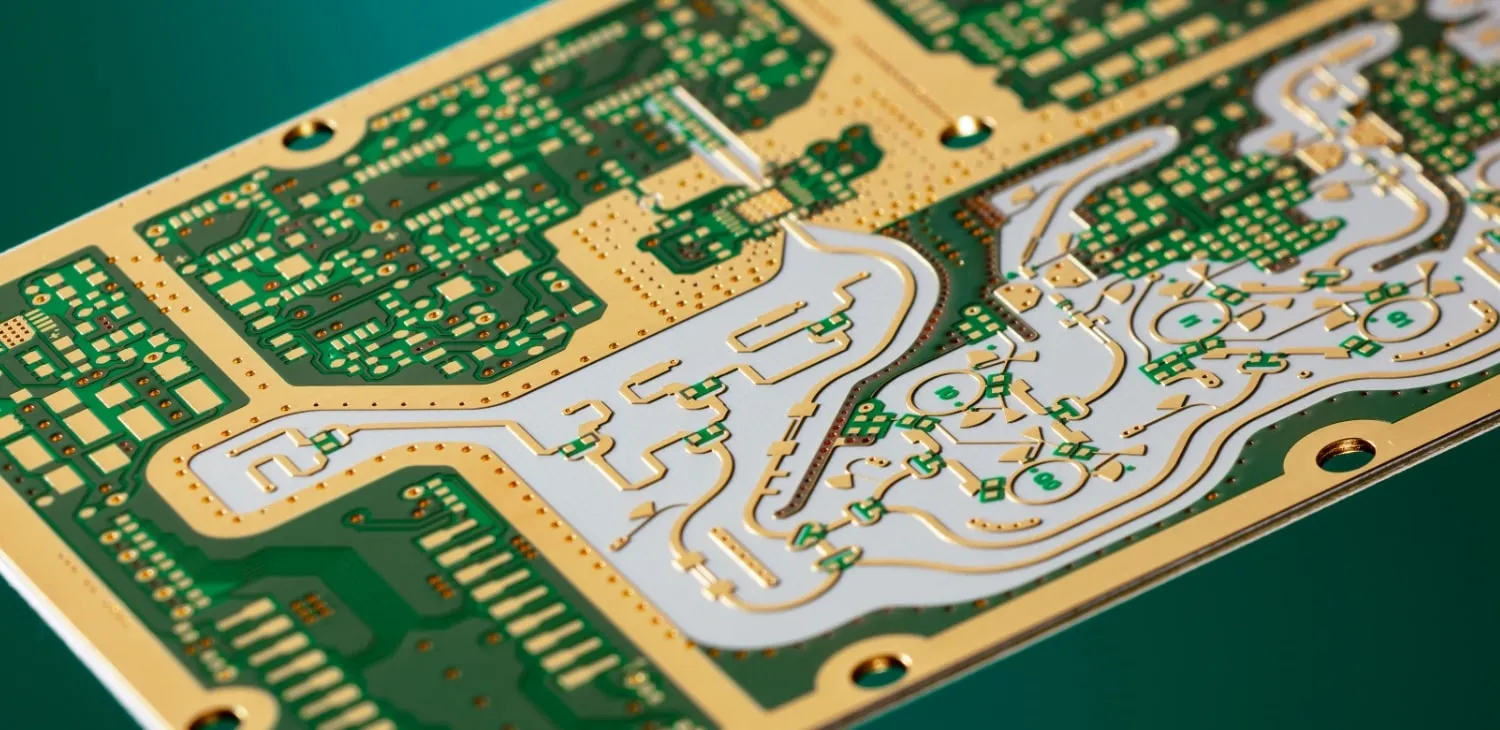
Discover how prototyping with Rogers PCB delivers fast, reliable results for high-frequency designs. This guide covers RO4350B/RO3003 materials, quick-turn workflows, cost management, DFM best practices, and a real 5G antenna case study that cut development time by 50% while meeting IPC-6018 standards.
Read More










.webp)