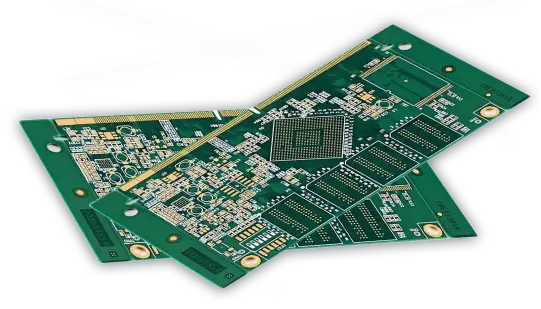
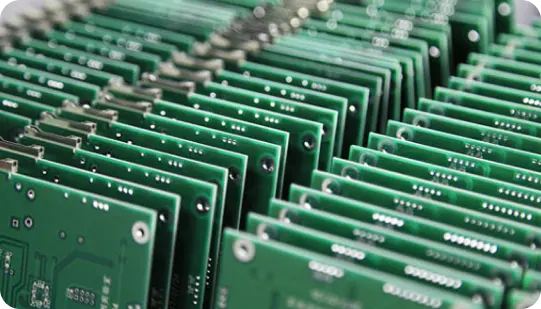
Discover how AIVON manufactures 8 Layer HDI PCBs, including high-density interconnect structures, complex stackup management, microvia reliability, manufacturing challenges, and real production experience from customer orders.
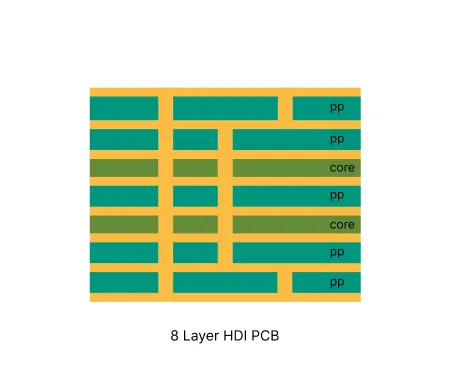
| Parameter | Typical Range |
|---|---|
| Layer count | 8 layers |
| Material type | High Tg FR-4, low loss laminates |
| Surface finish | ENIG, Immersion Silver, OSP |
| Thickness | 0.8 mm to 3.0 mm |
| Solder mask | Liquid photoimageable, green or black |
| Copper thickness | 0.5 oz to 2 oz |
| Special features | Blind vias, buried vias, stacked microvias, impedance control, via-in-pad, sequential lamination |
Sequential lamination builds the 8-layer HDI structure through multiple dielectric and copper buildup cycles. Each press cycle must maintain tight layer-to-layer registration because cumulative alignment errors can affect microvia landing, fine-line routing, and overall stackup accuracy. Proper material preparation, copper distribution, and lamination parameters are also important for controlling resin flow, warpage, and delamination risk in multilayer HDI boards.
Laser drilling forms the microvias that enable high-density interconnection between buildup layers. UV or CO₂ lasers can be selected according to the dielectric structure and via geometry. After drilling, plasma desmear removes resin residue from the via surface and prepares the copper target for metallization. Precise laser positioning and controlled microvia dimensions are particularly important in 8-layer HDI designs with dense routing and fine-pitch component areas.
After desmear, electroless copper provides an initial conductive layer before electrolytic copper plating builds the required copper thickness. Pulse plating can help improve copper distribution inside high-aspect-ratio microvias, while controlled via filling supports reliable layer-to-layer interconnection. Plating thickness, current density, bath chemistry, and via geometry must be monitored to reduce voids and other microvia plating defects that can affect long-term HDI reliability.
ENIG is suitable for fine-pitch HDI assembly because it provides a relatively flat pad surface and supports consistent solderability. During fabrication, process monitoring covers layer registration, copper thickness, via fill quality, and surface treatment. Cross-section analysis and electrical testing can then verify critical interconnect structures before shipment. These controls help maintain dimensional consistency, microvia reliability, and stable production quality across 8-layer HDI PCB manufacturing.
Actual production records can provide additional reference for 8-layer HDI PCB manufacturing, particularly when reviewing process control and fabrication consistency. The 8-layer HDI production record documents a representative HDI manufacturing case, while HDI PCB production process provides another reference for production execution and quality control. For additional manufacturing details and process verification, the HDI production case can also be reviewed alongside the process considerations described above.
| Order Quantity | Order Proportion | Estimated Price Level | Typical Lead Time |
|---|---|---|---|
| Prototype (<=30 pcs) | 71% | From $250 | From 9 days |
| Small volume (30-200 pcs) | 23% | From $280 | From 9 days |
| Mass production (>200 pcs) | 6% | From $400 | From 10 days |
| Order ID | PCB Type | Layers | Dimensions | Solder Mask | Surface Finish | Quantity | Action |
|---|---|---|---|---|---|---|---|
| Loading... | |||||||
AIVON provides high-reliability PCBs designed for civil aviation and aerospace applications, built to perform under extreme conditions such as vibration, temperature variation, and high-altitude environments. These PCBs are widely used in avionics systems, flight control modules, communication equipment, and satellite technologies. With advanced multilayer structures, heavy copper options, and high-temperature materials, our solutions are engineered to meet stringent reliability standards such as IPC-6012 Class 3.
AIVON automotive electronics PCBs are designed for demanding vehicle environments. They withstand extreme temperatures, vibration, and harsh conditions, supporting ECUs, ADAS, infotainment, and EV modules. Featuring multilayer, rigid-flex, and high-frequency designs, AIVON PCBs meet IATF 16949 standards for safe and reliable automotive performance.
AIVON empowers the renewable sector with high-performance PCBs for solar inverters, wind turbines, and Battery Management Systems (BMS). Engineered to withstand high voltages and harsh outdoor environments, our boards ensure precise energy conversion. Maximize your energy harvest and storage efficiency with our reliable, robust interconnect solutions.
Need reliable 8 Layer HDI PCB production? AIVON supports multi-stage sequential lamination, laser microvias, and tight registration control, delivering stable impedance, strong stacked via reliability, and consistent high-yield output for volume builds.
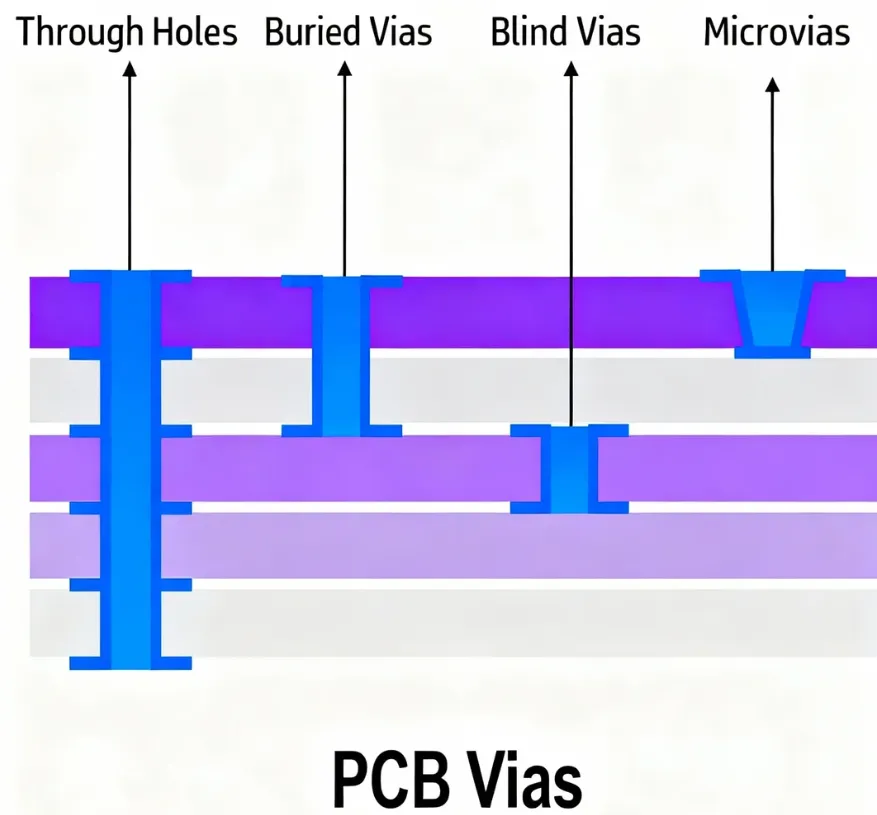
Explore stacked vias in High-Density Interconnect (HDI) PCBs, covering their design principles, manufacturing processes, key reliability considerations, and cost implications.
Read More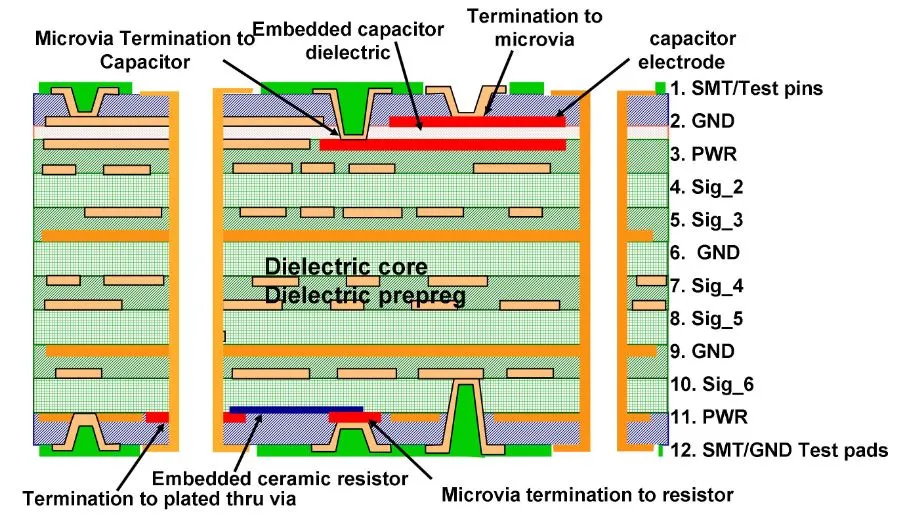
Explore advanced HDI PCB stackup materials for enhanced signal performance. Learn about low Dk, low loss, high Tg, and impedance control materials.
Read More