Discover how AIVON manufactures ENIG FR4 PCBs, including electroless nickel immersion gold surface finishing, solderability requirements, fabrication processes, manufacturing challenges, and real production experience from customer orders.
| Parameter | Typical Range |
|---|---|
| Layer count | 1-32 layers |
| Material type | FR4, high Tg FR4 |
| Surface finish | ENIG |
| Thickness | 0.4-3.2 mm |
| Solder mask | Green, black, red, white, yellow, blue, purple, matte black, matte black |
| Copper thickness | 1-8 oz |
| Special features | RoHS compliant, Nickel: 3-6 µm |
Inner Layer & Lamination Cores are imaged, etched and laminated with controlled copper balance. Proper registration and dielectric uniformity are essential so that subsequent ENIG plating achieves consistent nickel-gold coverage across all pads and vias.
Precision Drilling & Desmear Through-holes (and any controlled-depth features) are drilled and chemically cleaned. Clean hole walls and complete smear removal are critical—any residue interferes with electroless nickel deposition and can cause plating voids under ENIG.
Electroless Nickel Immersion Gold (ENIG) A uniform nickel barrier (typically 3–6 µm) is deposited followed by a thin immersion gold layer (0.05–0.15 µm). Process chemistry, bath control and dwell time are tightly monitored to prevent black-pad defects, ensure flatness for fine-pitch/BGA assembly, and deliver long shelf life.
Solder Mask Application Liquid photoimageable mask is applied and developed with high registration accuracy. Full, clean openings on all ENIG pads and gold-finger areas are mandatory—residual mask or oversized windows directly degrade solderability and corrosion resistance.
Via Plugging / Tenting Resin plugging or tenting is performed before or after ENIG according to design intent. Incomplete fill or conflicting mask openings can cause resin overflow, planarity issues or contamination that compromise the ENIG surface.
Final Inspection & Thickness Verification Gold and nickel thickness are measured, visual inspection checks for black-pad indicators or exposed copper, and electrical testing confirms continuity. Only boards meeting ENIG thickness and surface-quality criteria are released.
| Order Quantity | Order Proportion | Estimated Price Level | Typical Lead Time |
|---|---|---|---|
| Prototype (<=30 pcs) | 40% | From $8 | From 2 days |
| Small volume (30-200 pcs) | 45% | From $40 | From 2 days |
| Mass production (>200 pcs) | 15% | From $70 | From 2 days |
| Order ID | PCB Type | Layers | Dimensions | Solder Mask | Surface Finish | Quantity | Action |
|---|---|---|---|---|---|---|---|
| Loading... | |||||||
AIVON's consumer electronics PCBs are precision-engineered for smartphones, tablets, laptops, and smart home devices. Using HDI design, fine-line etching, and multilayer fabrication, they deliver compact layouts, high-speed signal transmission, and strong reliability while meeting international quality and environmental standards.
AIVON telecommunication PCBs are high-performance boards designed for fast and stable signal transmission. Used in base stations, routers, satellite systems, and 5G infrastructure, they feature advanced materials and precision manufacturing to ensure low signal loss, accurate impedance control, and reliable high-frequency performance.
AIVON medical device PCBs are high-reliability boards designed for healthcare applications. Built with strict quality control, biocompatible materials, and precise manufacturing, they ensure safety and accuracy. Suitable for diagnostic equipment, patient monitoring, and wearable medical devices, AIVON PCBs meet ISO and IPC medical standards.
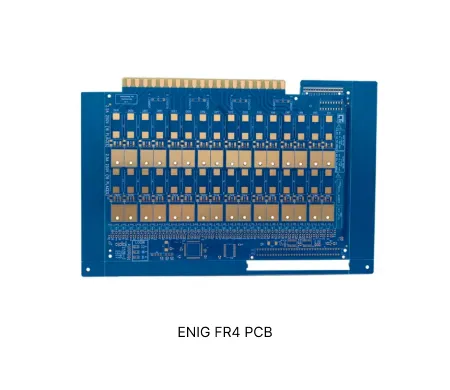
AIVON delivers ENIG FR4 PCB with precise nickel gold thickness control, uniform plating and low surface roughness, ensuring reliable solderability, stable contact performance, and consistent quality in volume production.
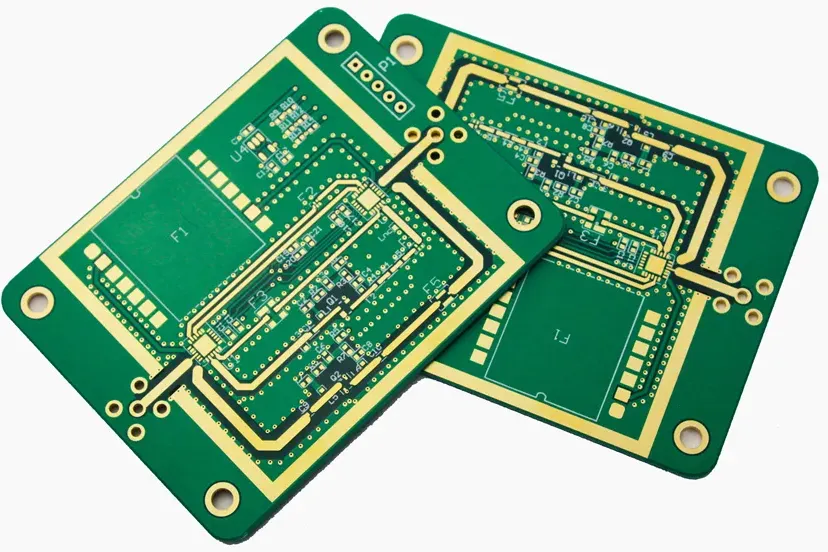
ENIG surface finish delivers flat, reliable plating for high-frequency PCBs, but the nickel layer and 2 microinches gold thickness can increase insertion loss above 5 GHz. Explore its impact on signal integrity, impedance control, and proven mitigation strategies for RF and 5G designs. Get expert PCB manufacturing insights today.
Read More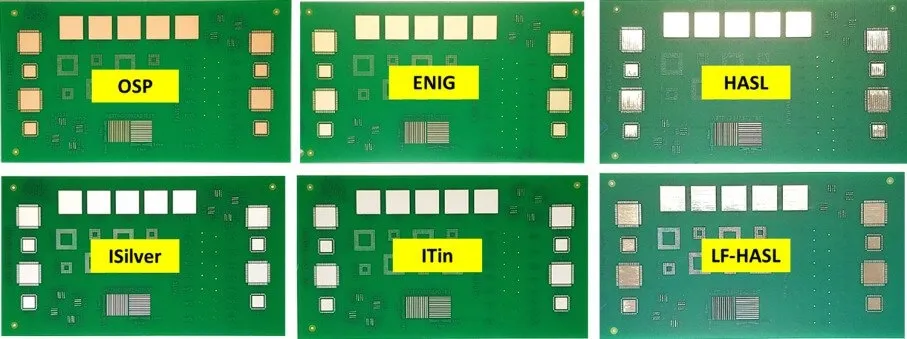
Compare HASL vs ENIG and other FR-4 PCB surface finishes including immersion silver and OSP. Learn solderability, cost, shelf life, and reliability differences to select the best option for your next project. Lead-free compliant and IPC-standard compliant.
Read More