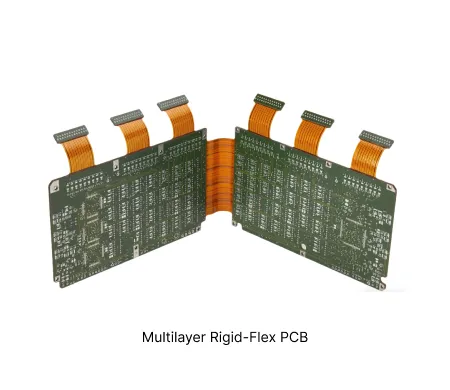
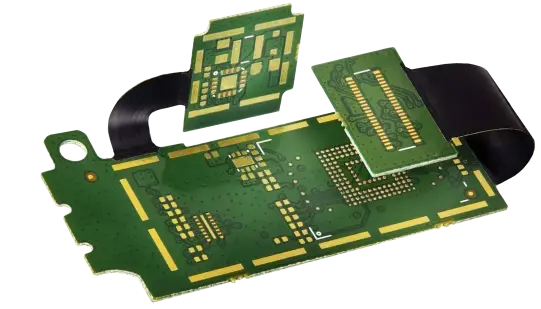
Multilayer rigid-flex PCBs integrate rigid multilayer sections with flexible polyimide layers in a single interconnected structure. Combines FR-4 or high-Tg rigid cores with polyimide flex layers. Supports coverlay or selective solder mask in flexible areas.
| Parameter | Typical Range |
|---|---|
| Layer count | 8 to 16+ layers |
| Material type | FR-4 rigid, Polyimide flex |
| Surface finish | ENIG, Immersion Silver, OSP |
| Thickness | Rigid 0.8–2.4 mm; flex 0.1–0.3 mm |
| Solder mask | LPI on rigid, green. Coverlay on flex, yellow, white |
| Copper thickness | 0.5 oz to 2 oz |
| Special features | Dynamic flex capability, impedance control, stiffeners |
Stackup and Material Preparation: Rigid cores and polyimide flex layers are prepared separately. No-flow or low-flow prepreg is selected for rigid-flex transition zones.
Lamination Approach: Sequential or single-cycle lamination bonds rigid and flex sections. Registration systems compensate for different material shrinkage rates.
Drilling Technology: Mechanical drilling is used for through-holes. Laser drilling creates microvias in dense rigid or flex areas when required.
Plating and Patterning: Electroless and electrolytic copper processes plate vias. Flexible areas receive rolled-annealed copper for improved bend life.
Coverlay and Surface Finish: Coverlay is aligned and laminated on flex regions. ENIG is applied across rigid and flex surfaces under controlled conditions.
Key Process Risks: Delamination at rigid-flex interfaces and coverlay voids are monitored through cross-section and thermal stress testing.
| Order Quantity | Order Proportion | Estimated Price Level | Typical Lead Time |
|---|---|---|---|
| Prototype (<=30 pcs) | 78% | From $782 | From 22 days |
| Small volume (30-200 pcs) | 17% | From $986 | From 24 days |
| Mass production (>200 pcs) | 5% | From $1667 | From 26 days |
| Order ID | PCB Type | Layers | Dimensions | Solder Mask | Surface Finish | Quantity | Action |
|---|---|---|---|---|---|---|---|
| Loading... | |||||||
AIVON's consumer electronics PCBs are precision-engineered for smartphones, tablets, laptops, and smart home devices. Using HDI design, fine-line etching, and multilayer fabrication, they deliver compact layouts, high-speed signal transmission, and strong reliability while meeting international quality and environmental standards.
AIVON provides high-reliability PCBs designed for civil aviation and aerospace applications, built to perform under extreme conditions such as vibration, temperature variation, and high-altitude environments. These PCBs are widely used in avionics systems, flight control modules, communication equipment, and satellite technologies. With advanced multilayer structures, heavy copper options, and high-temperature materials, our solutions are engineered to meet stringent reliability standards such as IPC-6012 Class 3.
AIVON medical device PCBs are high-reliability boards designed for healthcare applications. Built with strict quality control, biocompatible materials, and precise manufacturing, they ensure safety and accuracy. Suitable for diagnostic equipment, patient monitoring, and wearable medical devices, AIVON PCBs meet ISO and IPC medical standards.
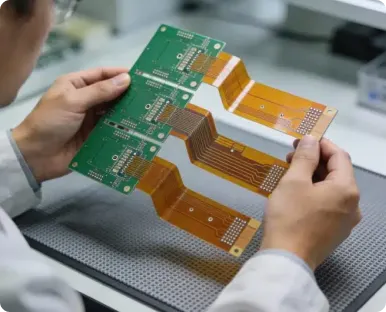
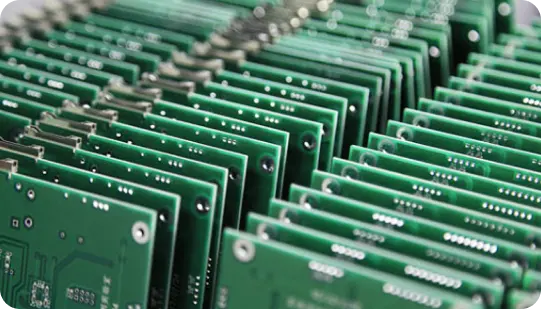
AIVON produces Multilayer rigid-flex PCBs with precise multi-layer registration, controlled impedance, and reliable plated through holes across rigid and flex zones. We maintain tight tolerances on dielectric thickness, transition areas, bend radius, and overall board thickness while ensuring strong lamination bonding and consistent copper plating. This delivers superior signal integrity and mechanical durability for complex, high-density applications in medical, aerospace, and automotive systems.
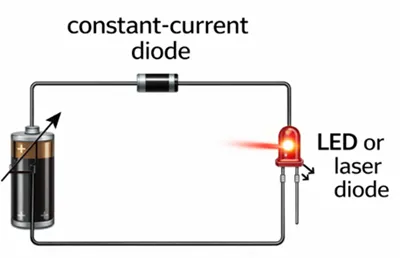
Technical overview of current limiters: uses, circuit principles, filtering and EMC concerns, and practical methods to adjust, bypass, or disable current limiting.
Read More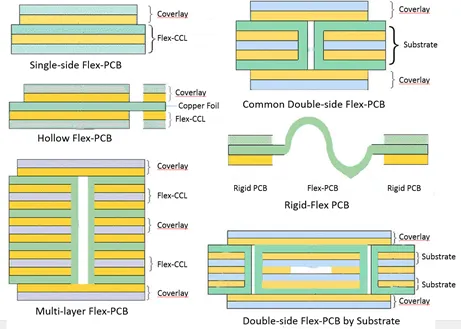
Rigid flex PCB design rules address sequential lamination challenges in flexible PCB manufacturing. This guide covers technical principles, stackup planning, transition zones, best practices, troubleshooting, and FAQs for reliable production and performance.
Read More










.webp)