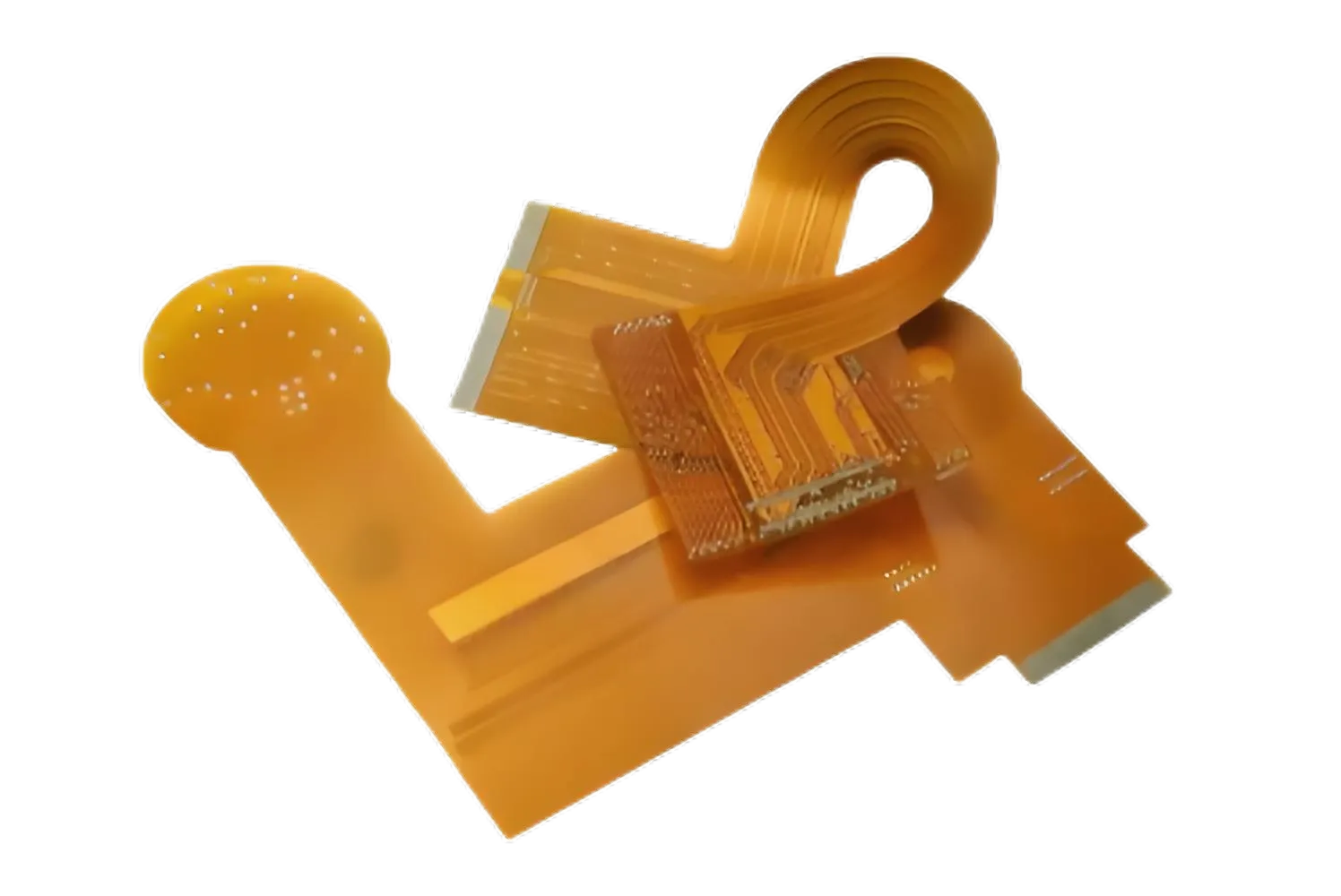
Discover how AIVON manufactures multilayer Flexible PCBs, including complex multilayer flex structures, flexible material processing, reliability requirements, manufacturing challenges, and real production experience from customer orders.
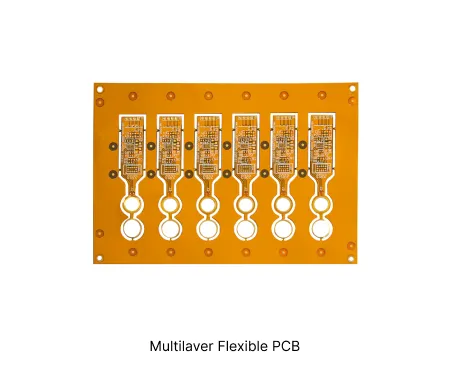
| Parameter | Typical Range |
|---|---|
| Layer count | 6 to 8+ layers |
| Material type | Polyimide, adhesiveless FCCL |
| Surface finish | ENIG, OSP, Immersion Silver |
| Thickness | 0.3-0.5mm |
| Solder mask | Yellow, white, black |
| Copper thickness | 0.5oz to 1oz |
| Special features | Impedance control, stiffeners, selective bonding |
Material Preparation and Stackup: Polyimide cores and bondply are dried under controlled conditions. Adhesiveless constructions are preferred for multilayer reliability.
Lamination Process: Layers are aligned and laminated under vacuum with precise pressure and temperature profiles. Registration compensates for polyimide shrinkage.
Drilling Technology: Laser drilling creates microvias in dense areas. Mechanical drilling is used for larger through-holes with controlled parameters.
Plating and Patterning: Plasma treatment prepares surfaces for copper adhesion. Electroless and electrolytic plating fill vias. Fine-line etching defines dense circuits.
Coverlay Application: Coverlay is aligned and laminated on outer flexible surfaces. Openings are formed by laser or mechanical routing.
Key Process Risks: Delamination and via cracking are controlled through process coupons and thermal-flex reliability testing.
| Order Quantity | Order Proportion | Estimated Price Level | Typical Lead Time |
|---|---|---|---|
| Prototype (<=30 pcs) | 77% | From $360 | From 10 days |
| Small volume (30-200 pcs) | 15% | From $443 | From 10 days |
| Mass production (>200 pcs) | 8% | From $720 | From 12 days |
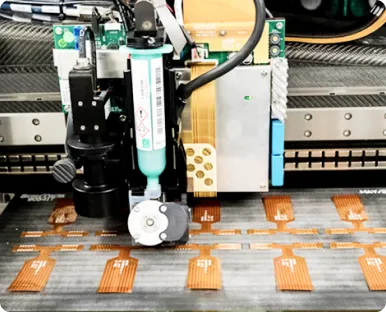
| Order ID | PCB Type | Layers | Dimensions | Solder Mask | Surface Finish | Quantity | Action |
|---|---|---|---|---|---|---|---|
| Loading... | |||||||
AIVON's consumer electronics PCBs are precision-engineered for smartphones, tablets, laptops, and smart home devices. Using HDI design, fine-line etching, and multilayer fabrication, they deliver compact layouts, high-speed signal transmission, and strong reliability while meeting international quality and environmental standards.
AIVON automotive electronics PCBs are designed for demanding vehicle environments. They withstand extreme temperatures, vibration, and harsh conditions, supporting ECUs, ADAS, infotainment, and EV modules. Featuring multilayer, rigid-flex, and high-frequency designs, AIVON PCBs meet IATF 16949 standards for safe and reliable automotive performance.
AIVON medical device PCBs are high-reliability boards designed for healthcare applications. Built with strict quality control, biocompatible materials, and precise manufacturing, they ensure safety and accuracy. Suitable for diagnostic equipment, patient monitoring, and wearable medical devices, AIVON PCBs meet ISO and IPC medical standards.
AIVON produces high-reliability multilayer flexible PCBs with precise layer-to-layer registration, controlled impedance, and uniform copper plating across all layers. We maintain tight tolerances on dielectric thickness, bend radius, and overall thickness while ensuring excellent flex endurance and signal integrity through advanced lamination and coverlay processes.
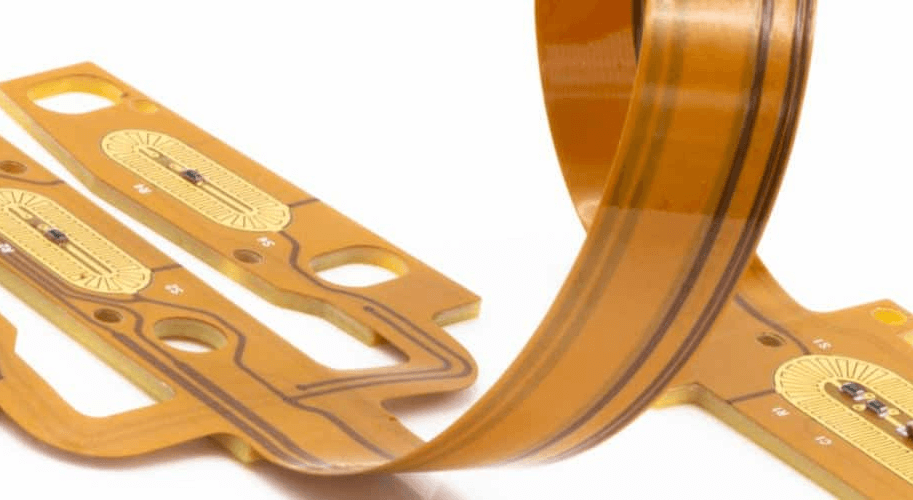
Explore the cost of flexible PCB design, key pricing factors, and strategies for optimization. Learn to reduce costs without losing quality.
Read More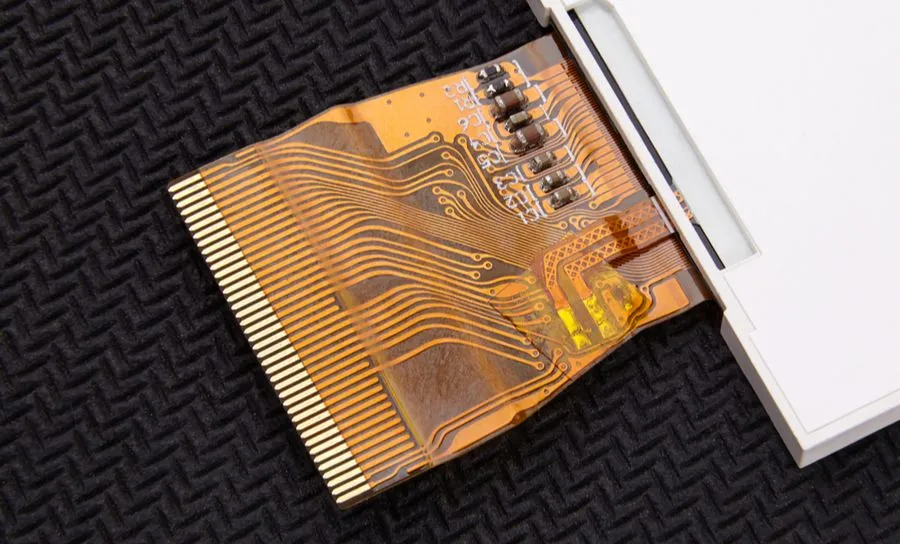
Bending alters signal integrity in flex PCBs through impedance changes and trace strain, causing reflections and loss. This article covers mechanisms, static versus dynamic effects, IPC-6013E testing, best practices like optimal routing, and troubleshooting to help engineers build reliable high-speed designs.
Read More










.webp)