Introduction
The integration of 5G technology marks a significant leap forward for unmanned aerial vehicles (UAVs). By overcoming the limitations of Wi-Fi, Bluetooth, and 4G connectivity, 5G enables higher data rates, lower latency, improved coverage, and advanced autonomy, fundamentally expanding drone applications in aerospace, industrial inspection, public safety, and logistics. For electronics engineers and PCB manufacturers, 5G integration introduces new requirements in RF design, high-speed signal integrity, power efficiency, and reliable assembly for flight-critical systems.
Limitations of Traditional and 4G-Connected Drones
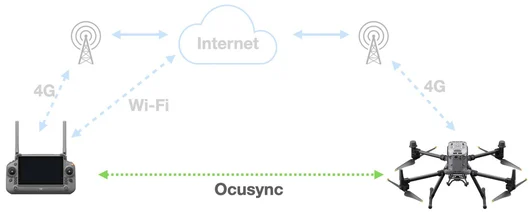
Conventional civil drones, primarily rotary-wing designs, rely on point-to-point wireless links such as Wi-Fi or Bluetooth for control and video transmission. These technologies typically limit effective range to a few hundred meters due to signal attenuation and line-of-sight constraints, restricting operational safety and scalability.
4G LTE cellular connectivity extended range significantly by leveraging mobile network infrastructure, but it still faced constraints:
- Video transmission limited to ~720p-1080p
- Latency around 50 ms or higher
- Positioning accuracy in the tens of meters
- Limited altitude coverage (typically below 120 meters)
These limitations constrained high-resolution imaging, real-time control, and complex mission profiles.
Key 5G Advantages for Drone Systems
5G addresses previous shortcomings with transformative improvements:
Ultra-High Bandwidth
Theoretical peak speeds exceed 20 Gbps, with practical deployments often surpassing 1 Gbps. This supports 4K and 8K video streaming, 360 degree panoramic feeds, and multi-sensor data transmission, enabling dynamic, high-definition aerial views far superior to fixed cameras.
Ultra-Low Latency
End-to-end latency drops to 1-20 ms, compared to 50+ ms on 4G. This enables near-real-time command response, precise maneuvering, and safer beyond-visual-line-of-sight (BVLOS) operations.
Enhanced Positioning and Coverage
Centimeter-level accuracy via advanced network positioning, combined with Massive MIMO and beamforming, improves performance in urban canyons and supports low-altitude airspace management up to 500 meters or higher.
Security and Reliability
Improved encryption, reduced interference susceptibility, and more robust data links enhance operational security.
Network Architecture Benefits
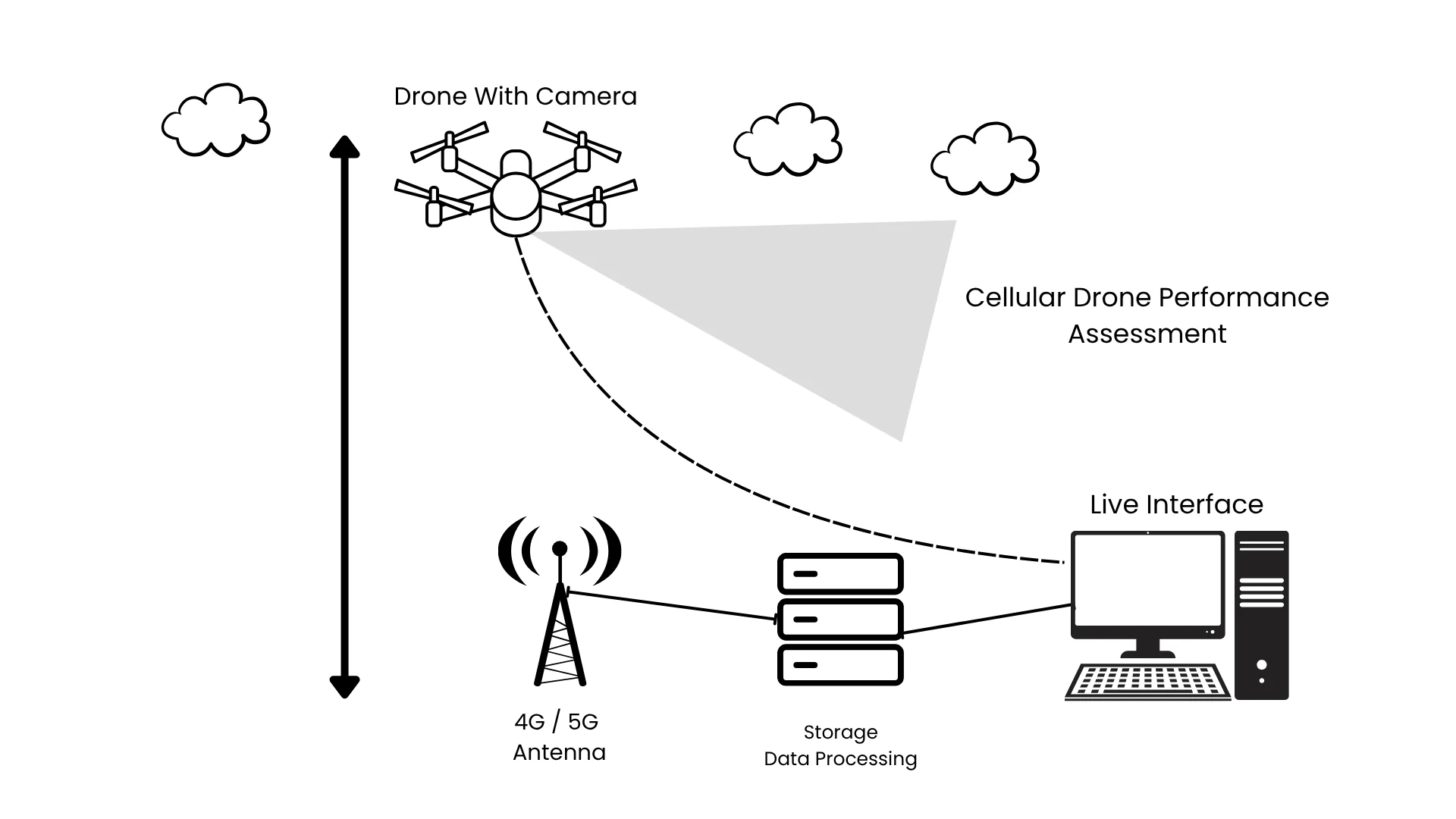
Support for massive device connectivity, edge computing, and device-to-device (D2D) communication facilitates cloud integration, real-time AI processing, and drone swarming.
PCB Design and Electronics Manufacturing Considerations for 5G Drones
Incorporating 5G modules into drones creates demanding requirements for PCB and FPC solutions:
- RF and High-Speed Design: 5G mmWave and sub-6 GHz modules require careful impedance control, antenna integration, and isolation to minimize interference with flight controllers, IMUs, and GNSS systems. Multilayer boards with dedicated RF layers are essential.
- Power Management: Higher data throughput and continuous connectivity increase power demands. PCB designers must implement efficient PDNs, DC-DC conversion, and thermal management solutions (thermal vias, copper pours) to support extended flight times alongside 5G transmission.
- Signal Integrity and Miniaturization: High-density interconnect (HDI) and rigid-flex PCBs help integrate 5G modems, processors, sensors, and cameras in weight-constrained airframes while maintaining reliability under vibration and thermal cycling.
- Antenna and Connectivity: Beamforming antenna arrays and multiple RF chains demand precise layout and testing. Flexible circuits often connect distributed systems across the drone frame.
- Reliability Engineering: Aerospace-grade drones require high-Tg materials, conformal coatings, redundant pathways, and rigorous vibration/shock testing during PCB assembly to ensure performance in harsh environments.
Application Scenarios for 5G-Enabled Drones
Infrastructure Inspection
Power lines, telecom towers, and pipelines benefit from 4K/8K imaging, infrared, and LiDAR payloads for detailed, efficient remote assessment.
Traffic Management and Public Safety
Real-time panoramic video, rapid response, and evidence collection improve traffic monitoring and emergency coordination.
Disaster Response
Drones acting as temporary communication relays restore coverage and deliver high-definition situational awareness in areas where terrestrial networks fail.
Autonomy and Swarming
Low latency and edge computing support advanced AI, sensor fusion, and coordinated multi-drone operations with reduced human intervention.
Industry Trends and Future Outlook
5G is accelerating drone evolution toward greater autonomy, BVLOS operations, and integration into digital airspace ecosystems. Combined with AI, edge computing, and improved battery/wireless charging technologies, these advancements promise substantial growth in commercial UAV adoption.
Supporting 5G Drone Technologies Through PCB Manufacturing
The realization of 5G drone potential depends heavily on advanced electronics manufacturing. Expertise in RF PCB design, high-reliability assembly, flexible circuits, and power optimization enables OEMs to build compact, robust, and high-performance UAV systems that meet stringent aerospace and industrial requirements.
FAQ
Q1: How does 5G improve drone video transmission?
A1: 5G's high bandwidth supports 4K and 8K streaming with low latency, far surpassing 4G and Wi-Fi capabilities for real-time high-resolution applications.
Q2: What are the main PCB challenges in 5G drones?
A2: Key challenges include RF signal integrity, power delivery for high-throughput modules, thermal management, antenna integration, and maintaining reliability under vibration and weight constraints.
Q3: Why is low latency critical for drone operations?
A3: Millisecond-level latency enables precise real-time control, safer autonomous flight, and responsive obstacle avoidance in complex environments.