The automotive industry is transitioning from traditional 12V electrical systems to 48V architectures to support higher power demands from advanced driver assistance systems (ADAS), electrified accessories, and mild-hybrid powertrains. This shift significantly impacts printed circuit board (PCB) design and manufacturing, requiring enhanced power integrity, isolation, thermal management, and reliability. At Aivon, we specialize in developing robust 48V-compatible PCBs that address the increased voltage stress, current handling, and system complexity of next-generation vehicles.
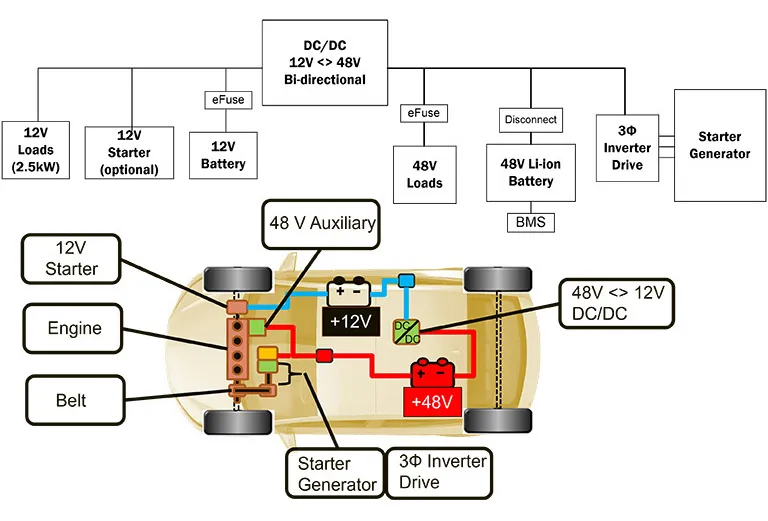
Drivers and Benefits of 48V Systems in Automotive Electronics
48V architectures enable more efficient power delivery for high-load components such as electric superchargers, active suspension, and advanced infotainment systems while reducing overall wiring harness weight and losses. Tesla's move toward 48V low-voltage systems exemplifies this trend, allowing smaller gauge wiring and improved energy efficiency.
From a PCB perspective, the transition creates both opportunities and challenges:
- Higher Power Density: 48V systems reduce current for the same power level, enabling thinner copper traces in some areas but demanding tighter control over voltage isolation and creepage distances.
- Mild-Hybrid Integration: Support for belt-driven starter generators and torque assist requires powerful DC-DC converters and inverters directly integrated on or near the main PCB.
PCB Design Challenges in 48V Electrical Architectures
Moving to 48V introduces higher voltage stress that affects insulation, component selection, and layout strategies. Critical design considerations include:
- Creepage and Clearance: Increased spacing requirements between high-voltage traces and low-voltage circuits to prevent arcing, particularly in humid or contaminated environments. This often necessitates more layers or specialized slotting in the PCB stack-up.
- Power Integrity (PDN): Sophisticated multi-domain power networks with heavy copper PCB layers (2oz-4oz) and extensive decoupling to maintain stable voltages under dynamic loads from electric accessories and hybrid systems.
- Thermal Management: Higher voltage systems can still generate significant localized heat in converters and distribution modules. Solutions include thermal vias, copper pours, and metal-core substrates to dissipate heat effectively while preserving signal integrity.
High-Current Handling and Wiring Integration on PCBs
The use of small-gauge aluminum conductors in wiring harnesses reduces vehicle weight but places greater emphasis on reliable PCB termination and connection points. PCB adaptations include:
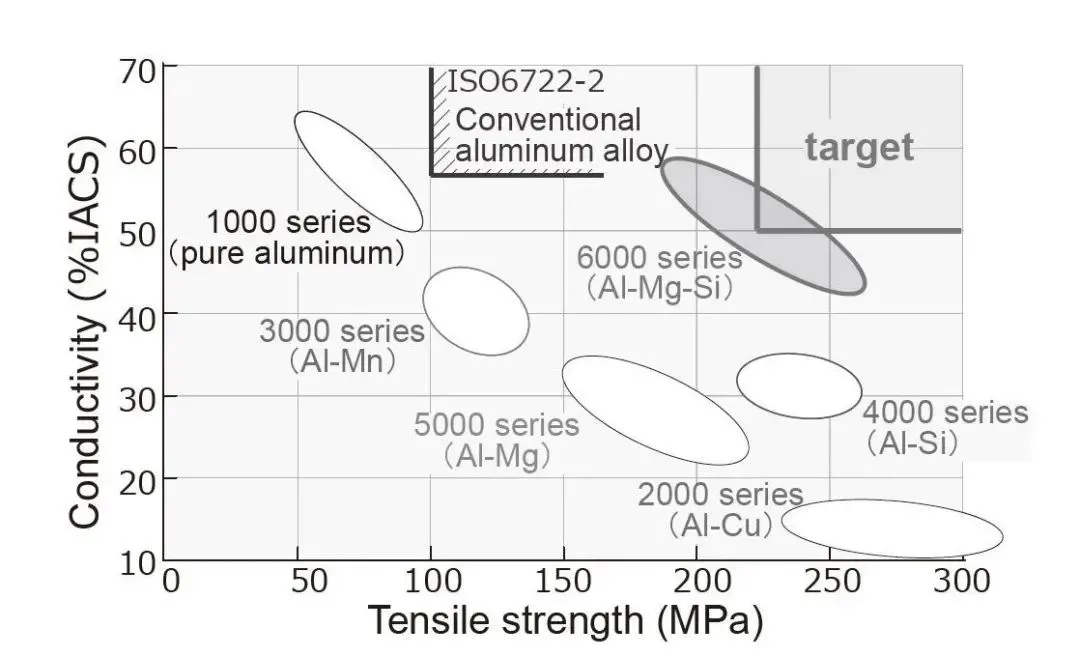
- Robust Termination Areas: Larger pads, reinforced vias, and specialized surface finishes (such as thick ENIG or OSP) to ensure reliable, low-resistance connections to aluminum wiring.
- Current Distribution: Optimized power planes and bus structures to minimize voltage drop and heating at high-current nodes.
- Grounding Design: Comprehensive grounding strategies with low-impedance return paths, multiple ground planes, and strategic via stitching to maintain signal reference stability and reduce EMI in 48V environments.
Proper grounding is particularly important to control common-mode noise and ensure electromagnetic compatibility across the vehicle.
Material Selection and Manufacturing Considerations for 48V PCBs
48V systems demand advanced materials and processes to balance performance, cost, and reliability:
- High-Tg and High-Dielectric-Strength Laminates: Essential for withstanding voltage stress and thermal cycling without delamination or breakdown.
- Hybrid Stack-Ups: Combining thick copper power layers with fine-pitch high-speed digital layers for integrated control and communication functions.
- Advanced Via Technologies: Filled, back-drilled, or stacked microvias to support high-density routing while improving thermal performance and signal integrity.
- Automotive-Grade Reliability: Enhanced plating, controlled etching, and rigorous testing (thermal shock, vibration, partial discharge) to meet AEC-Q100 and IATF 16949 standards.
Key manufacturing challenges include maintaining tight registration for multilayer boards and ensuring consistent copper thickness on heavy layers.
Four Key Considerations for Automotive Electronic Circuits in 48V Systems
When designing PCBs for 48V architectures, engineers must prioritize:
- Voltage Isolation and Safety: Physical and functional separation of 48V and low-voltage domains.
- Signal Integrity in Noisy Environments: Careful routing and shielding to protect sensitive control signals from power switching noise.
- Thermal and Mechanical Durability: Designs that withstand under-hood conditions and mechanical stress.
- Scalability and Future-Proofing: Flexible architectures that support evolving power requirements in mild-hybrids and full EVs.
These considerations directly influence material choices, stack-up configuration, and overall board reliability.
The transition to 48V vehicle electrical systems is a critical enabler for more efficient and feature-rich vehicles. However, its success depends on excellence in PCB design and manufacturing to handle higher voltages, manage power distribution, ensure safety isolation, and maintain long-term reliability.
Aivon delivers specialized 48V-compatible PCB solutions that address the unique challenges of modern automotive electrical architectures. Our expertise in high-voltage design, power integrity, thermal management, and automotive-grade processes helps OEMs and Tier 1 suppliers accelerate development while achieving superior performance, efficiency, and durability in next-generation vehicles.