






This article consolidates practical answers to common process issues encountered in conformal coating of printed circuit boards (PCBs) and assemblies in SMT production. It covers materials, coating methods, process control, defect mechanisms, equipment selection, storage and safety, and quality assurance, with actionable guidance for engineers and manufacturing teams.
What Is Conformal Coating and Why Apply It?
Conformal coating is a specially formulated protective coating applied to PCBs and electronic components to guard against environmental stressors such as moisture, dust, and corrosive agents. Properly applied, it improves the stability and reliability of electronics and helps extend service life.

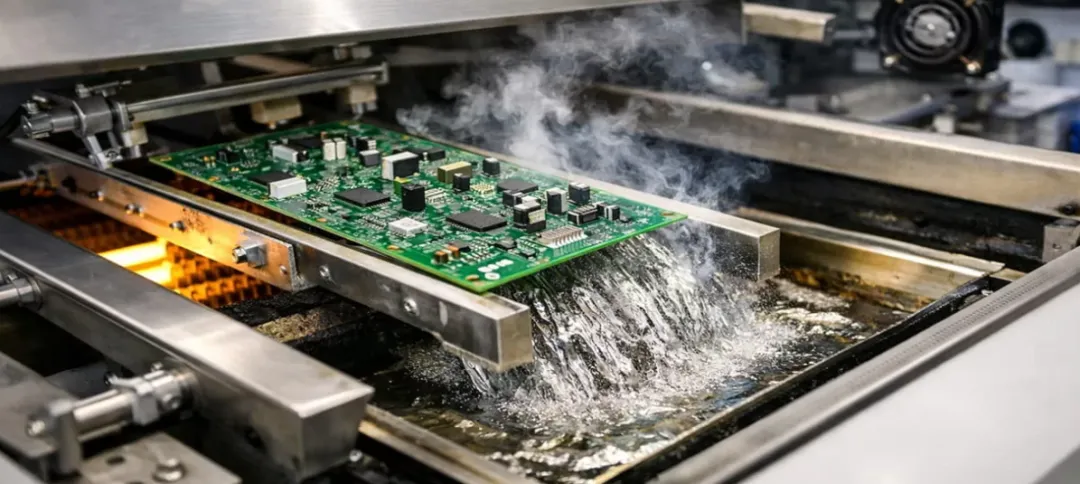
Coating Methods and Their Use Cases
Common Application Methods
- Brushing: Suitable for lab work, prototypes, small-batch builds, and localized rework or repair. Simple equipment and straightforward operation, but lower throughput and weaker consistency compared with other methods.
- Dipping: Offers excellent coverage and high material transfer efficiency. Can be performed manually or with automation and can fully cover complex assemblies without omissions.
- Spraying: Available as manual spray or automated selective coating. Provides precise, uniform application and high productivity, and lends itself to in-line inspection. Equipment cost and operator skill requirements are typically higher than brushing.
Spray Method Advantages and Differences
- Manual spray: Flexible and suitable for small runs or rework; requires skilled operators to maintain uniformity.
- Automated/Selective spray: Allows targeted coating and masking avoidance with high accuracy and repeatability; integrates well with production lines and automated inspection.
Choosing a Coating Process
Select a coating process based on product requirements, production environment, budget, and operator skill. Consider coverage needs, throughput, repeatability, and the ability to avoid keep-out zones.
Key Performance Indicators for Conformal Coatings
- Substrate compatibility: The materials and finishes the coating can adhere to (e.g., metals, plastics, solder masks).
- Viscosity: Governs ease of application, leveling, and achievable film thickness. Excessive viscosity can make application difficult; low viscosity can reduce coverage and uniformity.
- Drying time: Time from application to a dry-to-touch condition; influenced by environment and chemistry.
- Dielectric strength: The coating's resistance to electrical breakdown.
- Surface resistivity: A factor in ESD and leakage behavior at the surface.
- Temperature limits: The maximum and minimum temperatures the coating can tolerate during operation and thermal cycles.
Why Use UV-Trace Additives?
Fluorescent (UV-trace) additives enable post-application inspection under UV light. The coating fluoresces (often blue) under UV, making coated and uncoated regions readily distinguishable for quality checks.
Common Defects, Root Causes, and Corrective Actions
Uneven Coating Thickness
Symptoms include areas that are too thin or too thick.
- Causes: Inaccurate equipment settings; improper spray gun/nozzle tuning; inappropriate coating viscosity; inconsistent or incorrect application speed.
- Corrective actions: Calibrate and maintain equipment regularly; adjust viscosity per product data and supplier guidance; control and maintain consistent application speed.
Bubble Formation
Visible bubbles compromise film integrity and protection.
- Causes: Entrained air or particulate contamination in the coating; unclean substrate; excessively high ambient humidity.
- Corrective actions: Thoroughly mix and degas the coating; clean the substrate to remove oils, dust, and residues; control humidity and avoid coating in high-humidity environments.
Poor Adhesion
Coatings peel easily or fail to bond robustly.
- Causes: Inadequate surface preparation; coating and substrate incompatibility; insufficient curing conditions.
- Corrective actions: Implement appropriate pretreatment (e.g., cleaning, abrasion, or chemical treatment); select coatings compatible with the substrate; control curing temperature and time within recommended ranges.
Incomplete Curing
Leads to low hardness, susceptibility to scratching, and reduced protective performance.
- Causes: Insufficient curing temperature or time; expired materials or improper storage.
- Corrective actions: Follow coating supplier's curing instructions precisely; verify shelf life and storage conditions before use.
Discoloration
Color changes during use, often driven by environmental stressors.
- Causes: UV exposure; chemical attack; high-temperature exposure; natural aging.
- Corrective actions: Choose coatings with strong weathering/UV resistance; avoid exposure to aggressive chemicals; protect from direct sunlight and high heat; apply shields or covers if unavoidable; implement periodic inspection and recoating for long-term service.
Cracking (Crazing)
Network-like microcracks; severe cases may lead to flaking and loss of protection.
- Causes: Coating aging; mismatch between thermal expansion coefficients of the coating and substrate; excessive internal stress from application or curing; rapid temperature swings; overly thick films.
- Corrective actions: Use stable, aging-resistant coatings; consider CTE compatibility during material selection; optimize process parameters to reduce internal stress; avoid abrupt temperature changes; control film thickness.
Missed Areas (Skip Coating)
Uncoated zones leave substrate exposed.
- Causes: Equipment faults; operator error; masking or temporary fixtures blocking coverage.
- Corrective actions: Maintain equipment and verify function; train operators; inspect for and remove obstructions prior to coating.
Spray Gun/Nozzle Clogging
Interrupts production and degrades quality.
- Causes: Excessive particulates or contamination in the coating; delayed or inadequate cleaning; overly high viscosity.
- Corrective actions: Filter coatings before use; clean spray guns and nozzles after each use to prevent hardening residues; adjust viscosity as needed.
Curing Conditions and Process Control
Proper curing ensures film integrity and performance.
- Temperature: Cure within the recommended range, generally above 15 °C. Low temperatures can inhibit curing; excessively high temperatures can accelerate reactions, increasing the risk of cracking or delamination.
- Humidity: Target lower humidity (typically below 50%). High humidity can induce surface bubbling or localized discoloration.
- Process control: Maintain the specified temperature and time profile to form a robust film. Verify adhesion and hardness post-cure when required.
Selection Guidelines for Coatings
- Environmental requirements: Choose industrial conformal coatings that meet moisture resistance, dust resistance, and other environmental protection needs.
- Substrate compatibility: Match the coating to the substrate and finishes to achieve reliable adhesion and protection.
- Project-specific demands: Consider elevated temperature capability, chemical resistance, electrical properties, and reworkability as needed.
- Product reliability: Select products with proven performance and durability for your application.
Storage, Shelf Life, and Material Handling
Storage Environment
- Store in a cool, dry, ventilated area at room temperature not exceeding 30 °C.
- Keep away from heat sources; use explosion-proof ventilation and equipment in storage areas.
- Segregate from incompatible chemicals, maintain clear labeling, and ensure traceability.
Shelf Life and Condition Checks
- Typical unopened shelf life is around three years, depending on product and manufacturer. Refer to product labeling or consult the supplier for the exact value.
- Identify expiration by checking production date and shelf life. Signs such as degradation, discoloration, or thickening may indicate expiry or improper storage.
- Under proper storage, formulations remain chemically stable. Poor storage or overage can lead to polymerization, oxidation, or other chemical changes that degrade performance.
Safety in Storage
- Implement fire prevention measures and keep appropriate firefighting equipment available.
- Equip storage with spill response kits and containment materials for accidental releases.
- Ensure good ventilation to prevent accumulation of vapor and reduce incident risk.
Equipment Selection, Maintenance, and Uptime
Choosing Coating Equipment
- Match equipment type to production scale: manual tools for small batches and rework; automated coating machines for higher volumes.
- Prioritize precision and stability to ensure consistent film thickness and coverage uniformity.
- Choose equipment with documented reliability to reduce failures and maintenance costs.
Equipment Types
- Full-board coating machines: Suitable for high-volume production with high throughput and even coverage.
- Selective coating machines: Ideal for localized or precisely targeted application while avoiding keep-out zones.
- Manual tools: Appropriate for small-batch work or touch-up.
Preventive Maintenance
- Clean equipment at the end of each shift to prevent nozzle clogging and quality drift.
- Inspect and replace wear parts such as nozzles and pumps regularly.
- Calibrate equipment periodically to maintain application accuracy and repeatability.
Extending Equipment Service Life
- Operate within rated limits and follow the manufacturer's instructions.
- Keep equipment clean and prevent dust or debris ingress.
- Perform scheduled maintenance and address potential issues promptly.
Operating Practices, Safety, and Troubleshooting
Process Safety
- Ensure proper ventilation. Control ignition sources and observe fire, explosion, and toxicity precautions.
- Avoid prolonged skin contact and inhalation; provide PPE such as gloves and masks.
- Ground equipment to mitigate static discharge risk.
- Follow established operating procedures and safety standards.
Application Techniques
- Ensure substrates are clean, dry, and free from oils, dust, and residues.
- Adjust application speed and target film thickness to achieve optimal results.
- Monitor for anomalies such as clogging or missed areas and correct them immediately.
Avoiding Common Process Problems
- Routinely verify equipment condition and operation.
- Control temperature and humidity within recommended ranges to protect coating quality.
- Select coating chemistries and parameters tailored to each substrate and assembly.
Improving Throughput
- Use automation to reduce manual handling, time, and variability.
- Streamline process flows to remove unnecessary steps and delays.
- Train operators to improve consistency and efficiency.
Fault Handling
- For nozzle clogs, implement regular cleaning and inspection schedules.
- If equipment behavior is abnormal or coating results are substandard, escalate to qualified maintenance personnel for root-cause analysis and repair.
Quality Standards and Inspection
Quality Criteria
Quality evaluation typically includes film uniformity, adhesion, hardness, and weathering resistance, among others.
Inspection Methods
- Visual inspection for uniformity, coverage, and defects.
- Adhesion testing to verify bond strength to substrates.
- Hardness testing to assess cure state and scratch resistance.
- Environmental/weathering tests to validate durability under expected service conditions.
- UV inspection when fluorescent additives are used to confirm coverage.
Additional Functional Considerations and Mitigations
- Corrosion protection degradation: Often due to damaged films or incomplete curing. Conduct periodic inspections, repair damage promptly, and adhere strictly to recommended curing conditions.
- Electrical performance degradation: May result from coating aging or moisture ingress. Periodically test electrical metrics and recoat when needed.
- Workability issues: Non-uniform films, bubbles, and similar defects can typically be mitigated by optimizing application techniques, controlling environmental conditions, and selecting suitable coating products.
Final Notes
Process conditions, materials, and the environment vary by product and factory. Always follow the specific coating product's technical data sheet and application guidelines. Where needed, consult the supplier's technical support to align formulation, process parameters, and inspection methods with your product's performance and reliability requirements.