Introduction
The Pressure Sensor Market continues to expand rapidly, driven by demands across automotive, industrial automation, healthcare, and consumer electronics sectors. Electric engineers rely on these sensors for precise monitoring in systems ranging from engine management to IoT devices. As integration with printed circuit boards (PCBs) becomes more sophisticated, understanding market dynamics helps in selecting components that meet performance and reliability needs. This article explores the Pressure Sensor Market size, share, key trends, and growth factors, with a focus on technical aspects relevant to engineering applications. Recent projections indicate the global Pressure Sensor Market reached approximately USD 21.78 billion in 2026. Growth is fueled by advancements in microelectromechanical systems (MEMS) and wireless technologies, enabling compact and efficient designs.
What Are Pressure Sensors and Why Do They Matter?
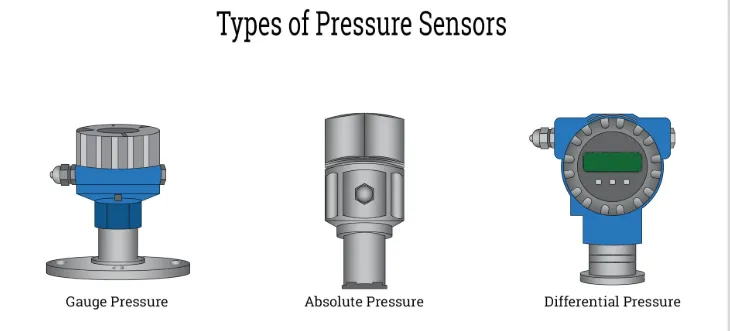
Pressure sensors convert mechanical pressure into electrical signals, essential for measuring force per unit area in gases or liquids. They operate on principles like piezoresistive, capacitive, or optical transduction, where deformation in a sensing element alters electrical properties. In electrical engineering, these sensors provide critical feedback for control systems, ensuring safety and efficiency in applications such as altitude compensation in avionics or tire pressure monitoring. Absolute pressure sensors reference a perfect vacuum, ideal for barometric and vacuum applications, while gauge pressure sensors measure relative to atmospheric pressure, common in industrial processes. Wireless pressure sensors transmit data without physical connections, supporting remote monitoring in harsh environments. Their importance lies in enabling predictive maintenance and real-time data analytics, reducing downtime in complex electronic assemblies.
Technical Principles of Key Pressure Sensor Types
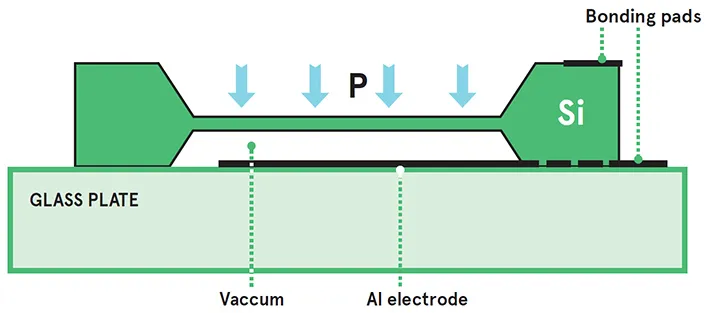
Absolute pressure sensors use a sealed vacuum reference cavity, providing measurements independent of ambient conditions, which is crucial for high-altitude or space applications. The sensing diaphragm deflects under pressure, changing resistance in piezoresistors via the piezoresistive effect, typically outputting a voltage proportional to the applied force. Gauge pressure sensors vent to atmosphere, making them suitable for hydraulic systems where differential pressure relative to surroundings matters. Capacitive variants detect changes in plate separation, offering high sensitivity and low power consumption for battery-operated devices. Wireless pressure sensors integrate RF modules with MEMS dies, using protocols like Bluetooth Low Energy for data transmission, which demands careful antenna design on PCBs to minimize interference.
Engineers must consider hysteresis, repeatability, and temperature compensation in sensor selection, as these affect long-term accuracy. For instance, thermal expansion in the diaphragm can introduce errors, addressed through silicon-on-insulator fabrication.
Pressure Sensor Market Size and Share Analysis
The Pressure Sensor Market demonstrates robust segmentation by type, with absolute pressure sensors holding a significant share due to their reliability in varied environments. In 2026, absolute pressure sensors accounted for about 29.92% of the market, driven by automotive and aerospace demands. Gauge pressure sensors generated revenues around USD 4.48 billion in recent years, projected to grow steadily with industrial automation. Overall, the market is valued between USD 17-22 billion in 2026, with forecasts to USD 24-34 billion by 2030-2031 at CAGRs of 6-9%.
Regional shares highlight Asia-Pacific dominance due to manufacturing hubs, followed by North America for innovation in EVs. By application, automotive leads, comprising over 30% share, followed by medical and consumer electronics. Wireless pressure sensors, though smaller at around USD 2-3 billion currently, show explosive potential with CAGRs exceeding 20%.
- Sensor Type: Absolute — Estimated 2026 Share/Size: ~30% — Key Applications: Aerospace, Barometric
- Sensor Type: Gauge — Estimated 2026 Share/Size: USD ~4.5B segment — Key Applications: Industrial, Hydraulics
- Sensor Type: Wireless — Estimated 2026 Share/Size: High-growth niche — Key Applications: IoT, Remote Monitoring
Key Trends Shaping the Pressure Sensor Market
Miniaturization via MEMS technology dominates trends, allowing integration into compact PCBs for wearables and smartphones. Wireless pressure sensors gain traction with IoT proliferation, enabling battery-free operation through energy harvesting. The shift to electric vehicles boosts demand for absolute and gauge sensors in battery management and braking systems. Sustainability drives low-power designs, reducing overall system consumption in smart factories.
Edge computing integration processes sensor data locally, minimizing latency for real-time control. Supply chain resilience post-pandemic emphasizes diversified manufacturing, impacting cost structures.
Applications in Electrical Engineering and PCB Integration
Electric engineers deploy pressure sensors in PCB assemblies for environmental monitoring, such as HVAC systems or medical ventilators. Absolute pressure sensors suit altitude-sensing drones, where precise vacuum-referenced data informs flight control algorithms. Gauge sensors monitor fluid levels in pumps, interfacing via analog-to-digital converters on microcontrollers. Wireless variants eliminate cabling in rotating machinery, using PCB antennas for Zigbee or LoRa transmission.
Challenges include electromagnetic interference (EMI) shielding per IEC standards and thermal management during soldering. Compliance with IPC-6012 ensures PCB quality supports sensor reliability in high-vibration environments.
Best Practices for Pressure Sensor Selection and Implementation
Select sensors based on pressure range, accuracy (typically 0.1-1% FS), and output type (analog, digital like I2C/SPI). Calibrate for offset and span using manufacturer data sheets, verifying against ASTM standards for performance. For wireless models, optimize PCB layout to avoid ground loops and ensure 50-ohm impedance matching.
Incorporate overpressure protection and ingress ratings per IEC 60529 to withstand harsh conditions. Test assemblies under JEDEC thermal cycling to validate solder joint integrity. Firmware should include filtering algorithms to mitigate noise from vibrations.
Future Outlook and Growth Drivers
The Pressure Sensor Market will exceed USD 30 billion by 2031, propelled by 5G-enabled IoT and autonomous systems. Wireless pressure sensors lead growth at over 20% CAGR, transforming predictive maintenance. Advancements in flexible electronics open wearable health monitoring opportunities.
Engineers should anticipate AI-driven anomaly detection, enhancing sensor fusion with accelerometers.
Conclusion
The Pressure Sensor Market offers electric engineers vital tools for innovative designs, with absolute, gauge, and wireless types addressing diverse needs. Market size around USD 20 billion in 2026 underscores steady growth amid technological shifts. Adhering to standards like IEC 60529 and IPC-6012 ensures robust implementations. Staying informed on trends positions teams for efficient, reliable systems.
FAQs
Q1: What factors drive growth in the Pressure Sensor Market?
A1: Advancements in MEMS and IoT integration boost the Pressure Sensor Market, particularly wireless pressure sensors for remote applications. Automotive electrification and industrial automation demand precise measurements from absolute and gauge types. Engineers benefit from reduced sizes and lower power, enabling complex PCB designs without compromising accuracy. Projections show CAGRs of 6-9% through 2030.
Q2: How do absolute pressure sensors differ from gauge pressure sensors?
A2: Absolute pressure sensors reference vacuum for true pressure values, ideal for sealed systems like engines. Gauge pressure sensors use atmospheric reference, suiting open industrial processes. Both integrate seamlessly on PCBs, but absolute types excel in variable altitude scenarios. Selection depends on application per IEC guidelines.
Q3: What role do wireless pressure sensors play in modern engineering?
A3: Wireless pressure sensors enable cable-free monitoring in hard-to-reach areas, growing rapidly in the Pressure Sensor Market. They use RF for data transmission, reducing wiring complexity on PCBs. Battery life and protocol choice like BLE are key considerations. Ideal for IoT in factories and EVs.
Q4: Why is standards compliance critical for pressure sensors?
A4: Standards like IEC 60529 ensure environmental protection, vital for sensor longevity in PCBs. IPC-6012 governs board quality, preventing failures under stress. Compliance minimizes risks in high-reliability apps like medical devices.
References
[1] Mordor Intelligence — Pressure Sensors Market: https://www.mordorintelligence.com/industry-reports/pressure-sensors-market
[2] Research and Markets — Pressure Sensor Market Report: https://www.researchandmarkets.com/reports/5939372/pressure-sensor-market-report
[3] Fortune Business Insights — Pressure Sensor Market: https://www.fortunebusinessinsights.com/pressure-sensor-market-112730
[4] Grand View Research — Gauge Pressure Sensor Market: https://www.grandviewresearch.com/horizon/statistics/pressure-sensor-market/product/gauge-pressure-sensor/global
[5] Markets and Markets — Pressure Sensor Market: https://www.marketsandmarkets.com/Market-Reports/pressure-sensor-market-871.html
[6] Mordor Intelligence — Global Wireless Pressure Sensors Market: https://www.mordorintelligence.com/industry-reports/global-wireless-pressure-sensors-market-industry
[7] Dataintelo — Wireless Pressure Sensor Market: https://dataintelo.com/report/wireless-pressure-sensor-market
IEC 60529 — Degrees of protection provided by enclosures (IP Code). IEC.
IPC-6012E — Qualification and Performance Specification for Rigid Printed Boards. IPC.
JEDEC J-STD-020E — Moisture/Reflow Sensitivity Classification. JEDEC.