Introduction
Conformal coatings provide essential protection for printed circuit boards in demanding environments by forming a thin, insulating barrier against moisture, contaminants, and mechanical stress. Electrical engineers increasingly prioritize eco-friendly options to align with sustainability goals while maintaining reliability. Acrylic, silicone, and urethane coatings represent key choices, each offering distinct properties suited to specific applications. This article compares their eco-friendly variants, focusing on performance, application, and environmental considerations. Understanding these differences helps in selecting the optimal coating for PCB assemblies that meet industry demands.
The Role of Conformal Coatings in PCB Protection
Conformal coatings conform to the contours of assembled boards, safeguarding components from environmental hazards without significantly altering electrical performance. They prevent issues like corrosion, short circuits, and insulation breakdown in humid or polluted conditions. Factory processes emphasize coatings qualified under standards such as IPC-CC-830C, which outlines performance requirements for insulating compounds. Eco-friendly formulations reduce volatile organic compounds and hazardous waste, supporting cleaner manufacturing workflows. Engineers must evaluate coating compatibility with assembly processes to ensure long-term board integrity.
Eco-Friendly Acrylic Conformal Coating Properties
Eco-friendly acrylic conformal coatings excel in general-purpose protection with formulations that minimize solvent use, often relying on water-based carriers for lower emissions. These coatings provide solid moisture resistance and high dielectric strength, making them suitable for consumer electronics and indoor applications. Their flexibility allows for straightforward rework, as they strip easily with compatible solvents, reducing scrap in production lines. Acrylic options maintain clarity and resist fungal growth, contributing to reliable performance over time. Factory insights highlight their cost-effectiveness and quick drying, ideal for high-volume assembly. Overall, eco-friendly acrylic conformal coating properties balance protection and process efficiency effectively.
Silicone Conformal Coating as Sustainable Alternatives
Silicone conformal coatings offer superior flexibility and thermal stability, functioning well across wide temperature ranges in vibrating or high-heat environments. Sustainable alternatives incorporate low-VOC or solvent-free systems, decreasing air pollution during curing and application. These coatings resist chemicals, salt spray, and oxidation, protecting PCBs in automotive or marine settings. However, their oily residue requires careful handling to avoid contamination of subsequent assembly steps. Silicone conformal coating sustainable alternatives provide durable insulation with minimal environmental footprint when selected properly. Production teams appreciate their self-leveling nature for uniform coverage on complex board geometries.
Urethane Conformal Coating and Environmental Impact
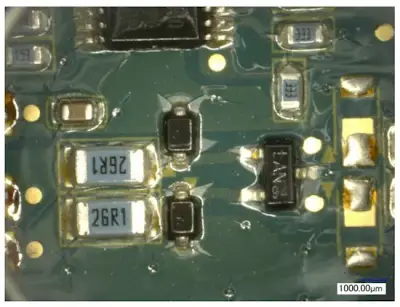
Urethane conformal coatings deliver exceptional mechanical toughness and adhesion, shielding boards from abrasion, solvents, and aggressive chemicals in industrial applications. Their environmental impact improves in eco-friendly versions through reduced toxicity and bio-based components, lowering disposal concerns. One-part or two-part systems cure to form a robust film that enhances solder joint integrity under stress. Urethane options resist cracking and peeling, extending service life in harsh conditions. Factories note their superior edge coverage, critical for preventing moisture ingress. Urethane conformal coating environmental impact remains favorable when paired with proper ventilation and waste management practices.
Comparative Analysis of Eco-Friendly Options
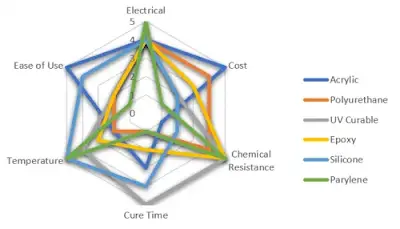
- Moisture Resistance — Acrylic: Good; Silicone: Excellent; Urethane: Excellent.
- Flexibility — Acrylic: Moderate; Silicone: High; Urethane: Moderate to High.
- Chemical Resistance — Acrylic: Fair; Silicone: Good; Urethane: Excellent.
- Reworkability — Acrylic: Easy; Silicone: Difficult; Urethane: Moderate.
- Temperature Tolerance — Acrylic: Moderate; Silicone: High; Urethane: Moderate.
- Eco Aspects — Acrylic: Water-based, low VOC; Silicone: Low-VOC alternatives; Urethane: Low-toxicity formulations.
- Typical Applications — Acrylic: General, indoor; Silicone: High-heat, vibration; Urethane: Harsh mechanical/chemical.
This summary of key attributes is based on factory evaluations, aiding selection for specific PCB requirements. Acrylic suits budget-conscious projects with simple needs, while silicone handles dynamic stresses. Urethane stands out for durability in aggressive environments. All eco-friendly variants align with reduced emissions goals. Engineers should test compatibility per IPC-A-610 guidelines for acceptability criteria.
Best Practices for Selecting and Applying Eco-Friendly Coatings
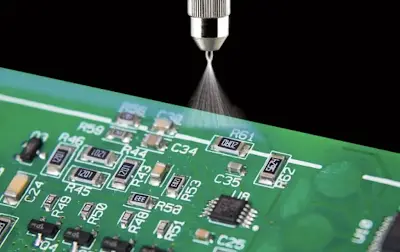
Selection begins with assessing the end-use environment, such as humidity levels or exposure to solvents, to match coating strengths. Review material safety data for VOC content and compatibility with board finishes to avoid defects. Application methods like selective spraying or dipping ensure uniform thickness, critical for insulation effectiveness. Cure under controlled conditions to achieve full properties, following manufacturer cure profiles. Inspection verifies coverage without voids, using IPC-CC-830C qualified materials for reliability. Post-application testing simulates operational stresses, confirming protection without compromising signals.
In production, prioritize water-based acrylic for rework-heavy lines, silicone for thermal cycling, and urethane for rugged assemblies. Mask sensitive areas like connectors to prevent issues. Proper storage extends shelf life, minimizing waste. Training operators on handling reduces application errors. These practices optimize performance while advancing sustainability.
Conclusion
Choosing between eco-friendly acrylic, silicone, and urethane conformal coatings depends on balancing protection needs with environmental priorities. Acrylic offers versatile, rework-friendly properties, silicone provides flexible high-temperature alternatives, and urethane delivers tough chemical resistance with manageable impact. Factory-driven decisions guided by standards ensure reliable PCB protection. Integrating these options supports sustainable manufacturing without sacrificing quality. Electrical engineers benefit from this comparison to enhance assembly longevity and compliance.
FAQs
Q1: What are the key eco-friendly acrylic conformal coating properties for PCB protection?
A1: Eco-friendly acrylic conformal coatings feature water-based formulations with low VOC emissions, providing good moisture resistance and high dielectric strength. They dry quickly, allow easy rework with solvents, and resist fungal growth for indoor applications. These properties make them cost-effective for general electronics, aligning with factory efficiency goals. Overall, they offer balanced protection with minimal environmental burden.
Q2: How do silicone conformal coating sustainable alternatives compare to traditional options?
A2: Silicone conformal coating sustainable alternatives use low-VOC or solvent-free systems, maintaining flexibility, chemical resistance, and thermal stability. They self-level well on complex boards and protect against salt spray in demanding environments. Unlike traditional versions, these reduce emissions during application, supporting greener production. Factories value their durability in vibration-prone assemblies.
Q3: What is the urethane conformal coating environmental impact in manufacturing?
A3: Urethane conformal coating environmental impact decreases with low-toxicity, bio-based variants that form tough, abrasion-resistant films. They excel in chemical-heavy settings, with strong adhesion preventing failures. Proper ventilation manages any residuals, while reduced waste from durability lowers overall footprint. Engineers select them for harsh industrial PCBs, ensuring compliance.
Q4: Which coating is best for high-vibration environments under sustainability constraints?
A4: Silicone conformal coating sustainable alternatives shine in high-vibration scenarios due to superior flexibility and thermal range. Their low-VOC options minimize emissions without compromising protection against moisture or chemicals. Acrylic works for milder cases, urethane for added toughness. Test per standards for optimal fit.
References
IPC-CC-830C — Qualification and Performance of Electrical Insulating Compounds for Coating of Printed Wiring Boards. IPC.
IPC-A-610H — Acceptability of Electronic Assemblies. IPC.
ISO 9001:2015 — Quality Management Systems. ISO.