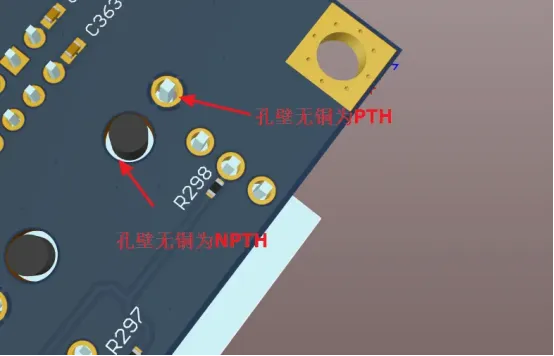
A finished PCB is covered with holes of different sizes. Some are for soldering components, some hold the board to a chassis, and some look minor but carry the electrical connection between layers.
Those holes fall into two groups:
- PTH (plated through-hole)
- NPTH (non-plated through-hole)
The structures, uses, and differences are covered below.
How to Tell PTH from NPTH
The main difference is whether the hole wall has a plated copper layer.
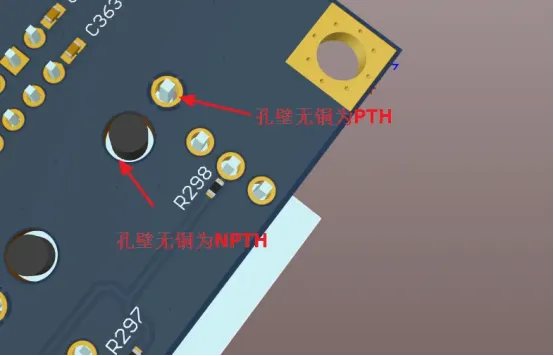
Figure 1 | Left: PTH with plated copper. Right: NPTH with no copper on the wall
- PTH: the barrel is copper-plated and conductive. It can connect traces on different layers.
- NPTH: the barrel is bare and insulating. It is used only as a mechanical feature.
What NPTH Is For
An NPTH hole is often large and is not part of the netlist. Its jobs are still specific:
- screw holes that fasten the board to a chassis, heat sink, or other structure
- mechanical fixing of an external connector or interface
- tooling or fixture locating holes
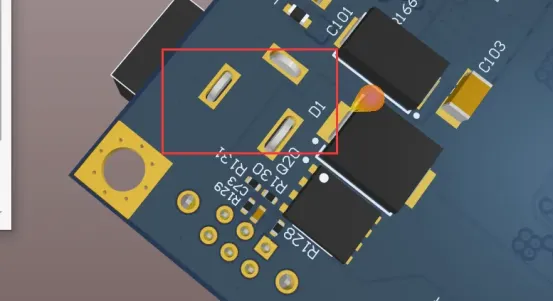
Figure 2 | Typical NPTH screw holes and corner locating holes
NPTH diameters are generally larger. They do not need to connect copper inside the board. They exist for strength or for assembly.
What PTH Is For: Layer-to-Layer Electrical Connection
PTH is different. It is how the board connects electrically from layer to layer.
Two common uses:
Through-hole component soldering (DIP parts)
- Typical parts include through-hole resistors, capacitors, and inductors.
- The hole must be larger than the lead so the part can be inserted and soldered.
Signal vias
A via figure is not included in the source, but on a real PCB the small PTH holes (vias) connect copper on different layers. They are required in high-speed and high-density designs.
A via is a smaller, denser form of PTH.
PTH versus NPTH
| Item | PTH (plated through-hole) | NPTH (non-plated through-hole) |
|---|---|---|
| Plating | Copper plated | No copper plating |
| Conductive | Yes | No |
| Use | Soldering / layer-to-layer connection (including vias) | Screws, locating, mechanical support |
| Typical size | Generally smaller (vias smaller still) | Generally larger, for structure |
| When required | Required on every multilayer board | Used when the mechanics need it |
PTH and NPTH are only holes in the board, but they set both the electrical and the mechanical behavior. The two types have to be specified correctly so fabrication and function do not fail for a hole that was defined as the wrong class.