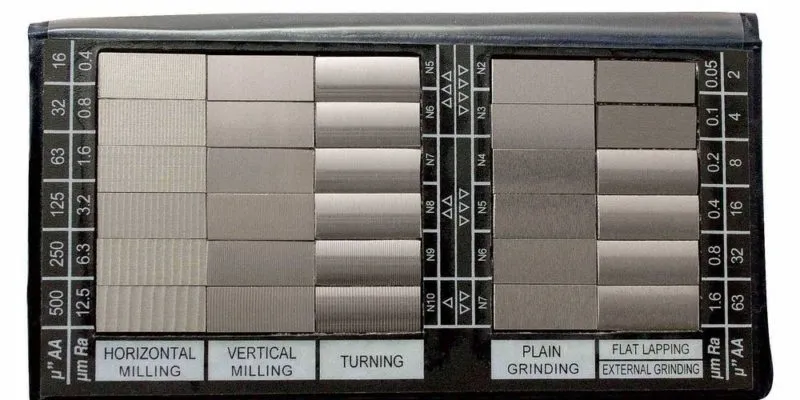
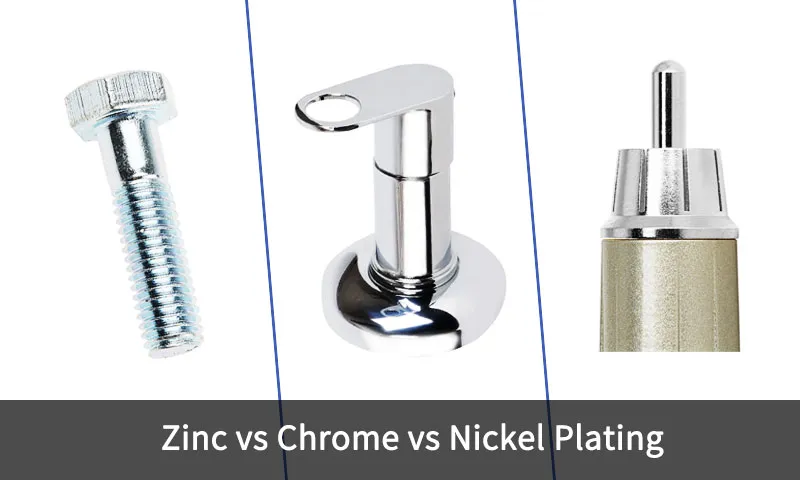
Most sheet metal surface finish mistakes show up after the parts leave the laser or brake. By then the geometry is locked and the only remaining variables are process order, coating thickness, and material reaction. The common thread across reviews is the same: the finish was treated as a cosmetic afterthought instead of a process that changes both dimensions and long-term performance.
Selecting a Finish Without Matching the Base Material
Aluminum 5052 and cold-rolled steel do not accept the same conversion coatings or powder systems. Specifying a zinc-nickel plating intended for steel onto 6061 almost always produces adhesion failure or hydrogen embrittlement risk on the aluminum side. The reverse is equally common—calling out anodize on a mild-steel bracket that will never see the required electrolyte.
Material compatibility is not a secondary check. It is the first filter. If the alloy and the finish chemistry are mismatched, every subsequent process step is compromised.

Ignoring the Required Process Sequence
Powder coat after welding is standard. Powder coat before welding is not. Yet drawings still arrive with a finish note that does not distinguish which surfaces must remain bare for subsequent joining or grounding. The result is either masked areas that are never properly defined or full coating that has to be ground off at the weld zone, destroying both appearance and corrosion protection.
Sequence also matters for plating. Electroless nickel applied before final forming can crack on tight-radius bends. The plating thickness itself becomes a stress riser once the part is bent.
Coating Thickness That Eats Critical Dimensions
A 60–80 µm powder coat is routine. On a 1.5 mm sheet with a ±0.1 mm hole tolerance, that thickness removes most of the available tolerance budget on both sides of the hole. Press-fit pins, captive fasteners, and sliding fits all fail for the same reason: the designer dimensioned the bare metal and never subtracted the finish.
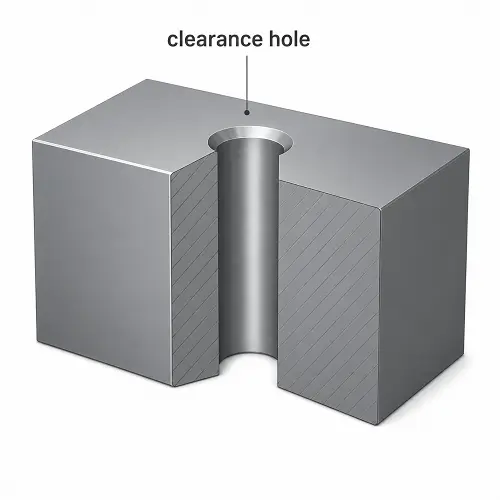
Clearance holes for M3 and M4 screws are frequent casualties. The nominal diameter is correct on the flat pattern; after coating the screw no longer passes freely. The shop then either opens the holes (risking secondary burrs) or rejects the lot.
Tolerance Stack Changes That Were Never Modeled
Surface finish is additive. Zinc plating at 8–12 µm per side is modest. Hard anodize at 25–50 µm is not. When three or four coated surfaces meet in an assembly, the cumulative growth exceeds the original tolerance stack. Parts that fitted in the bare-metal prototype no longer assemble after production coating.
The fix is not to tighten the machining tolerance. It is to declare the finish thickness as a design variable and adjust the nominals accordingly. Most drawings still treat finish as zero thickness.
Color and Appearance Variation Across Batches
Powder color is controlled by pigment lot, film thickness, and cure temperature. A 10 µm difference in thickness or a 5 °C shift in oven temperature is enough to move a RAL 9005 black from deep gloss to slightly brown. Anodize color is even more sensitive to alloy variation and bath age.
When a customer expects visual match across multiple suppliers or multiple production runs, the drawing must specify both the color standard and the acceptable ΔE or gloss range. Leaving it as "black powder coat" guarantees later disputes.

Under-Specifying Corrosion Protection for the Real Environment
A simple zinc plate is adequate for indoor dry environments. It is not adequate for outdoor equipment, marine-adjacent enclosures, or parts that see road salt. Specifying the finish without stating the exposure class (ISO 12944 or ASTM B117 hours) leaves the fabricator free to choose the cheapest compliant process. Red rust then appears within months.
The opposite error also occurs: calling for 1000-hour salt spray on a part that lives inside a climate-controlled cabinet. The extra process steps add cost with zero functional return.
How Finish Mistakes Drive Cost
Every one of the above errors forces secondary work: hole enlargement, selective stripping, re-masking, or complete re-coating. Masking itself is labor-intensive; a poorly defined finish boundary can double the handling time. Rejected lots that must be re-finished also consume schedule.
The largest cost driver is often the late discovery that the chosen finish is incompatible with a secondary process already committed—welding, concurrent machining, or adhesive bonding. Changing the finish at that point means new tooling or new fixtures.
Practical control is straightforward. Declare the finish thickness as a design dimension. State the process sequence relative to forming, welding, and machining. Match the chemistry to the alloy. Define the corrosion requirement by exposure class, not by generic name. And treat color as a measurable specification, not a verbal description. Those four steps eliminate most of the sheet metal surface finish mistakes that appear in production reviews.