Introduction
The rapid maturation of drone platforms and diversification of payloads have expanded UAV use cases across industries. 5G technology - with its high bandwidth, massive connectivity, ultra-low latency, and high reliability - provides a powerful foundation for unlocking the full potential of unmanned aerial vehicles in military, industrial, agricultural, and emergency applications. For electronics engineers and PCB manufacturers, integrating 5G into drones introduces specific demands in RF design, power management, signal integrity, and high-reliability production.
Key 5G Application Scenarios for Drones
Low-Altitude Airspace Supervision
5G-connected drones equipped with HD cameras and loudspeakers enable real-time video streaming and centralized command for monitoring airspace, maritime areas, and highways. Combined with AI, 5G supports intelligent route planning, autonomous takeoff/landing, and collision avoidance. Real-world examples include airport surveillance trials and maritime supervision pilots in China.
Logistics and Delivery
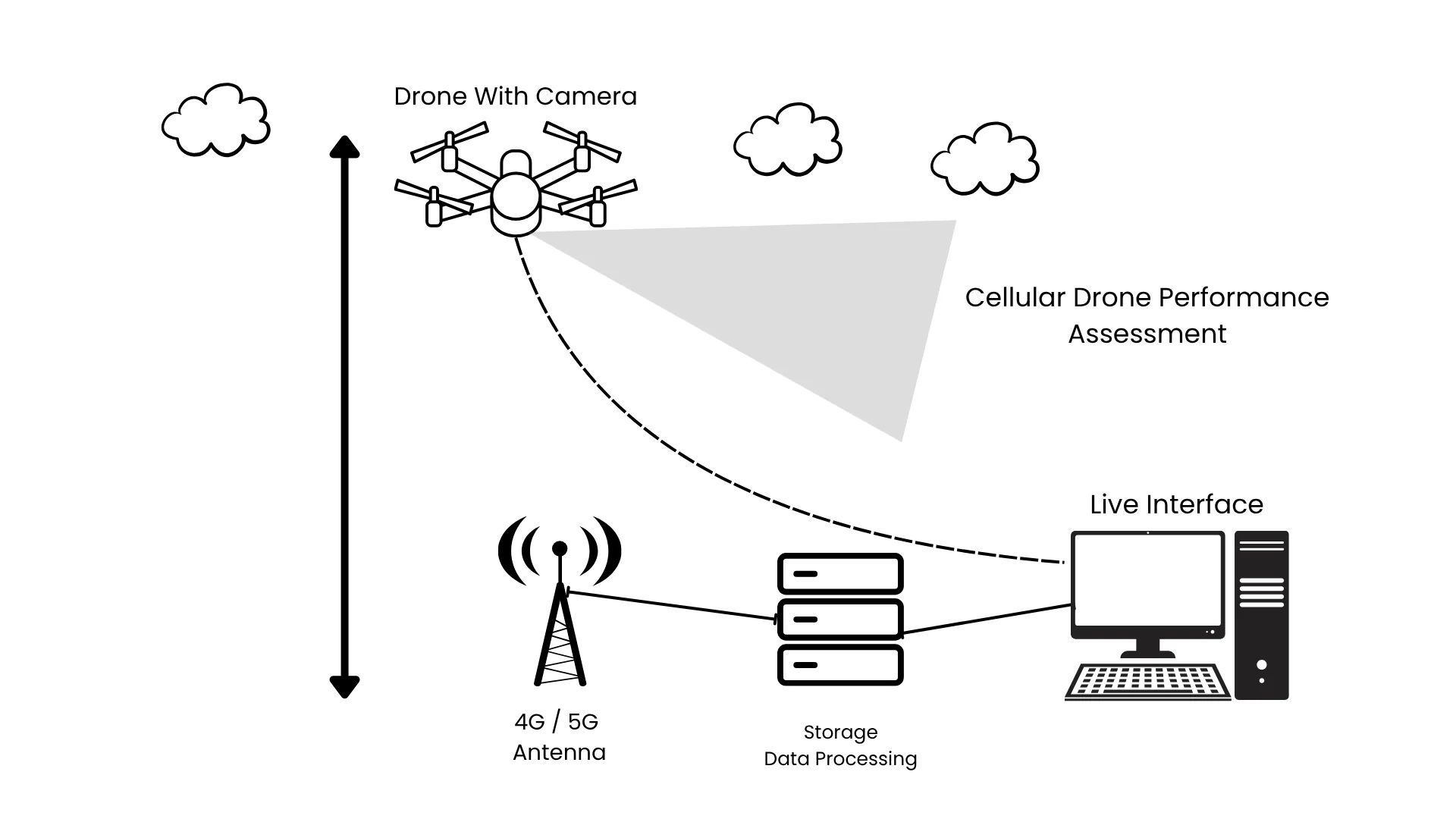
5G's low latency and high bandwidth facilitate real-time telemetry, video return, and remote flight path control. Commercial trials have demonstrated efficient cargo delivery over several kilometers with full-process 5G oversight.
Power Line and Infrastructure Inspection
Drones stream high-definition, infrared, and LiDAR data over 5G to ground stations for AI-powered fault detection. This significantly reduces inspection time and human risk compared to traditional methods.
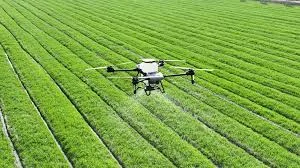
Agricultural Plant Protection
5G enables real-time field monitoring and precise automation of spraying and seeding operations. Demonstrations have shown dramatic improvements in efficiency over manual labor.
Live Video Streaming and VR
Panoramic and high-resolution (4K/8K) video streaming over 5G supports immersive applications in tourism, events, and remote viewing.
Emergency Response and Disaster Relief
Drones provide rapid situational awareness and can act as temporary airborne base stations for communication coverage in disaster zones. 5G ensures reliable real-time imagery and data relay to command centers.
Drone Swarm Operations
5G supports coordinated swarms with enhanced intra-swarm communication, edge computing offloading, and AI-driven autonomy for ISR and complex missions.
Technical Challenges in 5G UAV Integration
Low-Altitude Coverage
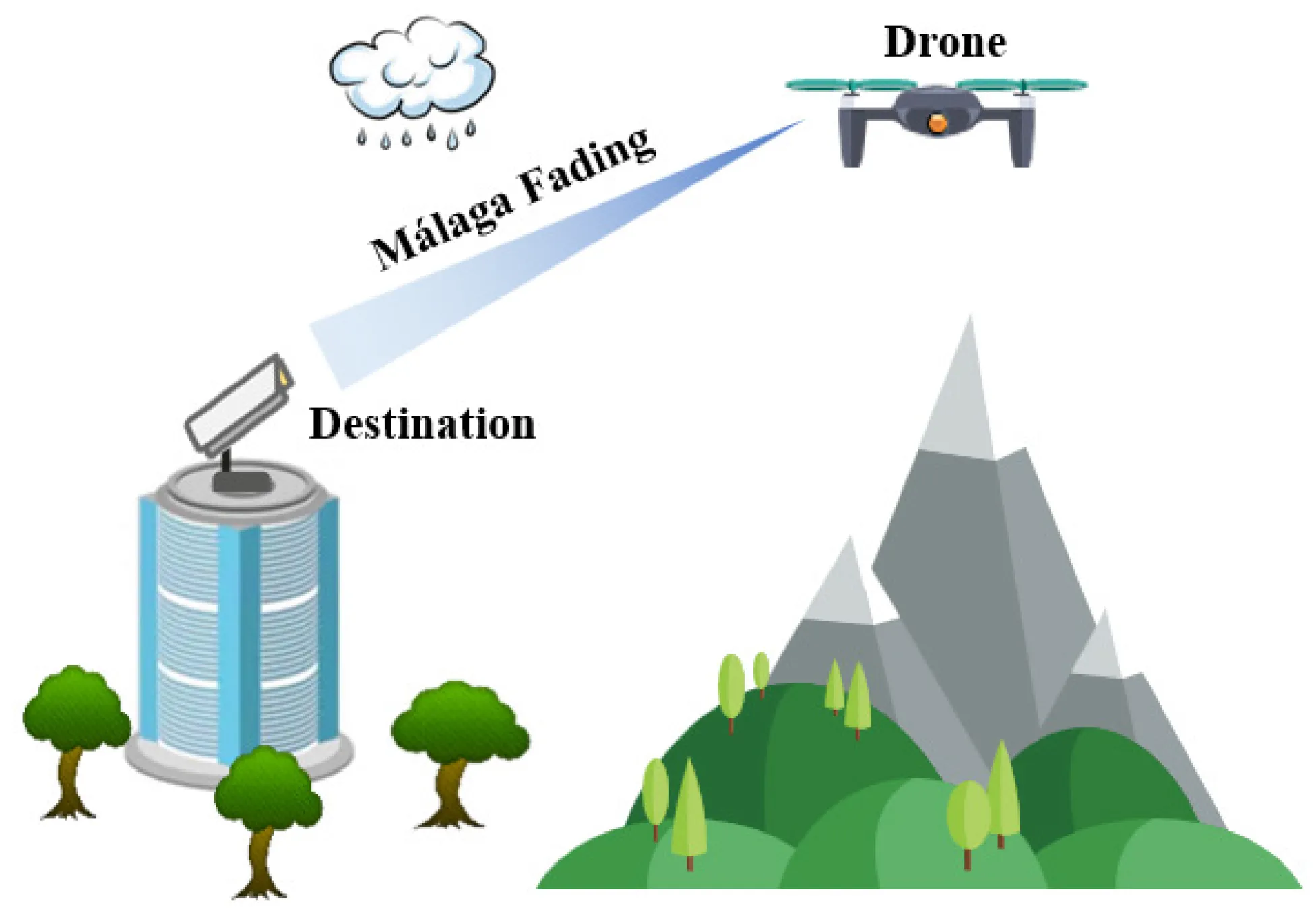
Conventional base stations are optimized for ground users. UAVs at higher altitudes experience increased path loss and require beamforming, massive MIMO, and antenna tilt adjustments for reliable aerial coverage.
Interference Resistance
Open low-altitude environments expose links to jamming, ambient noise, and inter-cell interference. Solutions include precise beamforming, power control, and dedicated 5G private networks.
Mobility and Handover
High-speed UAV movement demands enhanced mobility management, Doppler compensation, and optimized handover strategies to maintain stable connections.
PCB Design and Electronics Manufacturing Considerations for 5G Drones
Integrating 5G modules into UAVs creates demanding requirements for PCB and FPC solutions:
- RF and High-Frequency Design: 5G mmWave and sub-6 GHz modules require precise impedance control, low-loss materials, and careful antenna integration to maintain signal integrity under vibration and motion.
- Power Management: High-bandwidth transmission increases power draw. PCBs need robust power delivery networks (PDN), efficient DC-DC conversion, and thermal vias for sustained flight endurance.
- Signal Integrity and EMI/EMC: High-speed data buses and dense integration of 5G, GNSS, video encoders, and flight controllers demand multilayer boards with dedicated ground planes and shielding.
- Miniaturization and Weight Reduction: High-density interconnect (HDI) and rigid-flex PCBs help meet strict SWaP (Size, Weight, and Power) constraints while supporting multiple sensors and communication links.
- Reliability in Harsh Environments: Aerospace-grade materials, conformal coatings, and vibration-resistant assembly are essential for operation across temperature extremes and mechanical stress.
- Testing and Certification: Manufacturing must include rigorous RF testing, environmental stress screening, and compliance validation for 5G performance and aviation regulations.
Industry Trends and Future Outlook
5G is accelerating the convergence of drones with low-altitude airspace management (UTM) systems. Future developments will likely include greater private network adoption, AI-edge integration, and hybrid 5G/NTN solutions for enhanced coverage and reliability.
Supporting 5G UAV Technologies Through Advanced PCB Manufacturing
The successful deployment of 5G-enabled drones depends on high-performance electronics hardware. Expertise in RF PCB design, power optimization, flexible circuits, and high-reliability assembly enables manufacturers to deliver compact, robust systems that meet the stringent demands of modern UAV applications.
FAQs
Q1: What are the main benefits of 5G for drones?
A1: 5G provides high bandwidth for video streaming, ultra-low latency for real-time control, massive connectivity for swarms, and improved reliability for mission-critical operations.
Q2: What are the biggest technical challenges for 5G UAVs?
A2: Key challenges include low-altitude coverage optimization, interference resistance, and maintaining stable connections during high-speed movement.
Q3: How does 5G integration affect drone PCB design?
A3: It requires advanced RF layout, robust power delivery, thermal management, high-density interconnects, and vibration-resistant construction to support reliable 5G performance in flight.