There's a special kind of joy when a project removes complexity instead of adding it. Watching Tech Talkies introduce TT Voice Studio, I kept smiling. An ESP32-S3 that understands custom voice commands completely offline, configured through a simple browser page, and able to drive LEDs, RGB rings, servos, buzzers or relays—without a single line of code from the user. Flash the firmware, connect a microphone, open a webpage on your phone, and start talking to your project.
The creator set out to solve a real maker pain point: voice control is powerful, but most solutions demand coding, model training, or constant internet. Tech Talkies wanted something anyone could use—smart-home gadgets, robots, props, interactive installations—while keeping everything local and private after the initial setup. Commands are stored permanently. The interface is fast and friendly. That vision only becomes practical when the hardware underneath is quiet, stable, and manufacturable. A development board proves the idea. A thoughtfully designed custom PCB turns the idea into something you can trust in the real world.
The Magic of Talking to Hardware Without Writing a Single Line of Code
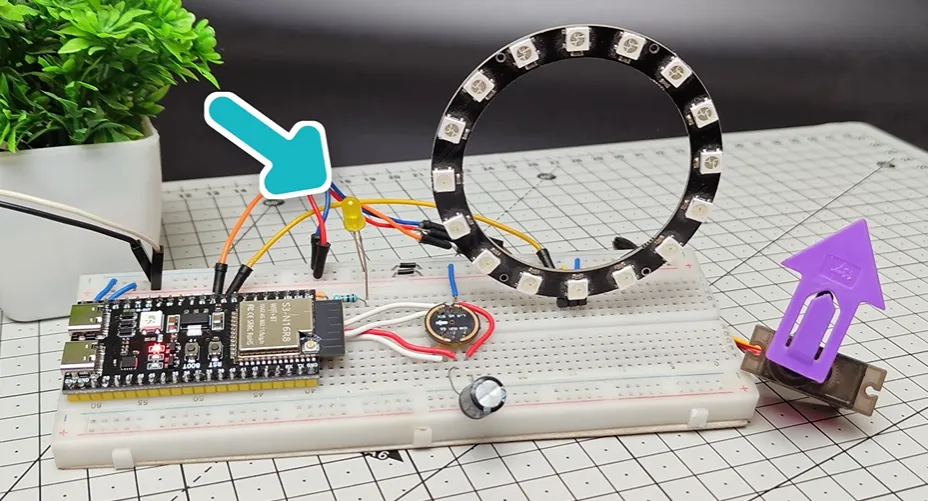
The video starts with the board already listening. A clear wake word brings it to life. Spoken phrases then turn lights on and off, change RGB colors, swing a servo left or back to center, or toggle a relay for a fan. No cloud round-trip. No API keys. Just the ESP32-S3 handling recognition locally.
Figure: ESP32-S3 8MB+Flash
What makes TT Voice Studio special is the complete removal of the coding step. After flashing through the convenient web flasher, the board creates its own Wi-Fi access point. Connect from a phone, open 192.168.4.1, and you land in a clean browser interface. Set the microphone pins once, then assign any voice phrase to a GPIO action. Choose the pin, pick the control type—digital on/off, RGB color, servo angle, buzzer—and save. The commands survive power cycles.
Figure: TT Voice Studio Hardware
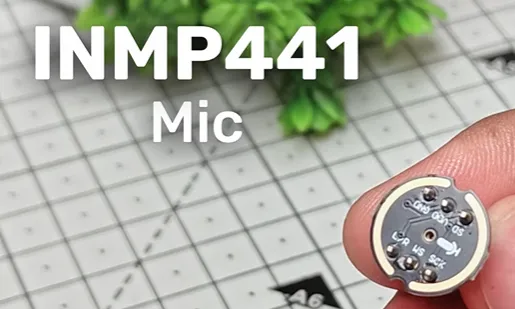
Hardware choices stay practical. An INMP441 MEMS microphone feeds clean digital I2S audio. External LEDs need current-limiting resistors. Servos and relays prefer their own power supply so the ESP32's 3.3 V rail stays clean. Once configured, the temporary Wi-Fi network is no longer needed. The device simply sits and listens offline. That combination of zero-code setup and true offline operation is rare—and exactly why makers immediately start imagining finished products.
DFM Checklist for Offline Voice ESP32-S3 Boards (TT Voice Studio Style)
|
Check Item |
Target / Rule |
Why It Matters Here |
|---|---|---|
|
I2S trace length & matching |
< 30 mm, length difference < 5 mm |
Prevents clock skew and bit errors on the digital microphone data |
|
Mic decoupling |
100 nF + optional 10 µF within 3 mm of VDD |
Keeps supply noise out of the sensitive MEMS capsule |
|
Ground plane under audio |
Continuous, minimal cuts, stitched vias every 5–8 mm |
Reduces digital noise coupling into the recognition path |
|
Power domains |
Separate 3.3 V (MCU + mic) from 5 V (servos/relays) |
Stops load-induced brown-outs and resets |
|
Antenna keep-out |
≥ 3–5 mm free of copper under and around antenna |
Maintains reliable Wi-Fi for initial configuration |
|
Silkscreen & test points |
Clear pin labels + test pads on I2S and power rails |
Speeds debugging and makes assembly less error-prone |
|
Flyback protection |
Diode across every inductive load (relay/servo) |
Protects GPIO pins from voltage spikes |
|
Acoustic hole alignment |
PCB hole ≥ 0.5 mm, centered under INMP441 port |
Ensures unobstructed sound path and consistent sensitivity |
Following this checklist turns a working demo into boards that behave the same every time they are powered up.
Potential Challenges When Moving This Offline Voice Project to a Custom PCB
The video itself focuses on the smooth, finished experience. In the real world, however, makers who take the same idea from a development board to a custom PCB often run into a handful of predictable issues. These are not problems that appeared on camera—they are the common pitfalls that show up once you start designing for reliability, consistency, and small-batch production.
Microphone signal integrity is usually the first. Long jumper wires on a breadboard act as antennas and pick up digital noise from the ESP32 and any switching loads. Recognition accuracy can drop and false triggers increase. Short, length-matched I2S traces over a continuous ground plane solve this cleanly.
Power distribution is another frequent source of trouble. Driving multiple LEDs, a servo and a relay from the same rail that feeds the MCU can create voltage dips that reset the chip or briefly corrupt the speech model. Separate power domains, local decoupling and solid ground pours prevent the problem before it appears.
GPIO flexibility is both a strength and a risk. The web interface lets users assign almost any free pin, so the PCB needs clear labeling, robust headers and enough spacing to avoid accidental shorting during experimentation. Finally, permanent command storage means the board must survive power cycles and occasional ESD events without losing its configuration—something a finished board with proper protection paths handles far better than a floating development module.
These potential issues are exactly what a proper DFM review is designed to catch early.
How a Thoughtful AIVON Custom PCB Quietly Elevated the Entire Project
This is the stage I enjoy most as a factory engineer. Tech Talkies already delivered outstanding firmware and a delightful user experience. What elevates the project from a great YouTube demonstration to a platform other makers can build real products around is a board that is quiet, compact and easy to assemble in small batches.
AIVON's process begins with a free engineering review focused on the exact pain points of voice projects: I2S routing, microphone land pattern (including the acoustic hole), decoupling placement, and power-domain separation. We recommend the 4-layer stackup because a continuous ground plane under the audio section measurably improves signal-to-noise ratio—exactly what offline speech recognition needs for consistent wake-word and command accuracy.
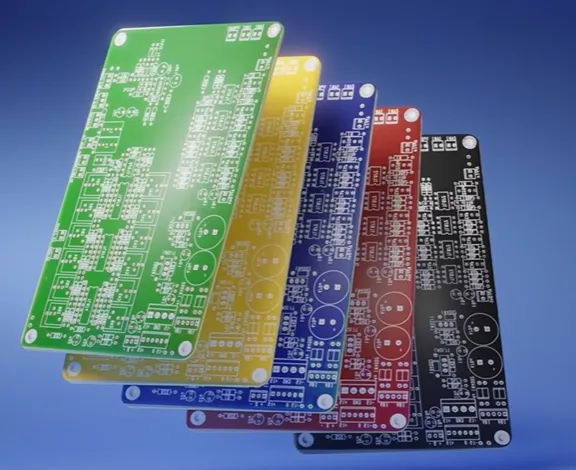
Material and finish choices stay practical. Standard FR-4 with a sensible glass-transition temperature keeps cost reasonable while surviving reflow and everyday temperature swings. ENIG surface finish gives reliable soldering on the fine-pitch ESP32-S3 pads and holds up to multiple rework cycles when a maker wants to experiment. Impedance control on the clock lines keeps edge rates clean so the digital microphone data arrives without errors.
Manufacturing precision handles the small but critical details—via placement that does not slice the ground plane under the mic, consistent solder-paste volume so every board behaves the same, and clear silkscreen that remains readable after assembly. Responsive engineering support means questions about GPIO current budgeting or relay protection get answered quickly, letting the creator stay focused on the fun parts of the project.
The finished result preserves every feature of TT Voice Studio while removing the fragility of jumpers and breadboard noise. Recognition stays sharp, power remains stable under load, and the units look and feel ready for a real enclosure or small production run. That is the quiet contribution a good PCB partner makes: the hardware simply disappears and the creator's idea shines.
Choosing the Right PCB Stackup and Layout for Clean Voice Recognition
While the original demonstration runs on a development board, moving to a custom PCB unlocks the consistency and compactness needed for real projects. The parameters that work reliably for this class of offline voice board are:
|
Parameter |
Recommended Value |
Reason for TT Voice Studio Style Builds |
|---|---|---|
|
Layers |
4-layer |
Continuous ground and power planes keep I2S audio free of digital noise |
|
Material |
FR-4, Tg 135–150 °C |
Thermally stable and cost-effective for continuous listening duty |
|
Thickness |
1.6 mm |
Mechanical strength for connectors, mounting holes and everyday handling |
|
Copper Weight |
1 oz outer / 0.5 oz inner |
Handles GPIO switching loads without excessive voltage drop |
|
Surface Finish |
ENIG |
Excellent for fine-pitch ESP32-S3 pads and repeated soldering or rework |
|
Via Type |
Through-hole (0.3 mm drill) |
Robust and simple for prototype-to-small-batch runs |
|
Impedance Control |
50 Ω on critical I2S clocks |
Maintains clean edges on SCK and WS lines to the microphone |
|
Target Size |
Compact (≈ 50 × 70 mm) |
Leaves room for mic, headers and optional load footprints |
Key layout rules that pay off immediately: keep the three I2S traces short and length-matched, place a 100 nF decoupling capacitor within a few millimeters of the INMP441 VDD pin, separate digital ground returns from any servo or relay current paths, and maintain a clear antenna keep-out zone. Clear silkscreen labels and strategically placed test points make both debugging and later assembly far easier.
Ready to Let Your Next Project Listen
Watching Tech Talkies turn a powerful offline voice idea into something any maker can use in minutes is genuinely inspiring. The firmware removes the coding barrier; a carefully designed PCB removes the reliability barrier. Together they keep creativity at the center.
If you have been thinking about adding voice control to a robot, a prop, a smart-home device or an interactive installation, this project shows how approachable it can be. Start with the free firmware and flasher, prove the concept on a development board, then move to a proper custom board when you are ready for something that lasts. Professional manufacturing support is there when you need it—ready to turn your next wild prototype into clean, manufacturable hardware.
FAQ
Q1: What minimum flash size does TT Voice Studio need on the ESP32-S3?
A1: At least 8 MB. The speech models and web configuration interface require the extra space. Always verify the module marking before flashing.
Q2: Why does recognition become unreliable with long wires to the INMP441?
A2: Digital noise couples into the I2S lines. Keep the three traces under 30 mm, length-matched, and routed over a continuous ground plane. Add local decoupling right at the microphone.
Q3: Can I safely drive servos and relays from the same board?
A3: Yes, provided you use a separate 5 V supply for the loads and keep their ground returns local. A solid power pour plus flyback diodes prevents brown-outs and voltage spikes from reaching the ESP32.
Q4: Is impedance control necessary for a simple offline voice board?
A4: Strongly recommended on the I2S clock lines. 50 Ω single-ended control keeps edges clean and improves recognition consistency, especially when other loads are switching nearby.
Q5: What surface finish works best for small production runs of these boards?
A5: ENIG. It offers excellent solderability on fine-pitch pads, survives multiple reflow or hand-solder cycles, and resists oxidation better than HASL for boards that may sit in inventory.
Q6: Why prefer a 4-layer stackup over 2-layer for this type of project?
A6: The continuous ground and power planes dramatically reduce noise coupling into the microphone path and stabilize the 3.3 V rail when GPIOs switch inductive loads. The modest extra cost pays for itself in recognition reliability and fewer field failures.