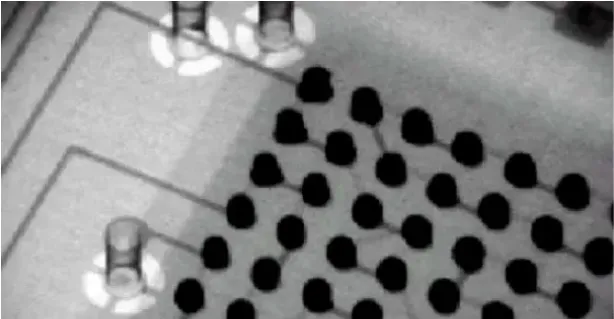
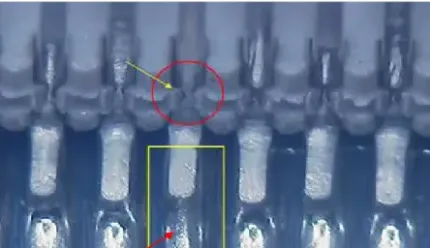
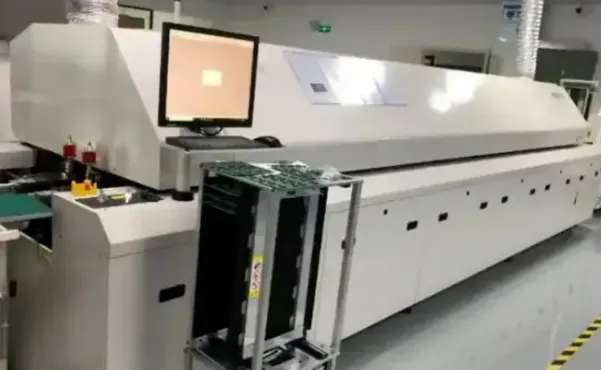
IPC-7801 is a key standard governing process control for reflow soldering in surface-mount technology (SMT). It specifies critical parameters and control requirements across the full soldering cycle to ensure that solder joints meet defined quality criteria. The standard applies to a broad range of electronic components and printed circuit boards (PCBs), covering the entire thermal profile from preheat and soak through reflow and cooling. By adhering to IPC-7801, manufacturers can optimize reflow processes, improve yield, reduce defects, and enhance product reliability.
Scope and Major Provisions
IPC-7801 encompasses the following core topics relevant to SMT reflow process control:
- Temperature profile definition: Requirements for the preheat, soak, reflow, and cooling zones, including profile shape and slope/ramp rate.
- Conveyor speed control: Guidance on belt speed to achieve uniform heating across assemblies.
- Atmosphere control: Conditions for using nitrogen or other inert gases to reduce oxidation and improve soldering quality.
- Soldering quality evaluation: Inspection methods and acceptance criteria using visual inspection, microscopy, and X-ray.
- Equipment selection and calibration: Specifications for choosing, calibrating, and maintaining reflow equipment to ensure accuracy and stability.
- Solder paste selection and use: Requirements for paste type, performance, storage, handling, and reclaim.
- Process optimization: Recommendations to refine the reflow process, mitigate defects, and increase throughput.
Key Parameters and Control Requirements
1. Temperature Profile Setup
The thermal profile is a cornerstone of reflow process control. It governs flux activation, solder paste melting, wetting, and solidification. IPC-7801 defines expectations for each thermal zone:
- Preheat zone: The temperature should rise gradually to avoid thermal shock to components and the PCB. Typical preheat range is from ambient to 150 °C, with the ramp rate controlled within an appropriate range.
- Soak zone: Hold temperature steady to allow solvents and flux volatiles to outgas sufficiently while limiting oxidation. The soak range is typically 150 °C to 200 °C, and the dwell time is adjusted based on PCB thickness, component density, and solder paste formulation.
- Reflow zone: Raise temperature above the solder paste melting point to achieve rapid melting and wetting of component leads/terminals and PCB pads. The reflow temperature range is typically 200 °C to 250 °C, with peak temperature controlled to roughly 20 °C to 50 °C above the solder alloy's melting point. Time spent at peak should be minimized to reduce thermal stress and oxidation.
- Cooling zone: Cool rapidly enough to solidify the solder joint and form a robust interconnection. A typical cooling range is from ambient to 100 °C, with the cooling rate kept within a suitable band to prevent joint cracking or warpage.
2. Conveyor Speed Control
Conveyor speed (belt speed) directly influences thermal exposure and uniformity. IPC-7801 sets expectations for adjusting and stabilizing speed:
- Uniform heating: Choose a speed that ensures all components across the assembly receive consistent thermal energy. Excessive speed may lead to insufficient heating and defects; too slow can cause over-drying of flux and degradation of solderability.
- Avoid thermal shock: Speed changes should be smooth to prevent abrupt temperature transitions that can damage components and PCBs.
3. Atmosphere Control
Using nitrogen or other inert gases can limit oxidation during reflow and improve wetting and joint quality. IPC-7801 addresses the following:
- Gas concentration: Maintain inert gas concentration within a defined range to keep the soldering environment stable and uniform in all zones.
- Gas flow rate: Set flow to enable adequate circulation and refresh of the atmosphere in the soldering region without disturbing the thermal profile or displacing components.
Soldering Quality Evaluation
IPC-7801 defines how to evaluate solder joint quality to determine compliance. Typical inspection methods include:
- Visual inspection: Assess joint appearance for surface defects such as cracks, voids, and non-wetting.
- Microscopic inspection: Examine joint microstructure and wetting at higher magnification to identify fine-scale anomalies.
- X-ray inspection: Detect internal defects such as voiding, cracks, and inclusions, particularly for hidden joints (e.g., BGAs, LGAs).
Inspection results should be recorded and reported to enable traceability and corrective action. For nonconforming joints, implement repair or replacement in accordance with applicable procedures.
Equipment Selection and Calibration
Appropriate equipment and rigorous calibration are essential for stable, repeatable reflow performance. IPC-7801 includes the following expectations:
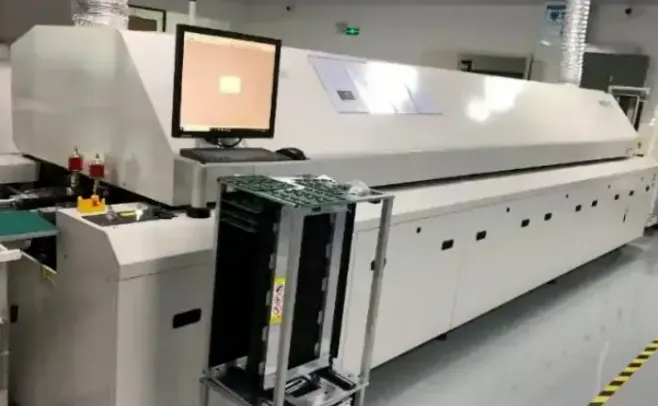
- Equipment selection: Choose reflow ovens that meet IPC-7801 requirements, with precise temperature control, consistent conveyor speed regulation, and integrated atmosphere control when required.
- Calibration and maintenance: Calibrate temperature profiles, conveyor speed, and atmosphere control routinely to maintain accuracy and repeatability. Perform preventive maintenance, including cleaning, lubrication, and replacement of consumable parts, to sustain equipment stability over time.
Solder Paste Selection and Use
Solder paste properties directly affect solder quality and process window. IPC-7801 outlines requirements for selecting and handling paste:
- Paste selection: Choose paste based on PCB materials, component types and sizes, and soldering requirements. Pastes should exhibit good wetting, appropriate viscosity/flow behavior, and reliable solidification characteristics.
- Storage and use: Store paste in a dry, cool, well-ventilated environment to prevent moisture uptake and oxidation. Follow the manufacturer's recommendations during handling and stencil printing to avoid defects.
- Reclaim and disposal: Manage unused and waste paste in compliance with environmental practices to minimize contamination and waste.
Process Optimization
Iterative optimization improves both quality and throughput. IPC-7801 recommends the following approaches:
- Preheat and soak optimization: Tune ramp rates, soak temperature, and dwell to balance flux activation and oxidation control, improving wetting and reducing defects.
- Speed optimization: Adjust conveyor speed to control heat input and temperature uniformity across the assembly for consistent joint formation.
- Atmosphere optimization: Set nitrogen or inert gas concentration and flow to reduce oxidation without disrupting thermal performance.
- Quality monitoring: Monitor temperature, conveyor speed, and atmosphere parameters in real time to detect and correct process drift promptly.
Practical Considerations for Implementation
Effective application of IPC-7801 in production requires disciplined execution:
- Operator training: Train operators on IPC-7801 requirements and process steps so that reflow runs are executed consistently and safely.
- Parameter tailoring: Adjust the thermal profile, conveyor speed, and atmosphere for the specific PCB stackup, component mixes, and solder paste chemistries.
- Equipment upkeep: Maintain and service reflow ovens regularly to ensure stable operation; replace worn parts and consumables in a timely manner.
- Closed-loop quality feedback: Implement a robust quality monitoring system; feed nonconformance data back to engineering and operations teams to drive continuous improvement.
Conclusion and Outlook
IPC-7801 provides a comprehensive framework for controlling SMT reflow processes and achieving consistent solder joint quality. By following the standard's guidance on thermal profiling, speed control, atmosphere management, inspection, equipment calibration, and paste handling, manufacturers can strengthen product reliability and production stability. As electronic technologies and applications continue to evolve, IPC-7801 will be updated to reflect new requirements. Manufacturers should continue adopting improved methods and tools to optimize reflow performance and maintain a competitive, high-quality manufacturing operation.