Surface-mount technology (SMT) assembly is a cornerstone of modern electronics manufacturing, yet many manufacturers find it increasingly difficult to run and scale profitably. Competitive intensity, rapid technology shifts, evolving customer expectations, and structural cost pressures combine to create a challenging operating environment. Understanding the technical and business mechanisms behind these pressures is essential to chart a practical path forward.
Competitive Intensity in the SMT Market
Market Saturation and Global Competition
Global electronics growth has attracted a large number of EMS and OEM manufacturers into SMT assembly, leading to saturated capacity in many regions. Major equipment vendors continue to launch higher-throughput, higher-accuracy platforms, and manufacturers worldwide compete on capability and price. As capacity expands faster than differentiated demand, pricing pressure intensifies, especially on commodity boards and standard assemblies.
Relentless Technology Updates
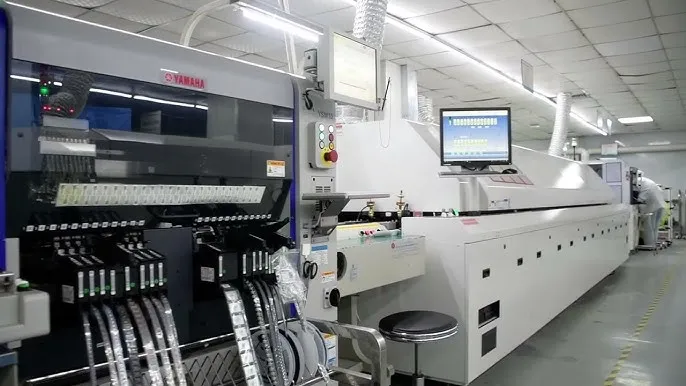
SMT technology is in constant flux: packages shrink, pin counts rise, and materials evolve. Fine-pitch BGAs, CSPs, QFNs with exposed pads, and ultra-miniature passives (down to 01005 and beyond) push equipment accuracy, solder paste printing precision, and thermal process control to their limits. Newer alloys, halogen-free materials, and complex stackups impose narrower process windows. To maintain capability, manufacturers must continuously invest in advanced printers, pick-and-place platforms, reflow ovens with tighter control, automated inspection, and process software—raising depreciation and training overheads. Falling behind the technical curve quickly erodes win rates for advanced assemblies.
Diverse and Elevated Customer Requirements
Customers increasingly expect short lead times, competitive pricing, and consistent quality—often simultaneously—with added demands for NPI agility, DFM feedback, design revisions at speed, and full traceability. Automotive, medical, and industrial clients impose stringent reliability and compliance requirements. Meeting these expectations requires tight process control, flexible scheduling, robust MES/traceability, and a capable engineering organization—cost centers that do not always translate into higher selling prices.
Profitability Challenges in SMT Operations
Structural Cost Drivers
SMT assembly involves capital-intensive equipment and skilled labor. Key cost elements include:
- Capital equipment and depreciation: printers, pick-and-place machines, reflow ovens, SPI/AOI/AXI, selective soldering, conformal coating, and test systems.
- Process consumables: solder paste, stencils and step-stencils, squeegees, flux, reflow nitrogen, cleaning agents, ESD packaging, and rework supplies.
- Engineering and programming: line setup, machine programming, feeder loading, stencil design, reflow profiling, test development, and FA/DFM effort.
- Quality and compliance: in-circuit test (ICT), functional test, X-ray inspection for hidden joints, reliability testing, and certification audits.
- Skilled labor and training: operators, technicians, process engineers, and quality engineers to maintain yields and manage changeovers.
Because customers are highly price-sensitive, much of this cost cannot be directly passed through. The result is sustained pressure on gross margin, especially where product mix leans toward standard consumer boards with minimal differentiation.
Margin Compression and Yield Sensitivity
Competitive bidding compresses pricing, while rising labor, materials, and energy costs elevate the breakeven point. In this context, yield becomes a dominant profitability lever. Defects such as tombstoning, solder bridging, head-in-pillow on BGAs, voiding on thermal pads, or insufficient solder wetting drive rework and scrap. Even a small drop in first-pass yield can erase margin, because rework adds labor time, consumes consumables, risks latent defects, and disrupts line flow. High-yield, stable processes are therefore central to sustainable profitability.
High-Mix, Low-Volume Dynamics
Many manufacturers serve high-mix, low-volume programs: frequent changeovers, short runs, and evolving designs. Each new lot requires:
- Stencil selection or fabrication, solder paste validation, and reflow profiling.
- Pick-and-place programming and feeder loading (including feeder verification, splice checks, and nozzle selection).
- SPI, AOI, and X-ray program development and golden sample qualification.
- Documentation, traveler setup, and MES parameterization for traceability.
These non-recurring engineering and setup activities can dominate cost for short builds. Without efficient NPI workflows, standardized libraries, and fast programming, overhead accumulates and erodes profitability on small or prototype orders.
Operations and Process Control: Why Execution Is Hard
Printing: The First Yield Gate
Solder paste printing quality determines a large portion of SMT defects. Fine-pitch apertures, microvia-in-pad designs, and dense thermal pads challenge paste release and deposit consistency. Critical controls include stencil aperture design (including reduced apertures and windowpane patterns), stencil thickness or step-downs, nanocoatings, squeegee pressure and speed, separation speed, and paste rheology. Inline SPI is essential to monitor deposit volume and shape, enabling rapid correction before defects propagate downstream.
Placement: Accuracy and Component Integrity
Modern components demand precise placement force and accuracy, correct nozzle selection, and effective vision algorithms to handle diverse body colors and markings. Moisture-sensitive devices require controlled handling to prevent popcorning. Board warpage and panelization strategies affect coplanarity and pickup stability. Feeder reliability, splice quality, and nozzle maintenance are all practical determinants of line uptime and quality.
Reflow: Narrow Thermal Process Windows
Reflow profiles must balance peak temperature, soak time, ramp rate, and time above liquidus for mixed components and different thermal masses on the same PCB. Lead-free solders and high thermal-mass boards narrow the process window. Nitrogen can improve wetting and reduce oxidation but adds operating cost. Warpage during reflow can cause BGA opens or QFN corner lift. Thermal pad voiding affects thermal performance and reliability. Closed-loop profiling, oven maintenance, and material pairing (paste, flux, finishes) are crucial to stable results.
Inspection, Test, and Rework
Inline SPI and AOI reduce escapes and shorten feedback loops, while AXI aids hidden joint verification for BGAs and LGA packages. ICT and functional test detect electrical defects early. Effective rework on fine-pitch and BGA parts requires skilled technicians, well-maintained rework stations, and proper thermal profiles to avoid pad damage and latent reliability issues. Excessive rework is a symptom of insufficient upstream control and a direct drain on margin.
Traceability, MES, and Compliance
Automotive, medical, and aerospace programs often mandate unit-level traceability: lot codes for paste and components, machine parameters, reflow profiles, AOI images, operator IDs, and timestamps. MES integration and data retention add cost but are essential for liability control and continuous improvement. Certifications such as ISO 9001, IATF 16949, and ISO 13485 introduce process rigor and audit overhead that must be built into the operating model.
Supply Chain Management Under Volatility
SMT assembly depends on stable access to thousands of components, each with its own lifecycle, package options, and MSL constraints. Volatile lead times, sudden allocations (e.g., MLCCs), EOL notices, and counterfeit risks complicate procurement and kitting. Best practices include dual sourcing, approved vendor lists, lifecycle monitoring, incoming inspection protocols, supplier scorecards, and safety stock policies for critical items. Close collaboration with customers on approved alternates and BOM risk mitigation reduces last-minute line stops and expedites—both profit killers.
Strategies for Differentiation and Profitability
Technical Innovation and Focused Differentiation
Competing solely on price is rarely sustainable. Manufacturers can differentiate by:
- Investing in closed-loop process control: SPI-to-printer feedback, AOI analytics, and continuous reflow profile monitoring to stabilize yield.
- Building credible NPI and DFM capabilities: early design feedback on pad geometry, stencil strategy, via-in-pad filling, component spacing, and panelization to reduce risk and cost.
- Specializing in challenging segments: fine-pitch, high-reliability, harsh-environment, or conformal coating assemblies where capabilities command better margins.
- Leveraging digitalization: MES integration, real-time dashboards, and data-driven maintenance to increase uptime and shorten changeovers.
Supply Chain Optimization
Profitability improves when materials flow reliably at predictable cost. Practical levers include vendor-managed inventory for fast-movers, long-term agreements on critical passives, second-source qualification during design, kitting accuracy with barcode/RFID controls, and proactive lifecycle management. A stable materials pipeline reduces expedites, line idle time, and rework induced by substitute components.
Market Development and Service Diversification
Expanding services beyond bare assembly can open additional revenue streams and strengthen customer stickiness:
- Value-added services: conformal coating, potting, selective soldering, functional test development, environmental stress screening, and box build.
- Industry verticals: targeting segments with defensible qualification barriers and predictable demand cycles, such as automotive subassemblies or medical devices.
- After-sales support: repair and refurbishment services that leverage core process expertise.
Diversification should align with existing capabilities to avoid diluting focus and increasing overhead without return.
Cost Discipline Through Process Excellence
Systematic waste elimination has direct margin impact. Examples include standardizing feeder setups and libraries to cut changeover time, using common stencils or step-down strategies across families, optimizing panel design to improve utilization and reduce warp, and deploying SMED (single-minute exchange of die) principles on the line. Monitoring first-pass yield, OEE, and defect Pareto charts guides targeted improvements that stick.
People and Capability Development
Skilled operators, technicians, and engineers translate equipment capability into yield. Structured training on printing, placement, and reflow fundamentals; disciplined root-cause analysis; and a culture that treats inspection as a feedback tool rather than a gate are foundations of sustainable performance. Retaining experienced staff reduces the hidden costs of frequent retraining and process instability.
Conclusion and Outlook
SMT assembly is widely perceived as hard to execute and even harder to scale profitably because it sits at the intersection of intense price competition, fast-moving technology, demanding quality expectations, and complex supply chains. The path forward is not a single silver bullet but a coherent strategy: differentiate technically where capabilities matter, stabilize the process to protect yield, build resilient supply chains, streamline NPI and changeovers, and invest in the people and systems that turn capital assets into repeatable quality. As technology and market requirements continue to evolve, manufacturers that adapt their processes, tooling, and business models with discipline and focus will be best positioned to capture opportunity while maintaining healthy margins.
In parallel, staying alert to policy changes, trade dynamics, and demand shifts helps calibrate capacity and risk posture. Regularly revisiting portfolio mix, customer selection, and service offerings ensures alignment between operational strengths and market needs. With rigorous execution and targeted differentiation, SMT assembly can remain both technically excellent and commercially viable.