In production we run a full HDI DFM review through CAM before any panel is built. CAM engineers check registration, copper balance, drill to copper clearance, solder mask compensation, and stackup symmetry against our actual process capabilities. Any issue gets flagged with EQ notes to the customer for confirmation before we release the job to the floor.

What the CAM review actually checks in HDI jobs
On the CAM side the HDI DFM review starts with layer alignment and registration analysis. We simulate the entire sequential lamination sequence to predict movement and set compensation values. Microvia placement, annular ring sizes, and copper to hole clearances get measured against our minimum capabilities. Low copper density zones get dummy copper suggestions automatically.
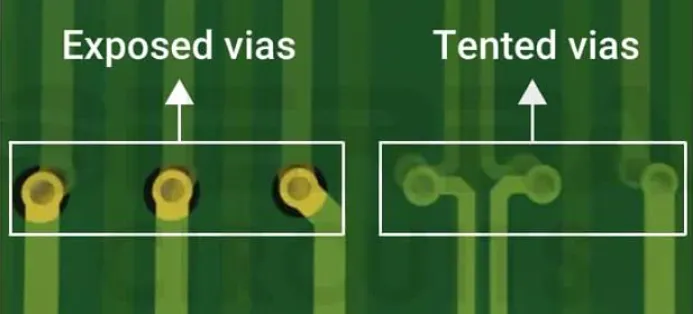
Solder mask openings, bridge widths, and trace to mask clearance are verified next. We also check impedance-critical layers for copper thickness variation and flag any stackup asymmetry that could cause warpage.
Why early HDI DFM review catches issues that later steps cannot fix
HDI production involves multiple lamination cycles, laser drilling, and plating steps where errors compound quickly. Once inner layers are pressed, changing drill programs or copper features becomes nearly impossible without scrapping the panel. The HDI DFM review acts as the gate that prevents these costly mistakes by catching problems while the design is still digital.
Our equipment has fixed mechanical tolerances. What looks fine on a designer’s screen can exceed those limits once panels are scaled to production size. CAM simulation reveals these gaps before material is cut.

How EQ confirmation integrates with the DFM process
Every flagged item in the HDI DFM review generates a clear EQ (Engineering Query) document with proposed solutions, affected tolerances, and expected yield impact. We send this to the designer with specific questions — for example, whether we can add dummy copper in certain areas or adjust a via pad size. Production only starts after written confirmation.
This step prevents assumptions. Many times the designer can approve a minor change that saves significant time and cost on our end.
What happens when HDI DFM review is skipped or rushed
Without proper review we see registration failures between layers, broken microvias, insufficient annular rings after plating, and mask alignment problems. These issues usually appear during AOI or electrical test, leading to batch rejection or heavy rework. Delivery gets delayed while we debug or remake panels, and the customer ends up with higher costs and longer lead times.
In extreme cases entire lots are scrapped when inner layer problems cannot be repaired. The factory absorbs material and labor loss while the schedule slips.
Common problems caught during standard HDI DFM review
- Insufficient clearance for laser drilled vias
- Unbalanced copper causing warpage risk
- Solder mask bridge widths below process minimum
- Stackup asymmetry between build-up layers
- Drill to copper violations on dense areas

How factories turn DFM findings into production-ready adjustments
After EQ confirmation we apply all approved changes in CAM — scaling, compensation, dummy copper addition, and panelization adjustments. We then run a final DRC and generate the full set of production files with embedded notes for each station. Panel layout is optimized for our press sizes and drilling machines to maximize utilization while keeping registration tight.
This preparation means the first panel coming off the line has a much higher chance of passing all inspections. The HDI DFM review directly translates into stable process parameters from lamination through final routing.
When we can shorten or adjust the HDI DFM review
For repeat orders with minor revisions we can streamline the review by comparing changes only. Simple HDI designs with proven stackups and good previous yields may need lighter checks. However, any new high-density or tight-tolerance job goes through the full HDI DFM review process. The time saved on review is usually lost many times over if problems reach the production floor.
Early and thorough DFM remains the most effective way we prevent manufacturing problems in HDI work. Good communication during this stage makes the difference between smooth production and constant firefighting.