FPC coverlay peeling rarely shows up at electrical test. It appears later—after reflow, after thermal cycling, or after months in the field—when the film starts lifting at the edges or around openings. Once the bond fails, copper is exposed, moisture and contaminants move in, and flex life drops fast. Most of the time the cause is already locked in before the board ever leaves the fab.
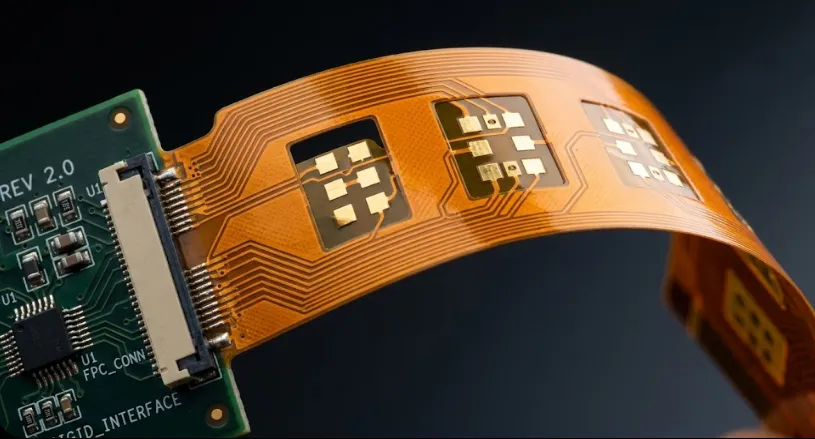
The coverlay is just a polyimide film with a thin adhesive layer. That adhesive is the entire mechanical and environmental barrier. When it loses grip, the flexible PCB coverlay failure is already in progress.
Adhesive Flow, Lamination Pressure, and Surface Contamination
Three things decide whether the coverlay stays down: adhesive quality, how it is pressed, and what sits on the copper before the press cycle starts.
Acrylic adhesives are common because they flow well at moderate temperature. Epoxy systems hold better at high temperature but need tighter process windows. If the adhesive is under-cured, too thin, or has already absorbed moisture in storage, it never develops full bond strength. You see this as edge lift that starts within weeks of assembly.
Lamination itself is unforgiving. Insufficient pressure leaves voids. Uneven platen temperature creates soft spots. Vacuum that is pulled too late traps air. The result is a bond that looks acceptable on first inspection but separates under thermal stress or repeated bending.
Contamination is the quiet killer. Finger oils, residual etchant, incomplete oxide removal, or even microscopic particles left after cleaning prevent the adhesive from wetting the copper. Plasma treatment or chemical micro-etch helps, but only if the surface stays clean until the coverlay is applied. Any delay and the benefit disappears.
High Temperature and Long-Term Environmental Stress
Most coverlay adhesives have a practical upper limit around 150–180 °C continuous. Above that the polymer chains start to break down. CTE mismatch between the polyimide film, the adhesive, and the copper does the rest. Each thermal cycle works the interface a little more. Eventually the bond fatigues and the film lifts.
Moisture makes it worse. Polyimide absorbs water. When the board later sees heat, that moisture turns to vapor and drives the coverlay away from the copper. You see this after reflow or after humidity testing. Boards that pass initial bend tests can still fail months later in a high-humidity environment because the adhesive has hydrolyzed.
Flex applications add mechanical cycling on top of the thermal load. Every bend puts peel stress on the coverlay edges. If the adhesive is already weakened, the lift starts at the highest stress points—usually near openings or at the transition from stiffener to free flex.
Coverlay Window Design That Leaves Too Little Bonding Area
Design decisions often create the weak spots that process variations later exploit. Coverlay openings that sit too close to the copper edge leave almost no adhesive margin. A 0.1 mm or smaller overlap is common in dense layouts. That is not enough once the adhesive starts to degrade.
Sharp internal corners in the window concentrate stress. Laser or punch tooling that leaves a slight burr or adhesive squeeze-out can also create a local peel initiator. High-density pad arrays with many small openings simply reduce the total bonded area. The remaining adhesive has to carry more load than it was designed for.
Edge clearance to the board outline matters as well. Coverlay that ends right at the routed edge has no continuous bond path. Any mechanical damage or thermal expansion at that free edge starts the peel and it travels inward.
Manufacturing Controls That Keep the Coverlay Bond Intact
Surface preparation is non-negotiable. Copper must be clean and oxide-free immediately before coverlay lay-up. Plasma or micro-etch followed by controlled handling is standard for high-reliability work. Skipping it to save time is a common source of later FPC coverlay peeling.
Coverlay material itself needs dry storage and limited open time after removal from the bag. Moisture-laden adhesive never recovers full strength. Lamination parameters—temperature ramp, pressure, vacuum time, dwell—must stay inside the adhesive supplier's window. Running hotter or faster to increase throughput is a frequent reason for field failures.
After lamination, visual and mechanical checks catch early problems. Edge lift that is already visible under magnification will only get worse. Some fabs add a short thermal stress screen before final inspection. It is not a substitute for process control, but it does weed out the worst lots.
On the design side, keep a minimum adhesive overlap of 0.2–0.3 mm around openings where possible. Avoid sharp internal corners. Give the coverlay a continuous bond path at the board edge. Choose an adhesive system rated for the actual operating temperature plus margin, not just the short-term reflow profile.
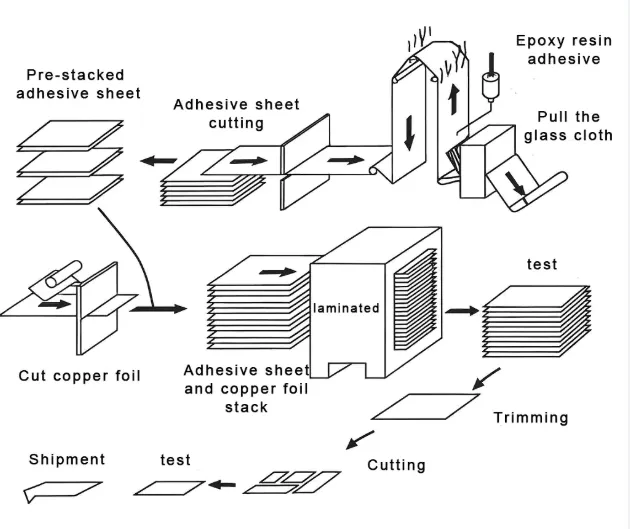
What Actually Prevents Flexible PCB Coverlay Failure
Most coverlay lift is not a mysterious material failure. It is the cumulative result of marginal adhesive, incomplete surface prep, aggressive window design, and process shortcuts. Fix any one of those and the problem often disappears. Fix all of them and the coverlay stays down for the life of the product.
When you review a layout, look first at the bonding area around every opening and at the board edge. Then confirm the adhesive system matches the temperature and humidity the board will actually see. Finally, make sure the fab treats surface cleanliness and lamination parameters as critical process steps, not optional ones. That combination stops the majority of FPC coverlay peeling before it starts.