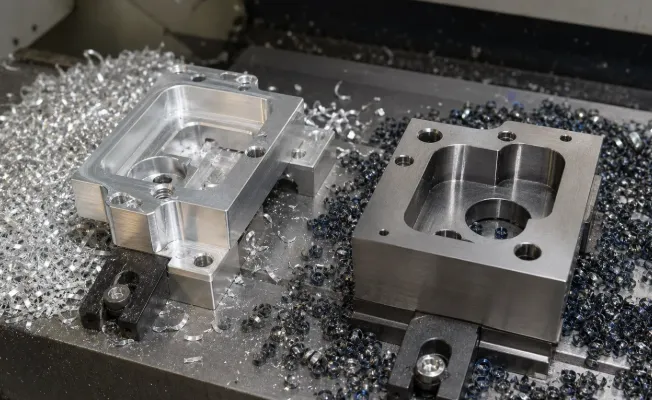
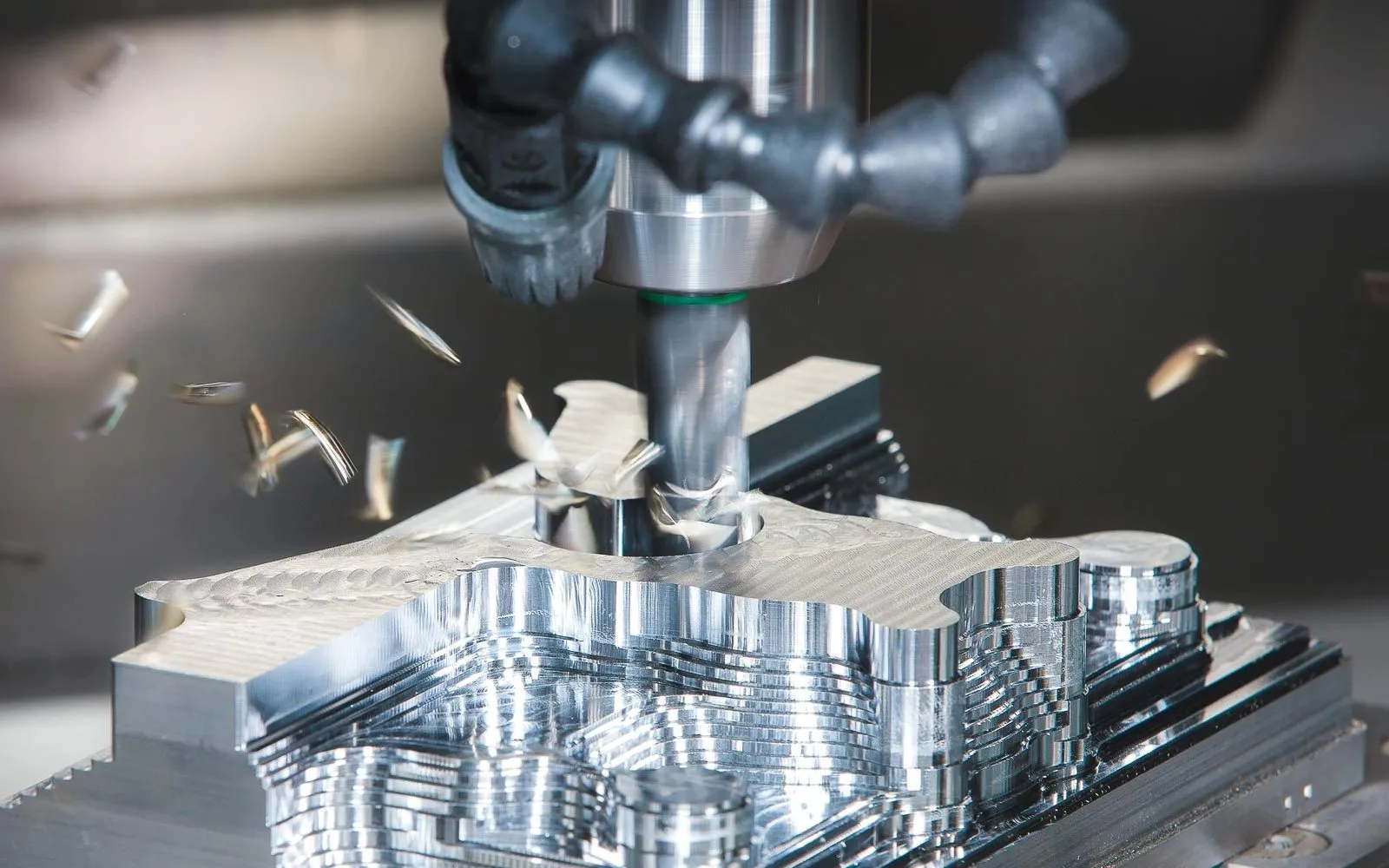
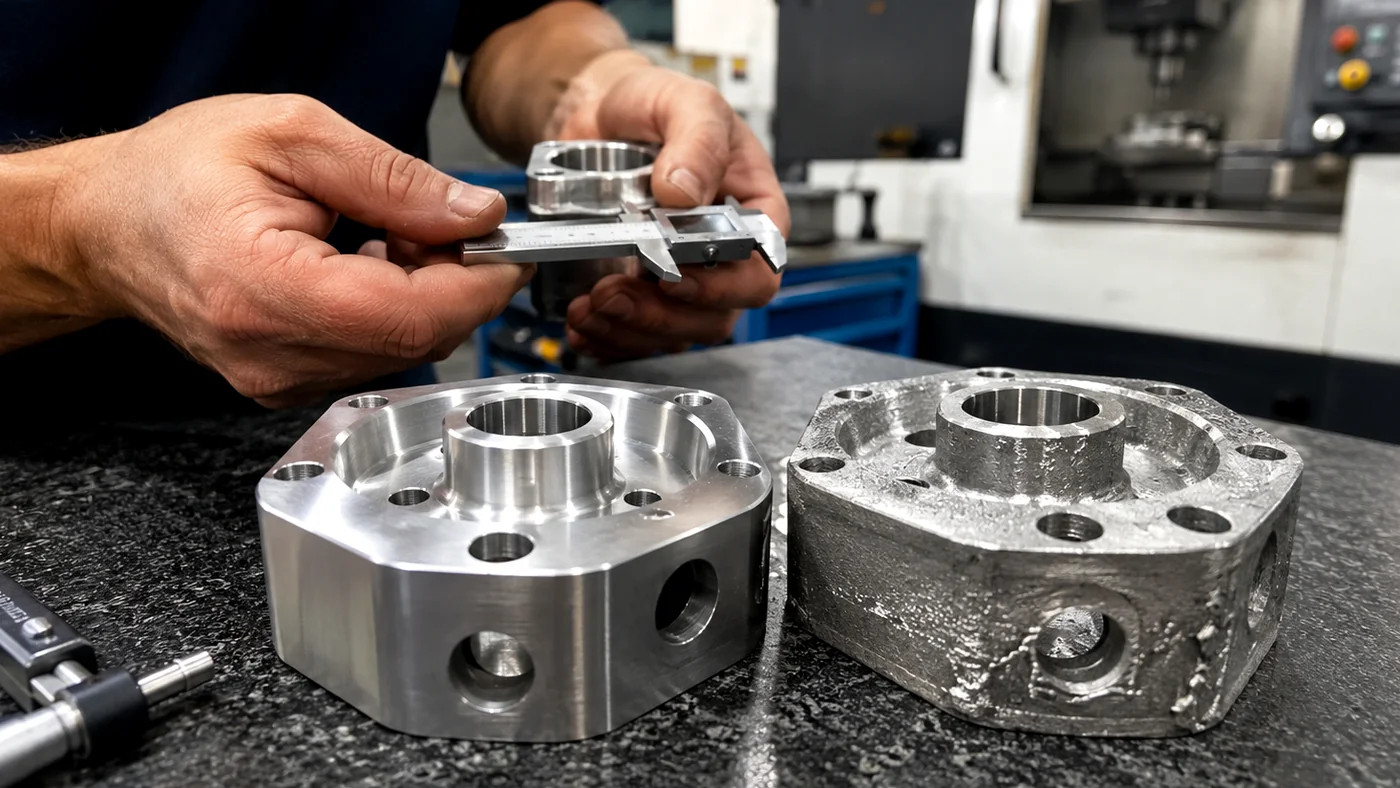
For the majority of functional CNC parts, 6061-T6 aluminum or common engineering plastics remain the practical starting point in prototype work. Once the design moves into production volumes, the same materials are often retained, but only if they satisfy strength, certification, and long-term consistency requirements. When those requirements tighten, shops shift to higher-spec alloys such as 7075-T6, 17-4PH stainless, or certified engineering plastics. The real decision is not which material is "better," but which set of trade-offs fits the production stage you are actually in.
Where Prototype and Production Material Choices Split
Prototype CNC material selection prioritizes machineability, stock availability, and short lead time. Production CNC material selection prioritizes lot-to-lot consistency, material certificates, and total cost at volume. Most shops will quote 6061-T6 or POM for a first-article run without hesitation. The same quote for a 500-piece production order will immediately ask for mill certificates, heat-lot control, and sometimes a different alloy if the design loads exceed what 6061 can reliably deliver.
Quick Engineering Comparison
| Factor | Prototype Stage | Production Stage |
|---|---|---|
| Typical default material | 6061-T6 aluminum, ABS, POM | Same or 7075-T6 / 304-316 / 17-4PH / PEEK |
| Material cost impact | Secondary to machine time | Primary driver at volume |
| Lead time sensitivity | Stock availability critical | Certificate and lot control critical |
| Machinability | High priority (fast chips, low tool wear) | Balanced against final properties |
| Certification | Usually none required | Mill certs, RoHS, REACH common |
| Surface treatment consistency | Often skipped or basic | Must be process-controlled |
| Risk if switched later | Low (design still fluid) | High (fit, strength, finish change) |
Decision Matrix: Which Material Path Fits Your Priority
| If your priority is... | Better Choice | Why |
|---|---|---|
| Fastest functional prototype | 6061-T6 or POM | Stock is everywhere, machines fast, low risk of tool breakage |
| Lowest unit cost at 50–500 pcs | Keep prototype material if strength allows | Avoids requote and new tool path development |
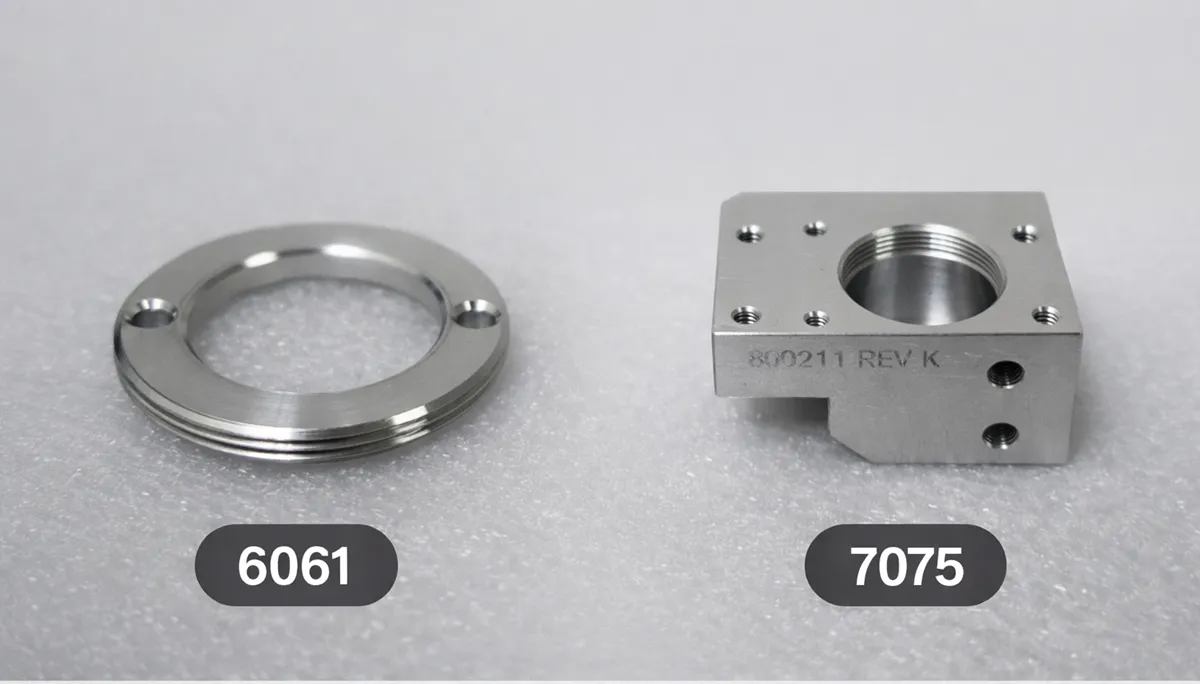
| Highest strength-to-weight | 7075-T6 for production | Prototype in 6061 is fine for fit; production needs the higher yield |
| Full material traceability | Production-grade certified stock | Prototype stock rarely carries heat-lot numbers |
| Corrosion or temperature extreme | 316 / 17-4PH or PEEK | Prototype plastics or 6061 will not survive long-term exposure |
| Minimal redesign risk | Same alloy from day one | Dimensional and finish behavior stay consistent |
How Material Selection Strategy Changes Between Stages
In prototype work the question is simple: can we cut this tomorrow and will the part hold together for testing? That is why 6061-T6 and free-machining plastics dominate early quotes. The material only has to be "close enough." In production the question becomes: will every piece from every heat lot meet the same mechanical and surface requirements for the life of the product? That forces tighter control on alloy grade, temper, and supplier qualification.
From a shop floor standpoint we see the same pattern repeatedly. A designer machines the first five pieces in 6061 because it is on the shelf. When the order scales to several hundred, the drawing still calls for 6061, but purchasing now demands certificates and the anodizing house starts rejecting lots that do not meet color standards. At that point the material choice has already locked in process risk that could have been avoided by specifying production intent earlier.
Where Cost Differences Become Visible
At one to ten pieces the material cost is almost irrelevant next to programming and setup time. A bar of 6061 or a block of POM is cheap enough that shops rarely argue about it. Once quantity moves past fifty pieces, material cost per part and scrap rate start to matter. 7075-T6 costs more per kilogram and machines slower, so the hourly rate climbs. Stainless adds tool wear and longer cycle times. Engineering plastics such as PEEK carry both high raw-material price and slower feeds.
The hidden cost is requalification. Changing from a prototype plastic to a production metal after design freeze usually forces a second round of dimensional verification and sometimes a redesign of press-fit or snap features. Most CNC manufacturers will flag this during the production DFM review because it is a common source of delayed shipments and unexpected tooling charges.

Lead Time and Material Availability Realities
Prototype lead times are driven almost entirely by whether the material is already on the shop floor or at a local distributor. 6061-T6 plate and bar in common sizes are stocked by virtually every CNC house. Specialty tempers, stainless grades with specific chemistry, or certified plastics often require three to ten extra days just to arrive. In production the lead-time risk shifts from availability to documentation. A heat of steel may be on the floor, but if the mill certificate is missing or the lot number cannot be traced, the parts cannot ship under most quality systems.
We routinely see prototype orders leave the building in three to five days while the corresponding production order sits for a week waiting on paperwork. That is not a machining issue; it is a material control issue that only appears once the part moves out of the prototype regime.
Machining Performance and Process Stability
6061 and most free-machining plastics produce clean chips at high feed rates and leave predictable surface finishes. That is ideal for rapid iteration. Production materials that deliver higher strength or better corrosion resistance usually reduce those advantages. 7075 machines acceptably but generates more heat and tool wear. Stainless requires lower speeds, coolant discipline, and more frequent tool changes. PEEK and Ultem demand sharp tools and controlled spindle speeds or the surface burns.
In production these differences translate directly into cycle-time variation and higher scrap risk if the process is not locked down. Shops therefore treat prototype material runs as "soft" processes and production material runs as "hard" processes that need first-article inspection and statistical process control before full release.
Certification and Traceability Requirements
Prototype parts almost never require material certificates. Production parts for aerospace, medical, automotive, or even many industrial customers do. The moment a drawing notes "material certification required," the shop must buy certified stock, maintain chain-of-custody records, and often perform incoming verification. That adds both cost and lead time that never appear on a prototype quote.
From the factory side we prefer customers to declare certification needs at the prototype stage even if the first articles do not need them. It forces the design to use a grade that is actually available with papers, avoiding a later scramble when production starts.
Surface Treatment Consistency Between Stages
Prototype parts frequently leave the machine with a as-machined finish or a quick bead blast. Production parts usually require anodizing, passivation, plating, or powder coat that must meet color, thickness, and adhesion specifications across every lot. Different alloys respond differently to the same surface process. 6061 anodizes cleanly and predictably; 7075 can show color variation if the chemistry is not controlled; stainless passivation results depend on the exact grade and surface preparation.
When a design moves from prototype material to a production alloy without updating the finish specification, the anodizing or plating house often rejects the first production lot. That rejection is expensive and entirely avoidable if the surface process is validated on the final material during the prototype phase.
Factory Perspective on Prototype-to-Production Material Decisions
During CAM review we look first at whether the material called out for production is the same alloy and temper that was used for the prototypes. If it is different, we immediately flag dimensional risk, tool-path changes, and potential surface-finish shifts. Panel or bar utilization also changes: prototype jobs often run on leftover stock; production jobs require efficient nesting and consistent grain direction.
Process stability is the next concern. Soft prototype materials forgive small programming errors. Harder production materials amplify them into chatter, tool breakage, or out-of-tolerance features. Inspection requirements rise as well. Prototype first articles may be checked with a caliper; production lots often need CMM programs and material verification reports.
Most experienced shops will recommend locking the production material as early as the second or third prototype iteration. That single decision removes the majority of the surprises that appear when the first production order is placed.
Which Option Should You Choose?
Choose prototype-oriented materials (6061-T6, POM, ABS) if you:
- Need parts in days rather than weeks
- Are still iterating geometry and fit
- Do not yet require material certificates
- Can accept lower long-term strength or corrosion resistance for testing
- Want the lowest possible machine time and tool wear
Choose production-oriented materials (same alloy with certs, 7075, stainless, PEEK) if you:
- Already know the final mechanical and environmental requirements
- Need lot traceability and certificates from the first production order
- Expect volumes above roughly fifty pieces
- Require consistent surface finishes across multiple lots
- Want to eliminate material-driven redesign risk later
The cleanest path is to prototype in the same material that will be used for production, even if that means slightly longer lead times or higher cost on the first articles. When that is not practical, document the differences explicitly so the production DFM review can address them before the first production lot is cut.
Frequently Asked Questions
Q1: Can I prototype in 6061 and then switch to 7075 for production without problems?
A1: Dimensionally the two alloys are close, but 7075 machines differently, anodizes with different color response, and has lower corrosion resistance. Expect at least a first-article verification and possible minor drawing updates for finish and strength notes.
Q2: Why do production quotes sometimes take longer even when the material is the same?
A2: Production orders usually require material certificates, lot control, and more formal inspection. The material itself may already be on the floor; the documentation and quality system steps add the extra days.
Q3: Is it worth prototyping in the exact production plastic or metal?
A3: Yes, whenever the material is available in plate or bar form. It removes the largest source of later surprises in fit, strength, and surface finish behavior.
Q4: How much does material choice actually affect CNC cycle time?
A4: Soft materials such as 6061 or POM can run 30–50 % faster than 7075 or stainless under the same tool path. That difference compounds at volume and directly affects quoted price.
Q5: When should surface treatment be validated on the final material?
A5: During the last prototype iteration. Running the intended anodize, passivation, or plating process on the production alloy early prevents color, thickness, or adhesion rejects once volume starts.
Q6: What is the biggest material-related risk when moving from prototype to mass production CNC?
A6: Discovering that the production material behaves differently enough to force a design change after tooling and process development are already complete. Locking material early is the single most effective way to avoid that risk.