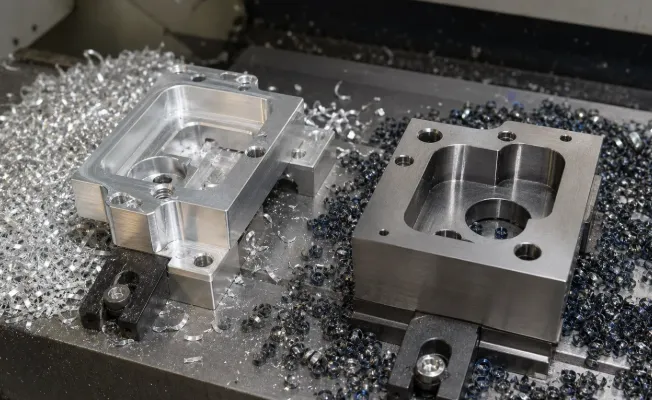
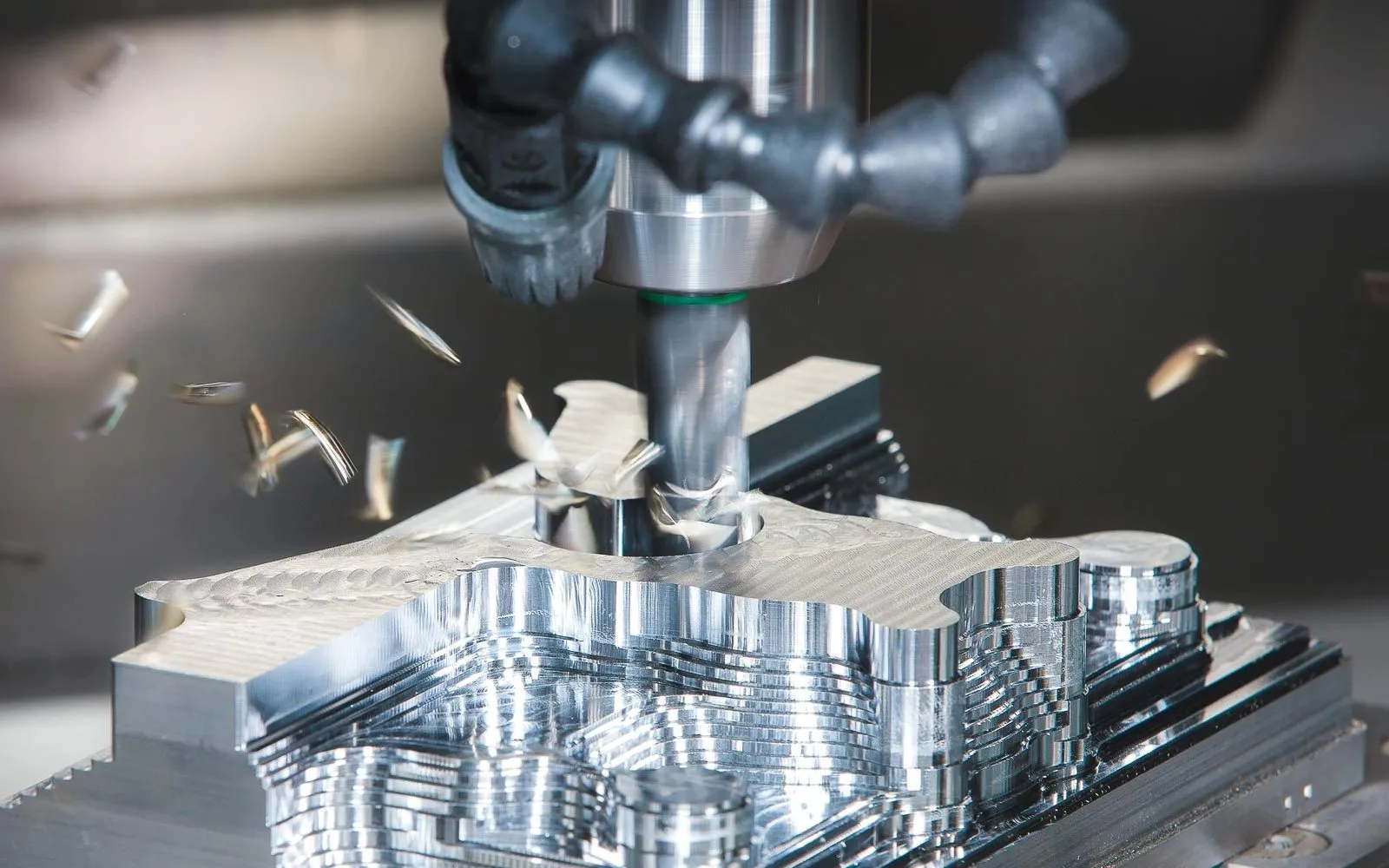
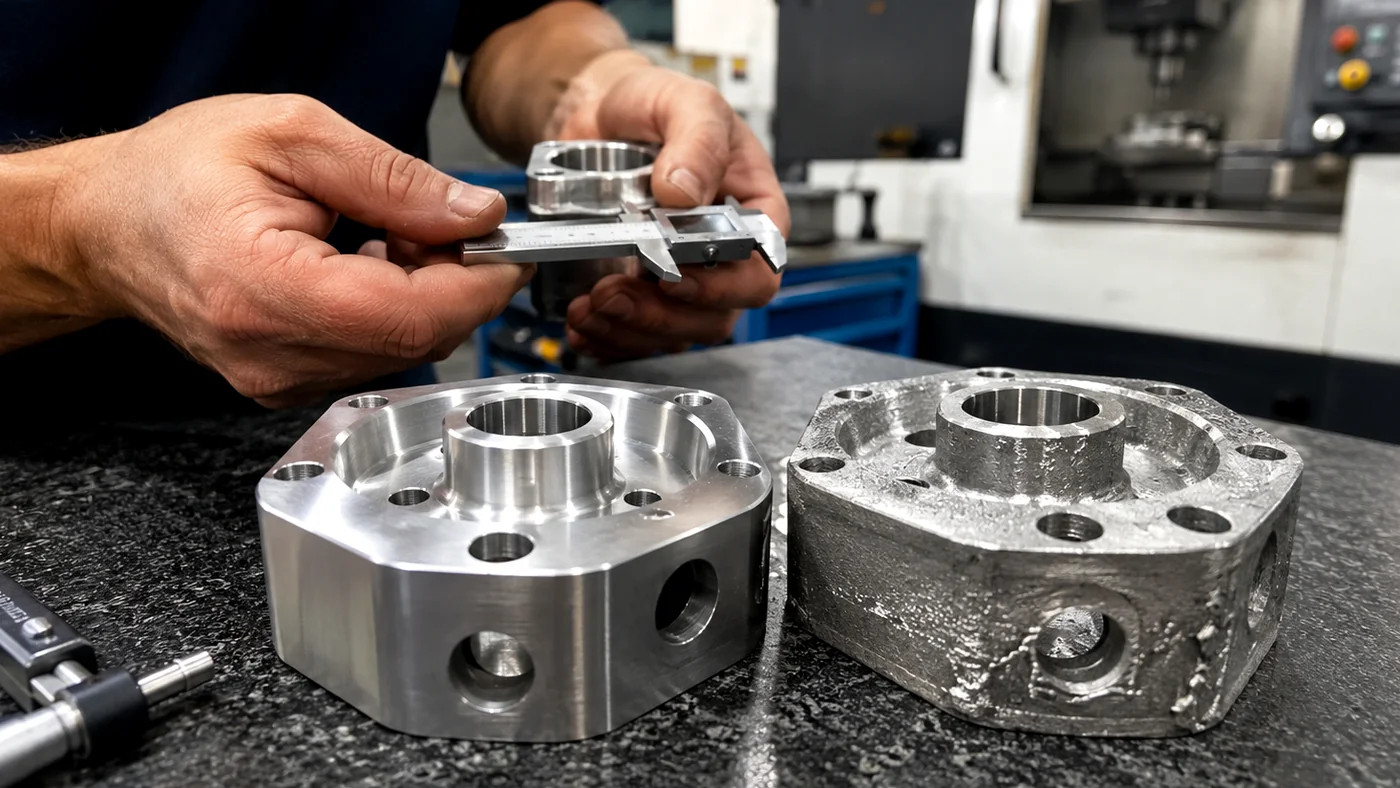
In production we treat material properties as the first hard constraint on every CNC job. When the design file lands, the process engineer does not start with tool paths. We start by mapping the stated material against the actual strength, hardness, thermal behaviour and machinability numbers we know from the shop floor. If those numbers do not line up with the spindle torque, tool coating and fixture rigidity we have available, the job is flagged before a single tool is loaded. This is the practical CNC material properties guide we use every day: match the numbers to the machine, not the other way around.
Where tensile strength and hardness force the first process change
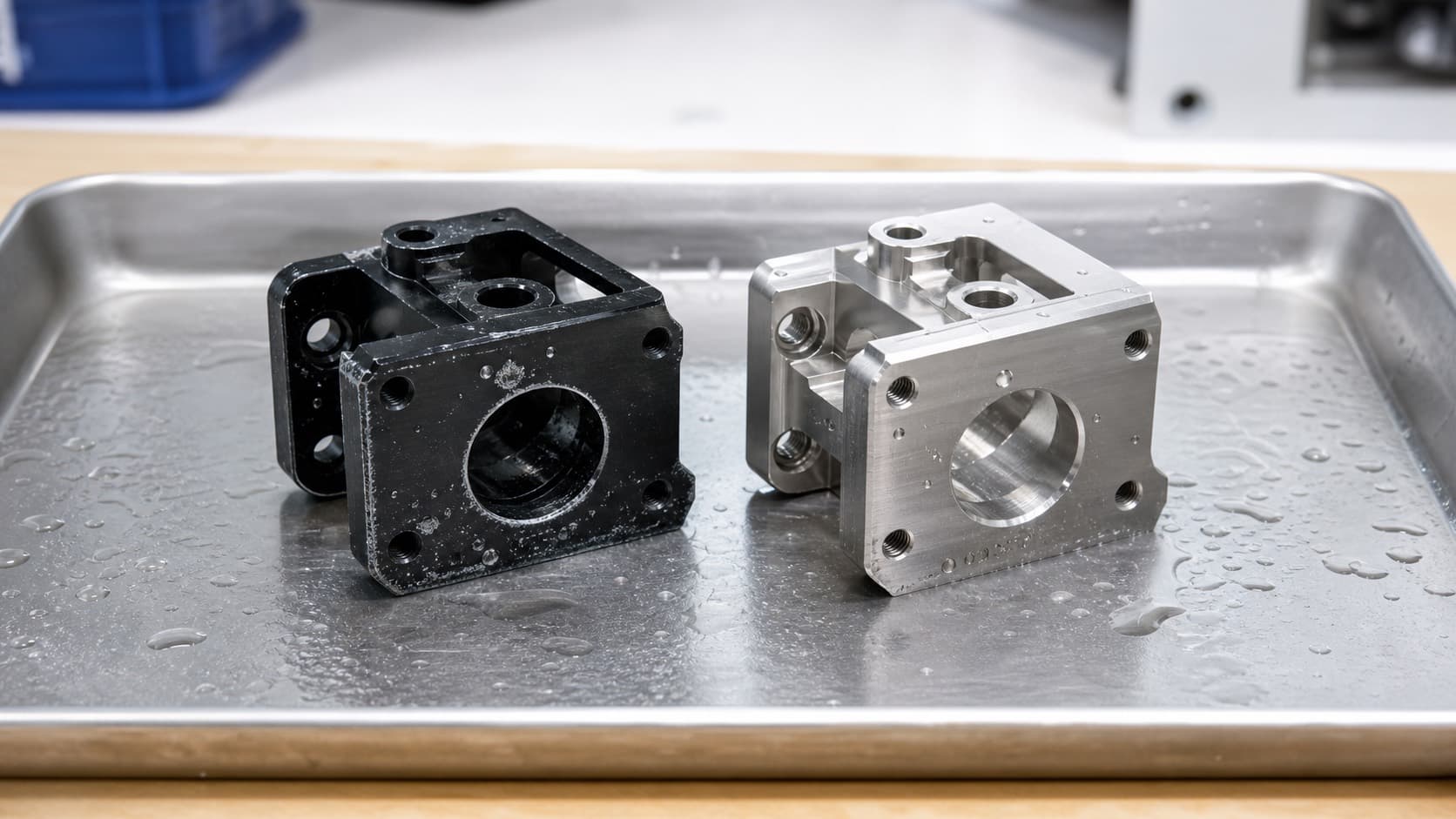
Tensile strength and hardness are the two properties that immediately change feeds, speeds and tool geometry. A 6061 aluminium bar at 310 MPa tensile and 95 HB will run at 300–400 m/min with a standard carbide end mill. Switch to 304 stainless at 520 MPa and 180 HB and the same tool will chatter or wear out in minutes unless surface speed drops to 80–120 m/min and chip load is reduced. Hardness above 35 HRC usually forces us onto coated carbide or ceramic tooling and often into climb-milling only strategies. If the drawing calls for a material whose hardness sits near the upper limit of our standard tooling, we either change the tool grade or ask for a hardness reduction. Ignoring this shows up as broken tools, tapered walls and out-of-tolerance holes within the first set-up.
Density enters the picture as soon as the part is large or thin-walled. Higher-density alloys (steel, titanium, copper) increase cutting forces and also increase the mass that the fixture must hold without vibration. On a 5-axis machine we regularly see light-alloy parts stay within 0.02 mm while the same geometry in steel drifts 0.05 mm simply because the cutter is fighting more mass and the part is storing more residual stress.
How thermal conductivity and expansion show up as dimensional drift on the machine
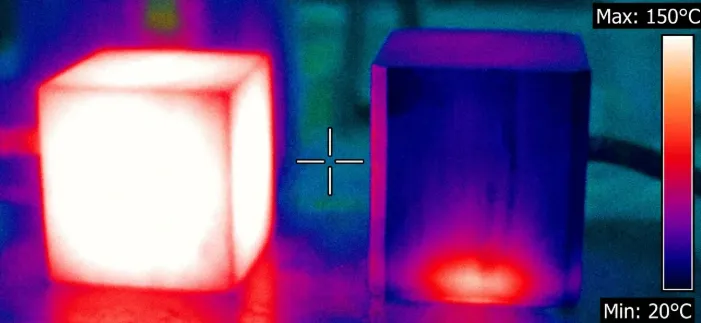
Thermal conductivity decides how fast heat leaves the cut zone. Aluminium and copper pull heat away quickly, so the part stays close to ambient and the tool lasts longer. Stainless and titanium keep the heat at the edge, raising local temperature and expanding the material while it is still being cut. Coefficient of thermal expansion then multiplies the problem. A 200 mm aluminium part heated 30 °C will grow roughly 0.14 mm; the same length in titanium grows only 0.05 mm, but the titanium is already hotter because heat cannot escape. In production we therefore leave a finishing pass for high-CTE or low-conductivity materials and often flood-cool or air-blast to keep temperature rise under control. When these properties are ignored, the first-article inspection shows holes that are oversized when hot and undersized after cooling, or flatness that fails once the part returns to room temperature.
Electrical conductivity, corrosion resistance and the downstream effects we cannot machine away
Electrical conductivity is rarely a cutting issue, but it dictates post-machining steps. High-conductivity copper or aluminium parts that will carry current must keep surface integrity; any work-hardening or oxide layer left by aggressive feeds becomes a contact-resistance problem later. Corrosion resistance works the same way. 316 stainless or anodised aluminium may machine cleanly, yet if the drawing specifies a salt-spray requirement and the material is only 304 or plain 6061, no amount of surface finish will pass the test. We therefore check the corrosion and conductivity notes at the same time we check hardness. Changing material after the first batch is already cut is the most expensive correction we see.
Machinability itself is the combined result of all the above. We keep a simple internal rating: free-machining steels and most aluminiums sit at 100 %, 304 stainless around 45 %, titanium alloys 20–30 %, and some nickel alloys below 15 %. The rating tells the programmer how much cycle time to add and which tool life expectancy to quote. Low-machinability materials also force us into more frequent tool changes and sometimes into separate roughing and finishing set-ups to keep dimensional stability.
Selecting material against the real functional demand instead of the catalogue name
When a designer asks which material to use, we reverse the question: what does the part actually have to survive? Structural load → tensile and yield strength first. Tight thermal cycling → CTE and conductivity. Electrical path → conductivity and surface finish. Outdoor or chemical exposure → corrosion rating. Weight-critical → density. Only after those four or five numbers are fixed do we look at machinability and cost. A common failure mode is choosing "the strongest steel" when the real requirement is moderate strength plus high corrosion resistance; the stronger alloy then costs more to machine and still fails the salt-spray test. Another is specifying titanium for weight saving on a part that never sees high temperature, when a high-strength aluminium would have met the load and cut in one-third the time.

Common alloys we actually run and the numbers that matter on the floor
The table below is the short list we keep next to the CAM stations. Values are typical and used only for first-pass process decisions; final acceptance still follows the material certificate.
6061-T6 aluminium: tensile ~310 MPa, hardness ~95 HB, density 2.7 g/cm³, thermal conductivity high, CTE ~23 µm/m·°C, excellent corrosion after anodising, machinability 100 %.
7075-T6 aluminium: tensile ~570 MPa, hardness ~150 HB, density 2.8 g/cm³, still high conductivity, same CTE range, lower corrosion resistance, machinability ~80 %.
304 stainless: tensile ~520 MPa, hardness ~180 HB, density 8.0 g/cm³, low thermal conductivity, CTE ~17 µm/m·°C, good corrosion, machinability ~45 %.
316 stainless: similar strength and hardness to 304, density same, better chloride resistance, machinability still ~45 %.
Ti-6Al-4V: tensile ~900 MPa, hardness ~36 HRC, density 4.4 g/cm³, very low thermal conductivity, CTE ~9 µm/m·°C, excellent corrosion, machinability 20–25 %.
C360 brass: tensile ~340 MPa, hardness ~80 HB, density 8.5 g/cm³, high conductivity, good corrosion, machinability 100 %+.
POM (Delrin): tensile ~70 MPa, hardness low, density 1.4 g/cm³, low thermal conductivity, high CTE, no corrosion issue, machinability excellent but watch for melting and chip evacuation.
These numbers tell us immediately whether we can stay on a standard 3-axis vertical with uncoated carbide or whether we need high-pressure coolant, rigid tapping, or a separate finishing set-up.
When we relax the property requirements
Prototype quantities under ten pieces and non-critical cosmetic parts are the usual exceptions. We will run a harder stainless on the same programme as aluminium if the customer accepts longer cycle time and possible extra tool changes. Soft plastics are allowed wider tolerance bands because thermal expansion is large but the absolute forces are low. In all other production runs the property limits stay firm: once the material is chosen, the process is built around its actual numbers, not around the hope that the machine will somehow compensate.