Everyone knows that chips are used in many application scenarios. The market generally divides them into consumer-grade and industrial-grade categories. So the question is: are their PCB layout and routing practices the same?
In principle, industrial-grade chips must tolerate harsher environments and emphasize stability and reliability, while consumer-grade chips focus on performance and cost balance, pursuing miniaturization and high integration. Their PCB layout and routing practices typically differ as follows:
1 | Design Goals and Reliability
Industrial-grade chips
Environmental tolerance: Must withstand extreme temperatures (?40 °C to 85 °C), high humidity, vibration, and electromagnetic interference. Design life exceeds 10 years.
Test standards: Subject to rigorous tests such as thermal cycling, humidity testing, and vibration/shock. Follow industry norms like IEC 60730.
Consumer-grade chips
Environmental tolerance: Intended for typical temperatures (0 °C to 70 °C). Design life is generally 3–5 years.
Test standards: Emphasize functional verification and stress testing, focusing on performance and compatibility.
2 | Material Selection
Industrial-grade chips
Substrates: Prefer high-Tg FR-4, ceramic substrates, or high-temperature polyimide to enhance mechanical strength and heat resistance.
Thermal performance: Use aluminum-backed or ceramic substrates to improve heat dissipation in high-power scenarios.
Consumer-grade chips
Substrates: Primarily standard FR-4; some higher-end products use high-thermal-conductivity FR-4 or graphene films to optimize cooling.
Cost orientation: Material selection balances performance and cost to avoid overdesign.
3 | Routing Strategies
Industrial-grade chips
Zone separation: Strict separation of digital, analog, and sensitive-signal areas to reduce interference.
Priority routing: Power and high-speed clocks routed with priority, using wider traces and radial power/ground routing.
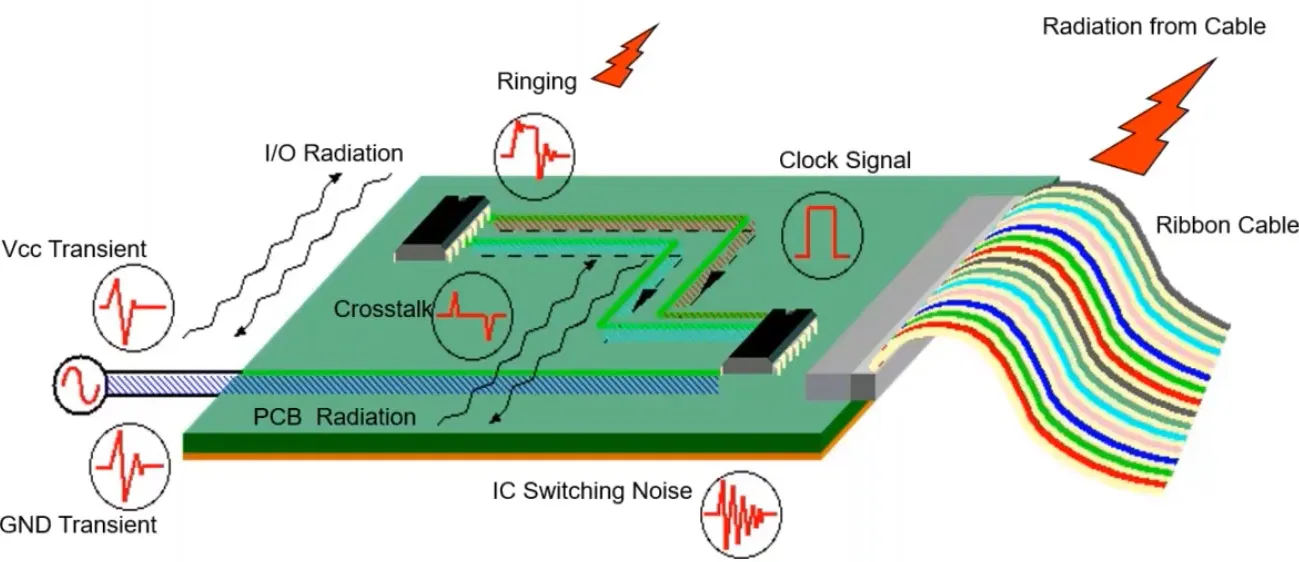
EMI/EMC measures: Use ground pours, high-frequency ferrite/choke components, and multi-layer shielding to improve signal integrity.
Consumer-grade chips
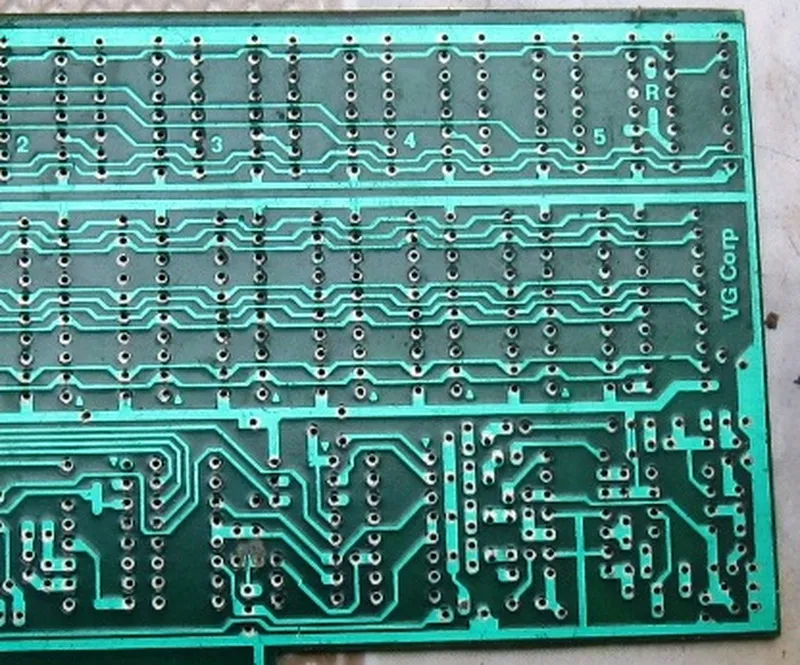
High-density integration: Use 45° corners and vertical inter-layer routing to optimize space utilization.
Length matching: DDR and other high-speed signals achieve length matching with serpentine traces to ensure timing alignment.
Simplified measures: EMI/EMC measures are more basic, relying more on component-level performance.
4 | Thermal Design
Industrial-grade chips
Thermal structures: Use metal-core PCBs, thermal vias, and heat-bridge techniques to ensure long-term stable operation.
Thermal management: Optimize stack-up, increase copper thickness and heat-spreading area to prevent local hotspots.
Consumer-grade chips
Thin and light designs: Rely on natural convection or small fans, thermal interface materials, and graphene films.
Space constraints: Thermal solutions are limited by device size and must balance performance and volume.
5 | Maintainability and Expandability
Industrial-grade chips
Modularity: Support standard expansion slots and modular interfaces for easier maintenance and upgrades.
Long-term supply: Designs consider a lifecycle of 10+ years and ensure component replaceability.
Consumer-grade chips
Integration-first: Limited expandability, typically only standard interfaces such as USB or HDMI.
Rapid iteration: Short design cycles that emphasize feature innovation and cost control.
6 | Cost and Production
Industrial-grade chips
Higher cost: Special materials, stricter testing, and long lifecycle support lead to significantly higher costs than consumer-grade products.
Production process: Automation may be lower; customized processes are often required to meet reliability needs.
Consumer-grade chips
Cost sensitivity: Scale production and standardized designs reduce costs and pursue higher cost-performance ratios.
Efficient manufacturing: High automation levels on production lines enable quick market responses.
SEO Title: PCB Layout Differences for Industrial-Grade vs Consumer-Grade Chips Meta Description: Compare PCB layout and routing for industrial-grade versus consumer-grade chips, covering design goals, materials, routing strategies, thermal management, maintainability, and cost-production trade-offs.