Stiffeners on an FPC are only as reliable as the adhesive that holds them. Standard pressure-sensitive tapes work well at room temperature. They often fail once the assembly passes through reflow.
FPC high temperature adhesive exists because the thermal environment of modern SMT processes exceeds the capability of ordinary flexible PCB tape. Choosing the wrong adhesive creates shifted stiffeners, voids, and delamination that appear after soldering rather than before.
Ordinary Acrylic Tape versus High-Temperature Adhesive
Most common double-sided tapes used on flex circuits are acrylic-based pressure-sensitive adhesives. They bond quickly, are easy to apply, and perform adequately for assemblies that never see elevated temperature. Their limitation is thermal stability.
At reflow temperatures the acrylic softens. Bond strength drops. The stiffener can shift under the weight of components or under the mechanical forces of the reflow oven conveyor. Adhesive that has softened can also flow, creating voids or edge bleed that contaminates nearby pads.
High-temperature adhesives are formulated to retain useful strength through the reflow profile. Some are higher-performance acrylics, others are silicone or modified systems with elevated glass-transition behavior. The key property is that the bond remains intact at peak temperatures of 240–260 °C and through multiple thermal cycles.
The difference is not theoretical. It is the difference between a stiffener that stays aligned through soldering and one that moves enough to misalign connectors or create uneven support under components.
How Reflow Soldering Affects the Adhesive Bond
A typical lead-free reflow profile reaches 240–260 °C for a sustained period. The entire FPC stack experiences that heat, including the adhesive layer under the stiffener.
Standard acrylic tapes lose shear and peel strength rapidly above 150–180 °C. Once softened, any residual stress in the stiffener or any external force from handling or component placement can move the reinforcement. After cooling, the adhesive re-solidifies in the new, incorrect position. The misalignment is permanent.
Multiple reflow cycles (common in double-sided SMT) compound the problem. Each pass further degrades a marginal adhesive. High-temperature adhesives are selected specifically to survive the full thermal excursion with acceptable residual strength.
The failure mode is rarely a complete detachment in the oven. More often it is a small shift that causes connector misalignment, uneven component support, or subsequent delamination under mechanical load or thermal cycling in the field.
Where High-Temperature Adhesives Such as Tesa Are Applied
High-temperature tapes are used whenever the FPC will experience reflow, wave soldering, or sustained high operating temperature.
Common scenarios include stiffeners under SMT connectors, reinforcement under BGA or fine-pitch components, and support areas that must remain dimensionally stable through the soldering process. They are also specified for assemblies that later see elevated service temperatures or automotive under-hood environments.
Products such as certain Tesa high-temperature grades, specialized 3M high-temp acrylics, and equivalent materials from other suppliers are chosen based on the peak temperature rating, residual bond strength after reflow, and compatibility with the stiffener material (PI, FR4, stainless steel, aluminum).
Not every stiffener location requires the highest-rated adhesive. Areas that are bonded after soldering, or that never see reflow, can often use standard tape. The decision must be driven by the actual thermal history of that specific region of the FPC.
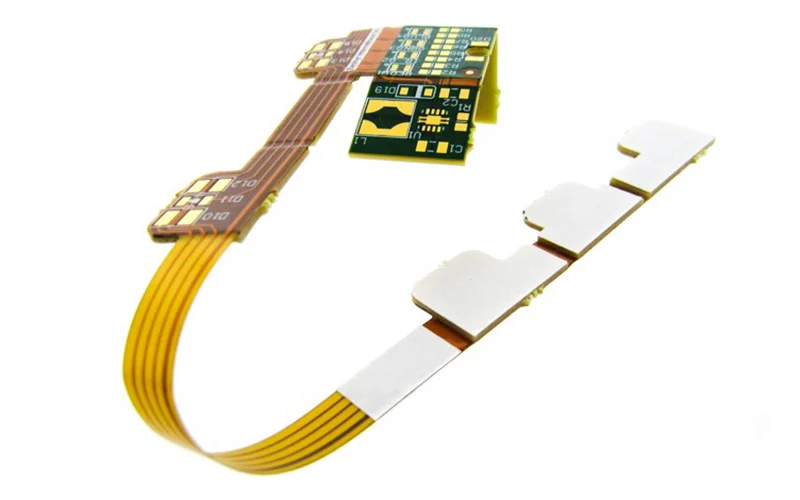
Adhesive Thickness and Its Effect on Total Stack Height
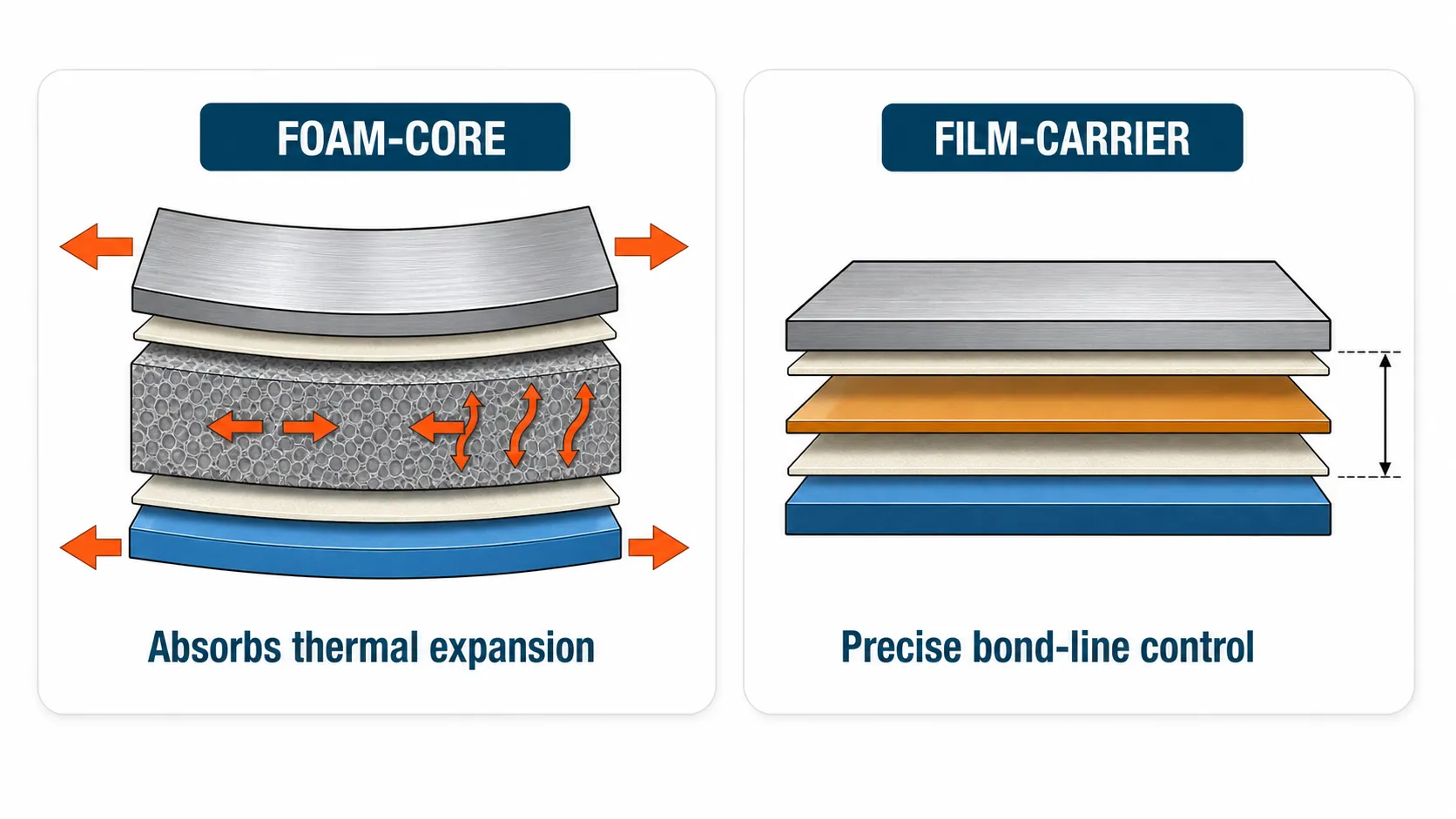
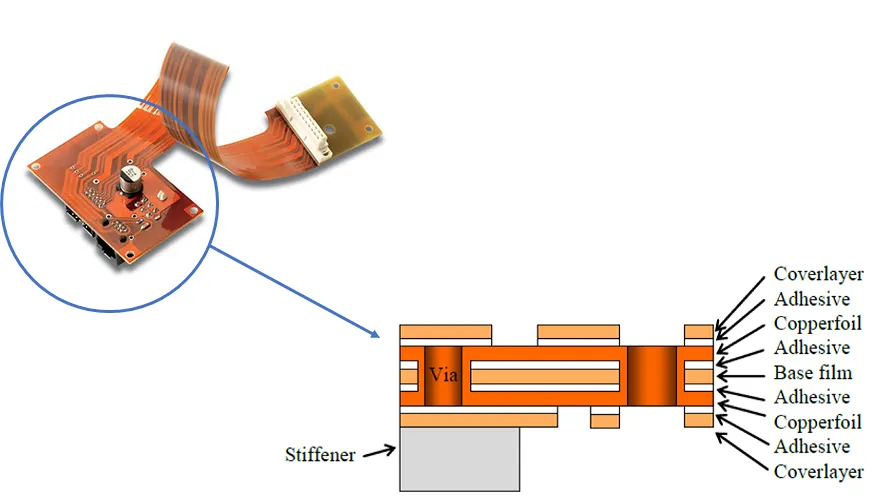
Every adhesive layer adds thickness. On an FPC the total stack height is often constrained by the final product envelope, connector mating dimensions, or impedance control in nearby controlled-impedance areas.
High-temperature adhesives are available in a range of thicknesses, commonly from 0.05 mm to 0.15 mm or more. Thinner constructions help keep the overall thickness under control but may offer lower bond strength or less gap-filling ability. Thicker constructions improve conformability and strength yet increase the stack height and can create step changes that affect flex behavior or assembly fit.
The designer must treat the adhesive thickness as a deliberate stack-up parameter, not an afterthought. When a stiffener is added, the adhesive thickness is part of the mechanical and sometimes electrical design. Changing from a standard tape to a high-temperature grade can also change the thickness, so the substitution must be verified against the total height budget.
In tight packages the difference between 0.05 mm and 0.13 mm of adhesive is enough to cause interference or require a redesign of the housing.
Practical Selection and Design Guidelines
Select the adhesive based on the actual thermal profile the bonded area will see. If the stiffener is present during reflow, the adhesive must be rated for that profile with margin. If the stiffener is applied after soldering, a standard tape may be sufficient and more economical.
Confirm residual bond strength after the full number of reflow cycles expected in production. Some adhesives survive one pass but degrade on the second or third.
Match adhesive thickness to the mechanical requirements and the total thickness limit. Document both the adhesive type and its thickness in the stack-up and in the fabrication notes.
Verify compatibility with the stiffener material and with any subsequent processes (cleaning, conformal coating, etc.). Some high-temperature adhesives have different surface characteristics that affect downstream steps.
Finally, design the adhesive area with the same keep-out discipline used for any other tape: clear of pads, openings, and high-flex zones unless the application specifically requires otherwise.
Engineering Takeaway
Ordinary flexible PCB tape softens under reflow and allows stiffener movement or voiding. FPC high temperature adhesive is specified so the reinforcement remains dimensionally stable through the soldering process.
Choose the adhesive according to the real thermal history of the bonded area, account for its thickness in the total stack, and apply the same geometric keep-outs used for any other adhesive layer. That combination keeps the stiffener where the design intended it to stay.