In production we pick sheet metal materials for electronic enclosures based on what the part actually has to survive and what the shop can form, weld, and finish without drama. The four materials that cover most jobs are aluminum (5052 or 6061), cold-rolled steel (CRS), stainless steel (304 or 316), and galvanized steel. A practical sheet metal materials for electronic enclosures decision starts with the environment, EMI needs, weight target, and cost ceiling. Aluminum wins when weight and heat dissipation matter. CRS is the default for indoor, cost-sensitive boxes. Stainless or galvanized is chosen when corrosion is the real risk. Anything outside these four usually gets pushed back during DFM.

Why Material Choice Directly Affects Forming and Assembly
Each material behaves differently on the press brake and in the welding cell. Aluminum is soft and springy; it needs larger bend radii and careful spring-back compensation. CRS forms cleanly and holds tight tolerances with standard tooling. Stainless work-hardens quickly, so multiple hits or larger radii are often required. Galvanized steel forms like CRS but the zinc coating can flake at tight bends or burn off during welding, creating fumes and adhesion problems for later paint.
These differences show up in yield. A design that works on 1.5 mm CRS can crack or wrinkle when switched to 1.5 mm stainless without changing the bend reliefs or tooling. Shops therefore lock the material early and run the flat-pattern and bend program around its specific properties.
Strength, Weight, and Thermal Performance in Real Enclosures
Cold-rolled steel gives the highest stiffness per dollar for a given thickness. It is the usual choice for larger server or industrial control boxes that must resist mounting loads and occasional impact. Aluminum is roughly one-third the density of steel, so the same stiffness requires greater thickness or added ribs. That extra thickness still usually results in a lighter final part, which is why aluminum dominates portable instruments, outdoor telecom cabinets, and anything that ships by air.
Thermal conductivity favors aluminum. Heat sinks and power-supply enclosures often stay in aluminum because the metal itself helps spread and reject heat. Steel and stainless are poorer conductors; they rely more on vents, fans, or external heat sinks. When the electronics run hot and the enclosure must stay cool to the touch, aluminum is the default.

Corrosion Resistance and EMI Shielding Reality
Indoor, climate-controlled equipment can live in bare or painted CRS for years. Any hint of moisture, salt, or outdoor exposure pushes the choice to aluminum (with proper coating), galvanized steel, or stainless. Galvanized offers sacrificial protection and is cheaper than stainless, but cut edges and weld zones need extra attention. 304 stainless handles most industrial atmospheres; 316 is reserved for marine or chemical exposure.
EMI performance is often misunderstood. Continuous conductive metal is what matters. Aluminum, CRS, and stainless all provide good shielding when seams are tight and gaskets or conductive fasteners are used. Painted or powder-coated surfaces need masked contact points. Galvanized can work, but the zinc layer must remain intact at joints. The material itself is rarely the limiting factor; the joint design and surface treatment are.
Cost, Lead Time, and What Happens When the Wrong Material Is Specified
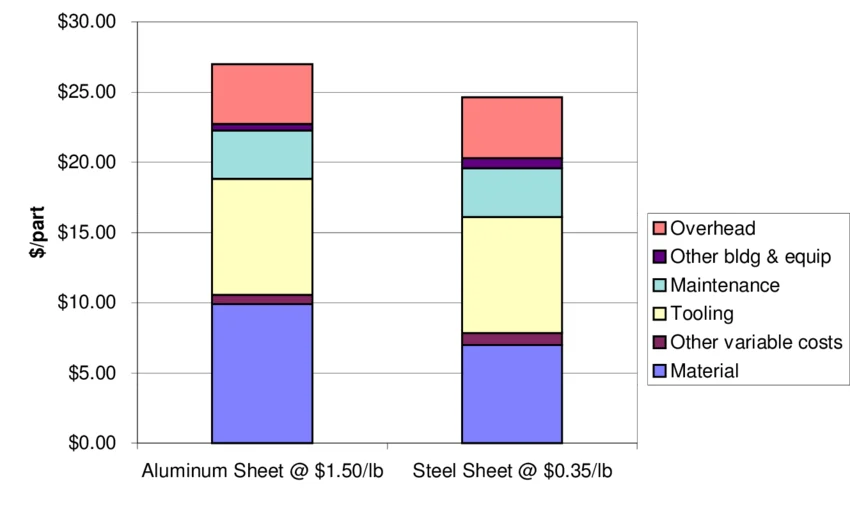
CRS is the lowest-cost option for most thicknesses. Aluminum sits higher but still well below stainless. Galvanized is close to CRS. Stainless can easily double or triple the material cost and also slows forming and welding. When a drawing calls for stainless on an indoor, non-corrosive box, the quote jumps and the schedule stretches because stainless requires different tooling parameters and more frequent tool cleaning.
Wrong material choices create downstream problems. An aluminum enclosure designed with steel bend radii will crack. A CRS box painted for outdoor use will rust at scratches and cut edges. An uncoated aluminum part in a salt environment will pit. These failures appear after the parts have already been formed, welded, and finished, so the scrap cost is high and the delivery date slips.

How Shops Guide the Final Selection
The usual recommendation is straightforward. Use CRS for indoor, cost-driven enclosures that do not need extreme light weight or high thermal conductivity. Switch to aluminum when weight, heat spreading, or moderate outdoor exposure matters. Choose galvanized when corrosion protection is needed but stainless cost is not justified. Reserve stainless for aggressive environments or where a specific clean-room or hygienic surface is required.
DFM notes should lock the alloy and temper early (5052-H32 aluminum, 304-2B stainless, etc.), call out any required coatings or plating, and identify EMI contact surfaces that must remain conductive. When these points are clear, the flat pattern, tooling, and finishing steps stay predictable.
Exceptions exist for specialized electronics. Military or marine gear may demand 316 stainless or specific aluminum alloys with special finishes. High-power RF enclosures sometimes need pure aluminum for conductivity. In those cases the shop accepts the higher cost and longer process time, but only after the functional need is confirmed and the quote reflects the real work involved. For the majority of commercial electronic enclosures, staying with the four standard materials and matching them to the actual environment keeps both cost and delivery under control.