Most sheet metal material selection mistakes start the same way. Someone opens the BOM, sorts by unit price, and locks in the cheapest alloy that meets the minimum yield strength on the drawing. That decision looks clean on paper. It usually unravels once the parts hit the press brake or the powder line.
The cost of the raw coil is rarely the dominant factor. Process yield, secondary operations, and field failures are. The following seven patterns appear repeatedly in DFM reviews and shop-floor rework tickets. Each one is preventable with a short set of checks before the material call-out is frozen.
Locking the Spec to Coil Price Alone
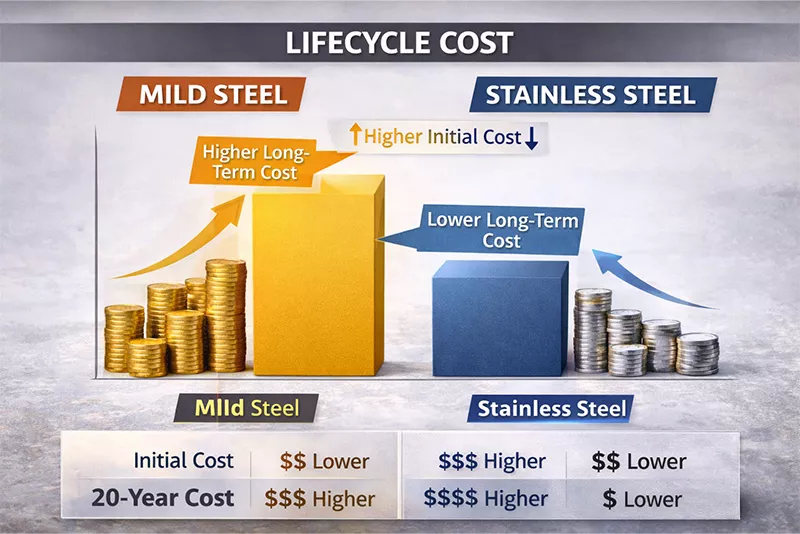
The lowest $/kg grade often carries the highest total cost. Mild steel at 0.8 mm may undercut 5052-H32 on the invoice, yet the forming radius required for that steel forces a larger bend allowance, longer blank, and more scrap. When the part also needs plating, the cheaper base metal can demand extra pre-treatment steps that erase the savings.
A quick rule used on the floor: if the material cost difference is less than 15 % of the finished part cost, processability and finish compatibility take priority. Otherwise the project pays later in setup time or rejected lots.

Ignoring How the Alloy Actually Behaves on the Brake and Punch
Formability is not a single number. Spring-back, minimum inside radius, and grain-direction sensitivity change with temper and thickness. Selecting 304 stainless in the 2B finish because it is "strong enough" while specifying a 0.5× thickness inside radius guarantees cracking or excessive force on the press. The operator then either increases the radius (changing the geometry) or runs the part hot, both of which add cost and variation.
Same problem appears with high-strength low-alloy grades. They look attractive for weight reduction until the blanking clearance has to be opened and the pierce tools wear twice as fast. The material data sheet rarely lists the practical clearance window used by the shop; that number comes from the tooling engineer.
Choosing Strength Grade Without Matching Load Path and Thickness
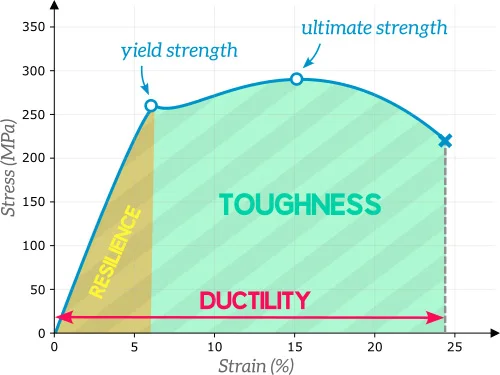
Calling out "high-strength steel, 500 MPa min" on a 1.2 mm panel that only sees distributed wind load is over-specification. The higher yield forces larger bend radii, reduces the usable stretch flange length, and often requires a second annealing step if the part has complex contours. The net result is a heavier blank and more forming stations for no functional gain.
Conversely, under-specifying yield on a mounting bracket that carries concentrated fastener loads produces permanent set after the first torque cycle. Both errors share the same root: the strength grade was selected from a catalog column rather than from the actual stress distribution and the available thickness range the press can handle.

Skipping Environmental Exposure When the Grade Is Chosen
Indoor equipment frames still see condensation, cleaning chemicals, and occasional salt spray during transport. Selecting plain cold-rolled steel without a corrosion allowance or protective finish produces white rust within weeks once the parts leave the controlled factory climate. Outdoor or marine applications amplify the problem: 5052 aluminum may be adequate for light corrosion, yet the same part in a coastal enclosure often needs 316 stainless or a properly specified coating system.
The mistake is treating corrosion resistance as a secondary coating decision rather than a primary material decision. Once the base metal is fixed, many coating options become incompatible or prohibitively expensive.
Treating Surface Finish as an Afterthought
Powder coat adhesion, anodizing thickness, and zinc plating all interact with the substrate chemistry and surface condition. A bright-annealed stainless sheet may look clean, yet the residual drawing oils and the passive layer can prevent consistent powder adhesion unless the pre-treatment is adjusted. Galvanized coil specified for outdoor use can create outgassing defects under powder if the zinc coating weight is too high or the chromate conversion is omitted.
The practical sequence is reverse: decide the final surface requirement first, then select a base metal that accepts that finish with standard shop processes. Changing the metal after the coating process is locked usually forces a requalification of the entire finish line.

Selecting Grades That Are Difficult to Source in Production Quantities
Exotic or tightly controlled alloys solve the prototype. They become schedule risks at volume. A 0.6 mm titanium sheet that is available in 100 kg lots from the mill may have a 16-week lead time and a minimum order that exceeds the entire annual usage. The same geometry in 316 stainless or even a coated aluminum often ships from distributor stock within days.
Supply risk also appears with dual-certified materials or special tempers. When the drawing calls for a grade that only two mills produce, any quality hold or capacity constraint stops the line. Standard commercial grades with multiple approved sources keep the buffer stock realistic.
How These Mistakes Compound into Rework and Escalating Cost
Each of the preceding errors rarely stays isolated. A low-cost grade that cracks on the brake forces a redesign of the bend radii. The new radii change the blank size, which changes the nesting efficiency. The revised part may now require a different coating process, which itself needs a material that accepts that coating. By the time the second or third revision is released, the tooling has already been cut for the original geometry and the schedule has slipped.
Field failures close the loop. Corrosion that starts at an unprotected cut edge or permanent deformation under load both generate warranty claims and emergency redesigns. The total cost is never visible on the original material quotation.
The corrective habit is simple and repeatable. Before the material call-out is released, walk through four questions in order:
- Does the chosen grade form to the required radii and stretch levels with standard tooling clearances?
- Is the strength level matched to the actual load path and available thickness?
- Will the base metal accept the specified surface finish with the shop's existing pre-treatment chemistry?
- Can the grade be sourced in production quantities from more than one approved supplier with acceptable lead time?
If any answer is no, the material selection is incomplete. Changing the grade at this stage costs a drawing revision. Changing it after tooling or after the first production lot costs far more. Most sheet metal material selection mistakes are avoided by treating the material decision as a manufacturing decision rather than a pure purchasing decision.