When High Strength Is the Right Call and When Formability Takes Priority
In production, the sheet metal strength vs formability trade-off is never abstract. High-strength grades (higher tensile and yield strength) give better structural performance and allow thinner gauges, but they raise springback, increase cracking risk on tight radii, and tighten the process window on the press. High-formability grades (higher elongation) run smoother through progressive dies and deep-draw operations, deliver higher first-pass yield, and tolerate more complex geometry, yet they often need extra thickness or reinforcements to meet load requirements. From a fabrication standpoint, we normally push strength when the part is primarily load-bearing and the geometry is simple; we push formability when the stamping sequence is long, the radii are tight, or the production volume demands stable yield. The decision is driven by the part's function, the die design, and the acceptable scrap rate—not by marketing datasheets.
Key Production Differences at a Glance
| Factor | High-Strength Focus | High-Formability Focus |
|---|---|---|
| Tensile / Yield Strength | Higher (typically 400–1000+ MPa) | Lower to moderate |
| Elongation | Lower (often <15–20 %) | Higher (25–40 %+) |
| Bending / Springback | Larger springback, tighter radius limits | Smaller springback, more forgiving radii |
| Stamping / Drawing Risk | Higher cracking and thinning risk | Lower risk, wider process window |
| Tooling & Die Wear | Higher wear, more frequent maintenance | Lower wear, longer die life |
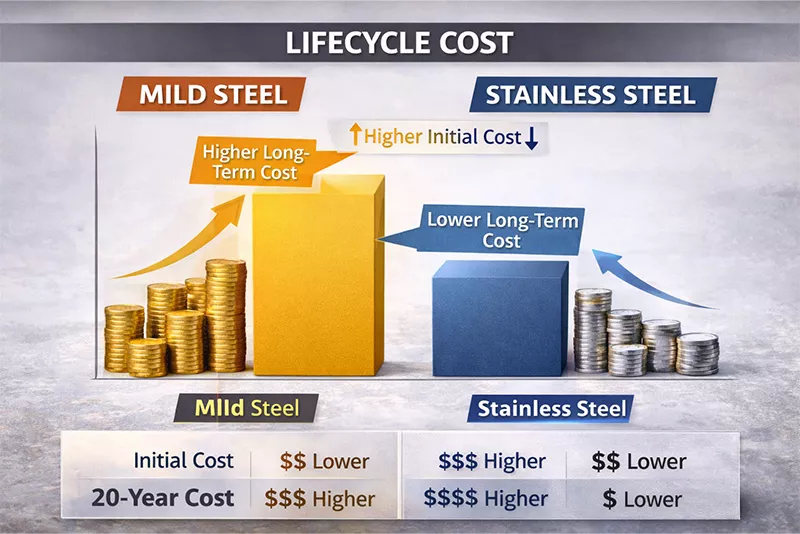
| Material Cost & Gauge | Often higher cost but thinner possible | Usually lower cost, may need thicker stock |
| Typical Yield in Production | Lower on complex parts | Higher and more stable |
| Best Fit | Structural brackets, chassis, load-bearing panels | Deep-drawn housings, complex covers, multi-stage progressive dies |
Which Priority Points to Which Material Choice
| If your priority is... | Better Choice | Why |
|---|---|---|
| Maximum load capacity or weight reduction | High strength | Higher yield and tensile allow thinner gauges without losing structural performance |
| Complex geometry or deep draws | High formability | Higher elongation reduces cracking and lets the blank flow more freely |
| Stable high-volume yield | High formability | Wider process window and lower scrap on progressive tooling |
| Tight bend radii without secondary operations | High formability | Less springback and higher elongation keep the bend inside tolerance |
| Lowest material cost at moderate performance | High formability (mild steel / soft aluminum) | Base grades are cheaper and easier to source in volume |
| Extreme structural stiffness with simple shapes | High strength | Strength advantage outweighs forming difficulty when geometry is forgiving |
How Tensile Strength, Yield Strength and Elongation Actually Trade Off on the Press
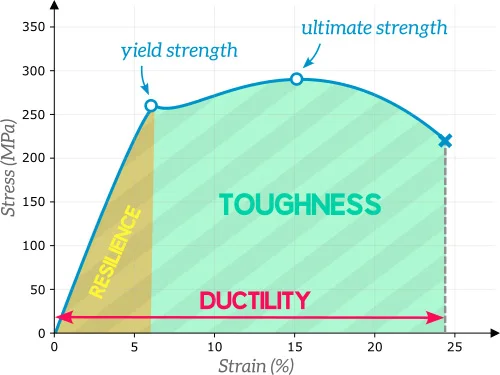
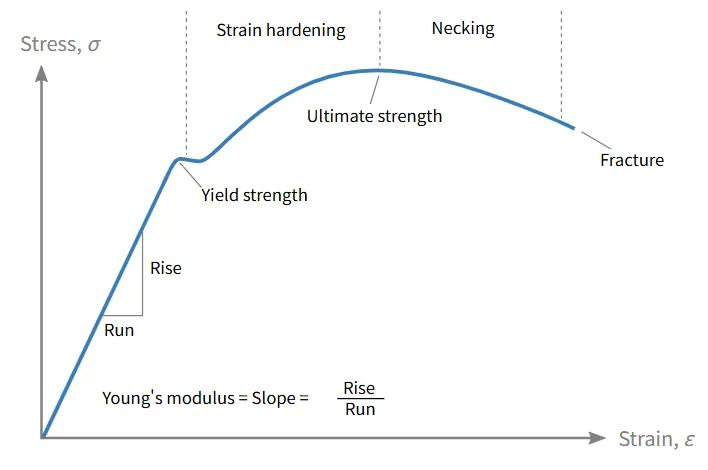
The core of the sheet metal strength vs formability relationship is the inverse link between strength and elongation. When tensile and yield strength rise, the material's ability to stretch without necking or cracking falls. In the press shop we see this immediately: a 590 MPa dual-phase steel may deliver excellent structural numbers but will show only 15–20 % elongation, while a mild steel at 270–340 MPa often exceeds 30–40 % elongation. During CAM and die try-out, the higher-strength material forces us to open the radii, reduce the draw depth, or add intermediate annealing steps that a formability-focused grade simply does not need.
Yield strength controls the onset of plastic deformation and therefore springback. Higher yield means the part wants to return closer to its original shape after the punch leaves, so compensation in the die becomes larger and more sensitive to material batch variation. Elongation, measured in the tensile test, tells us how much the blank can stretch before fracture. In multi-stage progressive dies, low elongation quickly turns into edge cracks or splits at stretch flanges. From a fabrication standpoint, we therefore treat tensile strength as the structural budget and elongation as the process budget; when one goes up, the other usually comes down, and the die design has to absorb the difference.
Bending Performance: Where Springback and Minimum Radius Start to Hurt
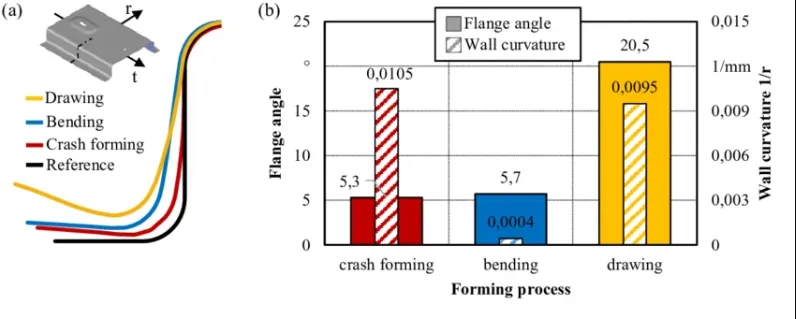
Bending is the first place the strength–formability trade-off becomes expensive. High-strength sheet exhibits larger elastic recovery, so the finished angle can open several degrees beyond the die angle. We compensate by over-bending, but the compensation itself is grade-dependent and can change from coil to coil. High-formability grades spring back less and tolerate smaller inside radii relative to thickness (often 0.5–1×t versus 1.5–2×t or more for high-strength steels). When a design calls for a sharp corner on a structural bracket, the high-strength route frequently forces either a larger radius or a secondary restrike operation—both of which add cost and cycle time.
In production we also watch for edge cracking on cut edges that are subsequently bent. Low-elongation material is far more sensitive to the quality of the blanking edge; a rough or work-hardened edge will initiate cracks that a formable grade would ignore. Most fabricators therefore recommend high-formability stock whenever the part contains multiple tight bends in different directions or when the bend radius cannot be increased without redesigning the mating components.
Stamping and Deep-Drawing Behavior Under Real Press Conditions
Stamping performance is where the difference becomes most visible on the shop floor. High-strength grades raise the required press tonnage, increase die wear on the draw beads and punch radii, and narrow the safe range of blank-holder force. Thinning in stretch zones becomes critical; once local thickness reduction exceeds the material's remaining ductility, splits appear. High-formability grades flow more readily into the die cavity, tolerate higher draw ratios, and keep the process window wide enough that small variations in lubrication or blank size still produce good parts.
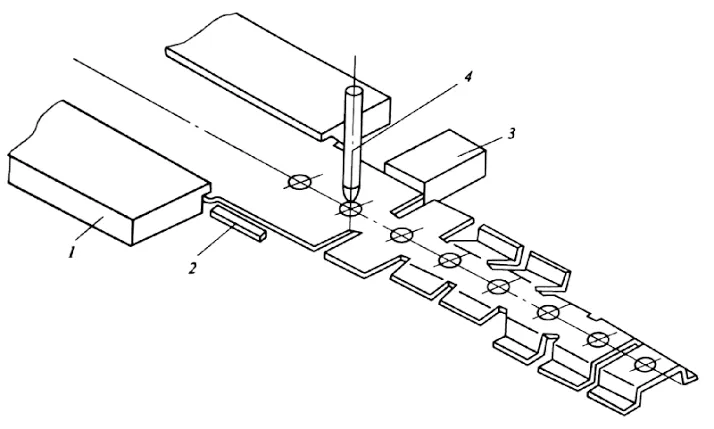
In progressive dies with five or more stations, the cumulative strain is the limiting factor. A material with low elongation may survive the first two stations and then crack on the third or fourth when the total strain exceeds its capacity. We therefore see higher scrap rates and more frequent die rework when strength is prioritized on complex progressive tools. Conversely, when the geometry is essentially a series of gentle bends and shallow forms, the high-strength grade can run cleanly and deliver the structural benefit without yield penalties.
How Fabricators Evaluate the Trade-Off During DFM and Tooling
From the manufacturer's side, the sheet metal strength vs formability decision is reviewed first in DFM. We look at the minimum bend radii relative to thickness and grade, the expected springback, the draw depth, and the number of stages required. High-strength material almost always triggers a note about possible secondary operations or the need for advanced high-strength steel (AHSS) tooling grades and coatings. High-formability material usually receives a green light for progressive tooling and higher expected yield.
Panel utilization and nesting also differ. Stronger grades are frequently ordered in thinner gauges, which can improve nesting efficiency if the part outline is the same, but the higher scrap risk on the press can erase that gain. Process stability is another factor: formable grades are less sensitive to coil property variation, so we can run longer campaigns between coil changes without adjusting blank-holder force or lubrication. High-strength grades often require tighter incoming inspection