In sheet metal shops the choice between aluminum 5052 vs 6061 sheet metal is driven by forming severity, strength requirements, and surface or corrosion demands rather than any absolute ranking. When the part needs excellent bendability, deep drawing, or superior corrosion resistance—especially for electronic enclosures or outdoor housings—5052 is the practical default. When higher strength after heat treatment, better machinability, or structural stiffness is required, 6061 (typically T6) becomes the stronger production choice. The decision is made during DFM based on how the alloy behaves under press, laser, weld, and finishing operations.
Where Each Aluminum Alloy Fits Production Realities
5052 is preferred for complex formed parts, chassis, and enclosures that require tight bends, good springback control, and reliable corrosion performance without heavy surface protection. 6061 is selected when the design demands higher yield strength, threaded features, or post-machining operations and the forming radii can be kept generous. For most electronic enclosure work the formability and corrosion edge of 5052 usually outweighs the strength advantage of 6061 unless the part sees significant mechanical load or requires extensive machining.
Key Fabrication Attributes Compared Side by Side
| Attribute | Aluminum 5052 | Aluminum 6061 |
|---|---|---|
| Strength (typical) | Moderate (H32 ~193 MPa yield) | Higher in T6 (~276 MPa yield) |
| Hardness | Lower, more formable | Higher in T6 condition |
| Formability / bendability | Excellent, tight radii possible | Good but limited by T6 strength |
| Weldability | Excellent, minimal strength loss | Good, but HAZ softens significantly |
| Corrosion resistance | Superior, especially marine/chemical | Good, but less than 5052 in aggressive environments |
| Weight | Essentially identical density | Essentially identical density |
| Machinability | Fair, more gumming tendency | Better, especially in T6 |
| Surface treatment response | Excellent anodizing and coating | Very good anodizing, slightly different appearance |
| Typical sheet metal applications | Formed enclosures, panels, marine parts | Structural brackets, machined frames, high-load parts |

Production Priority Decision Matrix
| If your priority is… | Better Choice | Why |
|---|---|---|
| Complex forming or tight bend radii | 5052 | Superior ductility and lower springback variation |
| Highest as-fabricated strength | 6061-T6 | Heat-treatable alloy delivers higher yield and tensile |
| Corrosion resistance without heavy coating | 5052 | Better performance in marine and industrial atmospheres |
| Extensive machining or tapping | 6061 | Cleaner chips and better tool life in T6 temper |
| Welded assemblies with minimal strength loss | 5052 | Less HAZ softening than 6061 |
| Electronic enclosures with deep draws | 5052 | Formability and surface quality favor consistent production |
Strength and Hardness Differences That Affect Tooling Loads
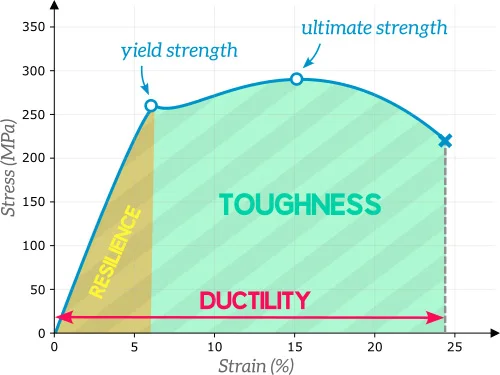
6061 in the T6 temper delivers noticeably higher yield and tensile strength than common 5052 tempers such as H32. From a fabrication standpoint this means higher press tonnage, greater springback, and increased risk of cracking if bend radii are not opened. 5052 remains softer and more workable, so forming loads stay lower and die wear is typically reduced on high-volume progressive tools. When the print calls for structural stiffness or resistance to permanent set under load, 6061 is the clearer choice; when the geometry is forming-driven, 5052 keeps the process window wider and scrap rates lower.
Hardness follows the same pattern. The higher hardness of 6061-T6 improves resistance to denting and improves machinability, but it also raises the force required for punching and bending. Most shops therefore reserve 6061 for parts that need both strength and subsequent machining, while routing pure formed sheet-metal work to 5052.
Formability and Why 5052 Dominates Complex Sheet Metal Shapes
5052 offers superior elongation and lower work-hardening rates in typical sheet gauges, allowing tighter bend radii and deeper draws without intermediate annealing. 6061-T6 can be formed, but recommended inside radii are larger and springback is less predictable. In production this difference shows up immediately in press-brake setup time and first-article yield. For electronic enclosures that require multiple tight flanges, embosses, or shallow draws, 5052 consistently produces higher good-part rates and fewer cracked corners.
Directionality is present in both alloys, yet 5052 tends to be more forgiving across grain orientations. When nesting mixed-orientation parts, 5052 reduces the need for grain-direction call-outs on the shop traveler.

Weldability and Heat-Affected Zone Behavior on the Floor
Both alloys weld readily with MIG or TIG using appropriate filler, but the post-weld properties diverge. 5052 experiences relatively little strength loss in the heat-affected zone. 6061, being heat-treatable, loses a significant portion of its T6 strength in the HAZ and often requires post-weld heat treatment if full strength must be restored—an operation rarely practical on finished sheet-metal assemblies. From a fabrication standpoint, welded 5052 structures retain more consistent mechanical properties without extra process steps, while 6061 welds demand careful joint design or acceptance of reduced local strength.
Porosity risk and filler selection are manageable for both, yet shops running high-volume robotic welding often prefer 5052 for the more predictable strength outcome after welding.
Corrosion Resistance and Long-Term Reliability in Service
5052, as an Al-Mg alloy, provides superior resistance to atmospheric, marine, and many chemical environments compared with 6061. This advantage is particularly relevant for outdoor enclosures, industrial control boxes, and any part exposed to salt spray or high humidity. 6061 still offers good general corrosion resistance and can be further protected by anodizing or coating, but in aggressive conditions 5052 reduces the risk of pitting and extends service life with less dependence on perfect surface preparation.
In electronic enclosure applications the corrosion edge of 5052 frequently outweighs the modest strength difference, especially when the part must maintain appearance and electrical continuity over years of field exposure.
Weight, Machinability, and Secondary Processing Differences
Density of the two alloys is essentially the same, so weight is not a deciding factor. Machinability, however, favors 6061-T6. It produces cleaner chips, lower tool wear, and better surface finish on milling, drilling, and tapping operations. 5052 tends to be gummier and can build up on cutting edges more readily. When a design mixes formed sheet with significant CNC machining or threaded features, 6061 reduces cycle time and tool cost. Pure formed-and-welded or formed-and-coated parts stay with 5052 to protect formability.
Surface treatment response is strong for both. Anodizing, powder coating, and chemical conversion coatings perform well. Slight differences in alloy chemistry can produce minor variations in anodized color or coating adhesion, but both are routinely finished to high cosmetic standards. Process stability is typically higher with 5052 when the part has already undergone severe forming, because residual stresses and surface condition are more consistent.

How Fabrication Shops Evaluate 5052 versus 6061 During DFM
During DFM review the first questions are forming severity, required strength, and environmental exposure. Tight bend radii, deep flanges, or complex embosses push the recommendation toward 5052. Structural loads, extensive machining, or the need for higher hardness favor 6061-T6. Corrosion or outdoor service further tips the scale to 5052 unless strength is non-negotiable.
CAM and nesting considerations also differ. 5052's better formability allows more aggressive nesting and fewer orientation restrictions, improving material utilization. 6061 often requires larger bend reliefs and more conservative tool clearances, which can increase scrap. Tooling life on progressive dies is generally longer with 5052 because of lower forming forces and less abrasive wear. Welded assemblies benefit from the more stable HAZ behavior of 5052, reducing the need for post-weld correction or acceptance of lower joint strength.
Process risk is lower with 5052 for most pure sheet-metal work. 6061 introduces higher springback variation and greater sensitivity to bend radius, which can increase first-article iterations and scrap on new tools. Most manufacturers therefore default to 5052 for electronic enclosures and formed housings, switching to 6061 only when the design explicitly requires the higher strength or superior machinability.
Which Alloy Should You Choose for Sheet Metal Work?
Choose aluminum 5052 if you:
- Need excellent formability for tight bends, deep draws, or complex flanges
- Require superior corrosion resistance for outdoor, marine, or industrial environments
- Are producing electronic enclosures, chassis, or panels where forming consistency and surface quality matter most
- Want minimal strength loss after welding without post-weld heat treatment
- Prioritize lower forming loads, longer die life, and higher first-pass yield on progressive tools
Choose aluminum 6061 if you:
- Require higher yield and tensile strength in the finished part (especially T6 temper)
- Have significant machining, drilling, or tapping content that benefits from better chip control
- Need greater hardness and dent resistance for structural or load-bearing sheet-metal components
- Can accommodate larger bend radii and accept some HAZ softening after welding
- Are designing brackets or frames where stiffness and strength outweigh pure formability
There is no single "better" alloy. The correct selection is the one that matches the dominant process constraints—forming severity versus strength and machinability—while meeting the service environment of the finished part.
Frequently Asked Questions
Q1: Can 6061-T6 be substituted for 5052 on a formed electronic enclosure drawing?
A1: Only after verifying that bend radii, springback, and forming severity remain within safe limits. 6061-T6 is less formable and may crack or show excessive springback where 5052 succeeds. Engineering approval and process trials are required.
Q2: Which alloy is better for anodized electronic enclosures?
A2: Both anodize well. 5052 is often preferred when the part is heavily formed, because residual stress and surface condition after forming are more consistent, leading to more uniform anodized appearance.
Q3: Does 6061 always provide higher strength in a welded sheet-metal assembly?
A3: Not necessarily. The heat-affected zone of 6061 loses significant strength, while 5052 retains more of its original properties. Without post-weld heat treatment, the welded joint in 5052 can be more consistent.
Q4: Is there a meaningful weight difference between 5052 and 6061 sheet?
A4: No. Density is essentially identical, so weight is not a selection factor. Strength-to-weight and formability drive the decision instead.
Q5: Which alloy lasers and punches cleaner for high-volume production?
A5: Both cut well. 5052’s lower hardness can produce slightly softer edges, while 6061-T6 may require more attention to burr control. Overall process capability is high for both when parameters are optimized.
Q6: When should a shop default to 5052 for new electronic enclosure projects?
A6: When the design is dominated by forming, requires good corrosion resistance, or prioritizes consistent yield and surface quality after coating or anodizing. Switch to 6061 only when strength or machining content clearly outweighs formability needs.