The order parameters describe a 6-layer flexible circuit measuring 14 × 37 mm. The specified board thickness is 0.23 mm. Copper weights are listed as 1/3 oz inner and 1/2 oz outer. Yellow coverlay is indicated on both top and bottom, with white silkscreen on both sides. Surface finish is ENIG. A single FR4 stiffener of 0.2 mm thickness is specified. Outline processing is laser forming. Quantity is 10 pieces. In the accompanying engineering communication two specific points are recorded for confirmation.
6-Layer FPC Thickness Requirements and 0.23 mm Limitations
The communication states that the customer noted an FPC thickness of 0.23 mm in the order ( #FPC-20240927-0025 ). It then states that conventional materials cannot match this thickness. No additional explanation of which materials were considered or what minimum thicknesses those materials impose is provided in the note. The statement is limited to the observation that the 0.23 mm figure cannot be achieved with conventional materials for this construction.
The order itself lists the thickness as 0.23 mm and identifies the board as a 6-layer FPC with the copper weights noted above. The engineering note treats the 0.23 mm value as the customer requirement and records that conventional materials are unable to meet it. No alternative material call-out or calculated stack is supplied beyond the figures that follow.
Proposed 6-Layer FPC Stack-Up with FR4 Stiffener
Following the statement that conventional materials cannot match 0.23 mm, the factory asks the customer to confirm whether its stack-up structure is acceptable. The values given are FPC thickness of 0.30 mm ± 0.03 mm and FPC plus FR4 stiffener thickness of 0.50 mm ± 0.05 mm. These two figures are presented together as the stack-up submitted for confirmation.
The order lists one FR4 stiffener at 0.2 mm. The difference between the proposed 0.30 mm flexible thickness and the proposed 0.50 mm total is 0.20 mm, which corresponds to the stiffener thickness already stated in the order parameters. The note does not describe any change to the stiffener itself. It records the 0.30 mm and 0.50 mm values as the thicknesses associated with the stack-up the factory is asking the customer to confirm in place of the original 0.23 mm specification.
No customer response accepting or rejecting the 0.30 mm / 0.50 mm figures is included in the records. No updated stack-up drawing, no revised thickness call-out in the order parameters, and no statement that the production files have been changed to the proposed values appear. The note ends with the request for confirmation of the production draft that contains the proposed stack-up.

Board thickness 0.30+/-0.03mm,FPC+FR4 stiffener thickness 0.5+/-0.05mm
FPC Silkscreen Extending Beyond the Board Outline
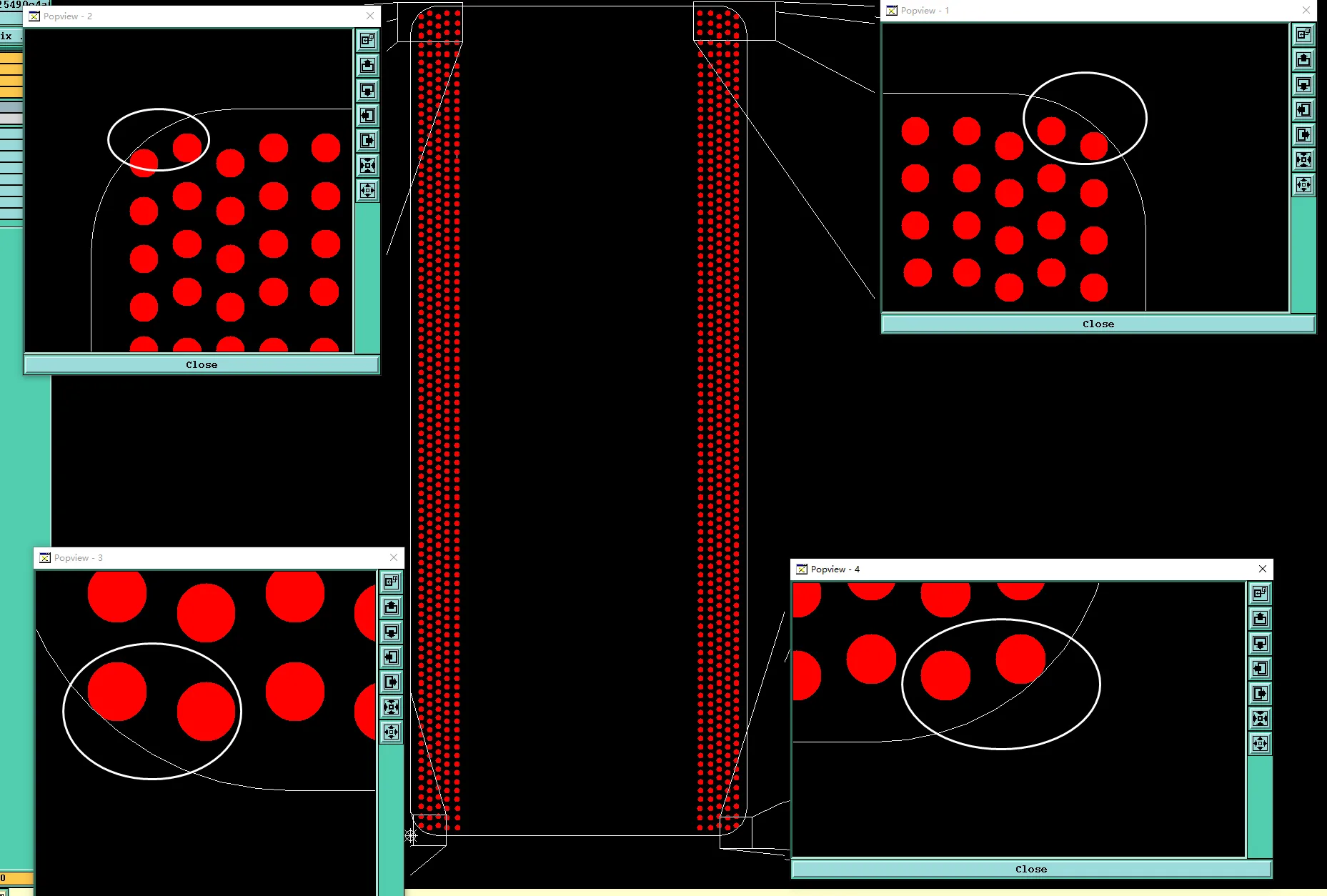
The same communication states that part of the silkscreen data extends beyond the outline. The factory then records its suggestion: the characters lying outside the outline will be deleted. The note does not identify which characters or how far they extend. It states only that a portion of the silkscreen data lies outside the outline and that the suggested action is to delete those characters.
White silkscreen is specified on both top and bottom in the order parameters. The suggestion concerns the portion of that data that falls outside the defined board contour. No instruction from the customer to retain the external characters is recorded, nor is any statement that the deletion has already been performed. The suggestion is presented as the action the factory proposes to take with the silkscreen data that exceeds the outline.
FPC Stack-Up and Silkscreen Confirmation Before Production
The thickness observation and the silkscreen observation are recorded in one communication that also requests confirmation of the production draft. The thickness item consists of the statement that conventional materials cannot match the noted 0.23 mm FPC thickness, followed by the request to confirm the factory stack-up of 0.30 mm ± 0.03 mm for the FPC and 0.50 mm ± 0.05 mm for the FPC plus FR4 stiffener. The silkscreen item consists of the statement that part of the character data extends beyond the outline, followed by the suggestion that those characters will be deleted.
The records do not link the two items to each other. The thickness point addresses the overall build of the 6-layer flexible circuit. The silkscreen point addresses artwork that lies outside the outline. Both are submitted for confirmation as part of the production draft. No subsequent note indicates that either proposal has been accepted, that the thickness has been changed in the released data, or that the external silkscreen characters have been removed.
Other parameters listed in the order—copper weights of 1/3 oz and 1/2 oz, ENIG, yellow coverlay, laser forming, and the single 0.2 mm FR4 stiffener—are present but are not cited in the engineering note as the reason the 0.23 mm thickness cannot be matched. The note attributes the limitation solely to conventional materials and offers the 0.30 mm / 0.50 mm stack-up in response. The silkscreen suggestion is likewise limited to the deletion of characters outside the outline.
FPC Thickness Approval and Silkscreen Revision Status
The engineering communication therefore contains two documented findings and two corresponding suggestions. The first finding is that the FPC thickness of 0.23 mm noted by the customer cannot be matched with conventional materials. The corresponding suggestion is the stack-up of 0.30 mm ± 0.03 mm for the flexible circuit and 0.50 mm ± 0.05 mm once the FR4 stiffener is included, submitted for confirmation. The second finding is that part of the silkscreen data extends beyond the outline. The corresponding suggestion is that the characters outside the outline will be deleted.
Both suggestions are included in the request to confirm the production draft. No acceptance of the proposed thicknesses, no confirmation that the silkscreen deletion has been applied, and no revised production files are present in the records. The items remain as stated in the engineering note: the 0.23 mm thickness cannot be achieved with conventional materials, the 0.30 mm / 0.50 mm stack-up is offered for confirmation, and deletion of the external silkscreen characters is suggested.