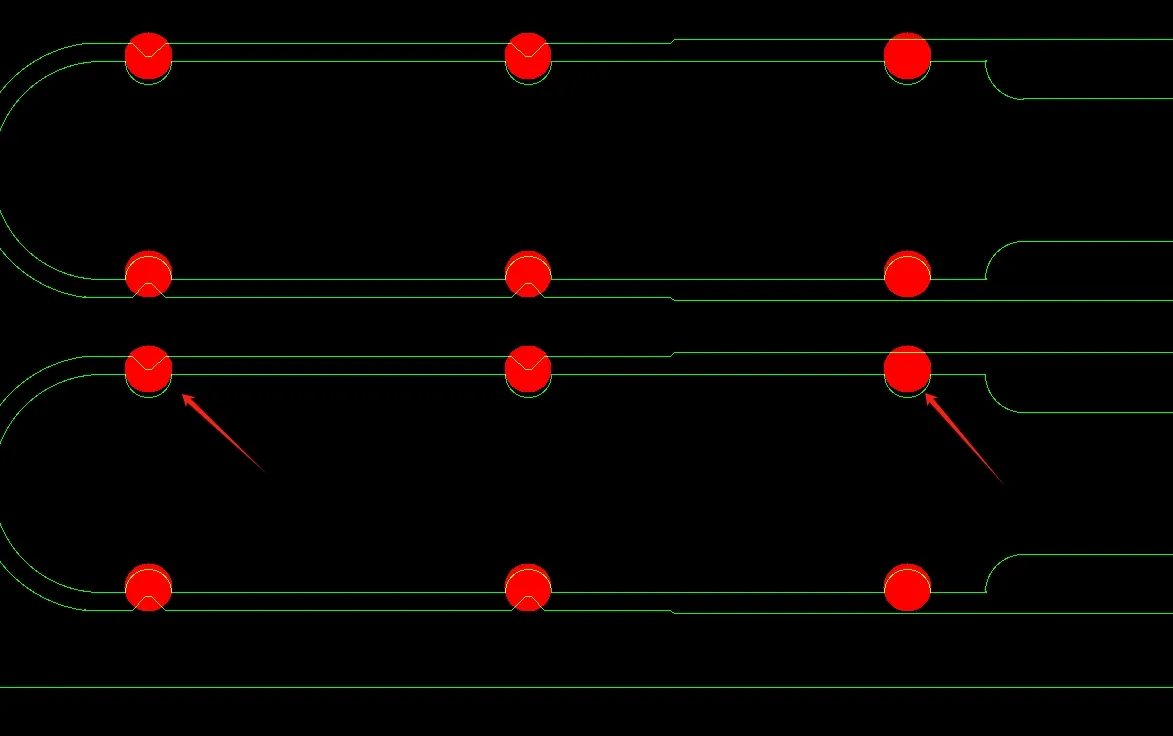
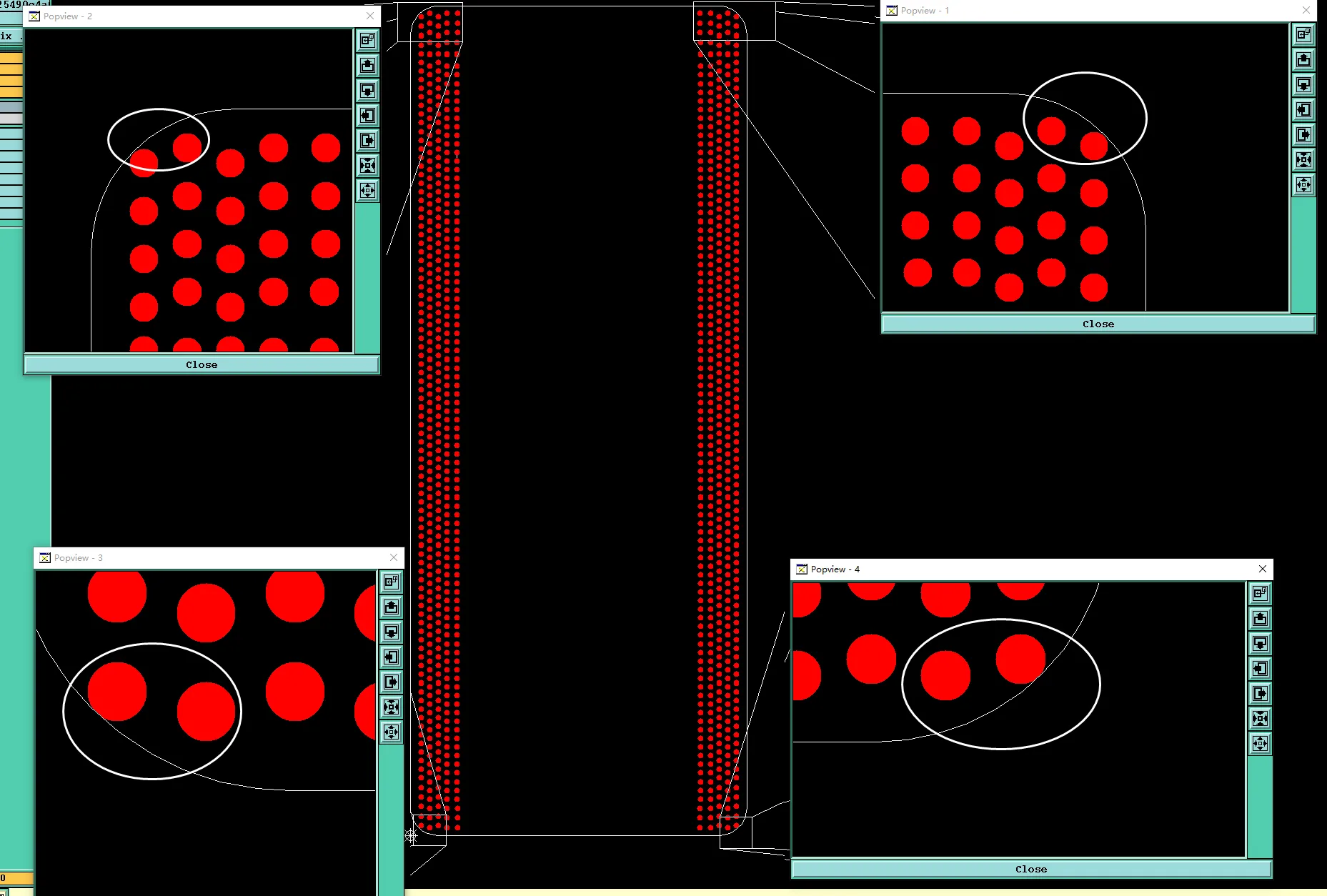
A PCB package can contain two released instructions for the same vias. The order system may say "cover oil," tent the vias, or plug them, while the Gerber solder mask layers show mask openings at those same drill hits. In other jobs, the Gerber itself contains a mixed population: some vias are open on both sides, some are covered, and some are covered on only one side.
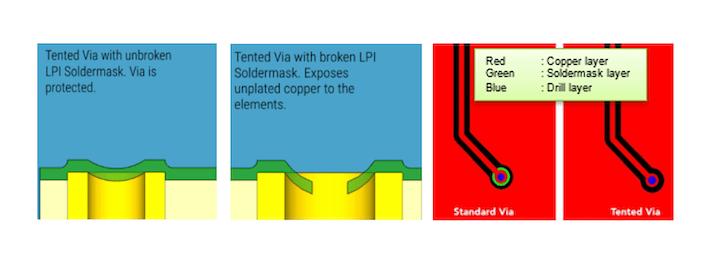
These are real EQ cases. The conflict is not whether via tenting is generally better than leaving a via open. The problem is that manufacturing has received incompatible instructions for the same holes. Solder mask imaging can either cover a via or leave a solder mask opening over it. It cannot do both on the same hit.
This article stays on that mismatch: what the order note and the solder mask layers each say, what a drill-to-mask overlay can prove, why the job cannot ship on a guess, and how the EQ usually closes.
| What arrived | What the files show | Why it stops |
|---|---|---|
| System order: tent / "cover oil" / plug | Solder mask openings on the via hits | Cover or plug on the note, open vias in the Gerber |
| Same global tent / "cover oil" note | Some vias open both sides, some tented, some open one side | The note does not name which drill hits it applies to, and the mask layers already show more than one treatment |
| Cover requested on the order | Artwork drawn open on the vias | Matching the note means editing the solder mask layers. Matching the Gerber means the order note is wrong. |
When the Order Note and the Solder Mask Layer Do Not Describe the Same Vias
The via instruction is in the order note or fabrication note, and again in the Gerber solder mask layers at each drill hit — either the mask covers the via, or there is a solder mask opening over it.
Before anyone edits a layer, separate:
- the wording on the order or fabrication note
- the solder mask aperture (or missing aperture) at each via, top and bottom
- the single treatment that will be imaged on that hole
- which file will be revised when the note and the mask layers do not match
Raise the EQ. Do not change the solder mask plot or add plug yet.
Two Instructions in One Package
The order note is a text line. It does not point to tool numbers or coordinates. The Gerber solder mask layer either has an opening on the via pad or it does not. An empty remark does not authorize covering every via that happens to have no opening. A checkbox reused from the previous order does not authorize deleting openings that are already in the mask layers.
Tent, "Cover Oil," Plug, and Open Are Not the Same Request
On the mask layers, a tented via has solder mask covering the via pad and hole, with no opening at that drill hit. However, as highlighted in DFM reviews of via tenting issues, this artwork treatment does not fill the via barrel. An open, or untented, via has a solder mask opening over the hit. That opening may provide clearance around that via only, or it may sit inside a larger opening that also covers nearby copper.
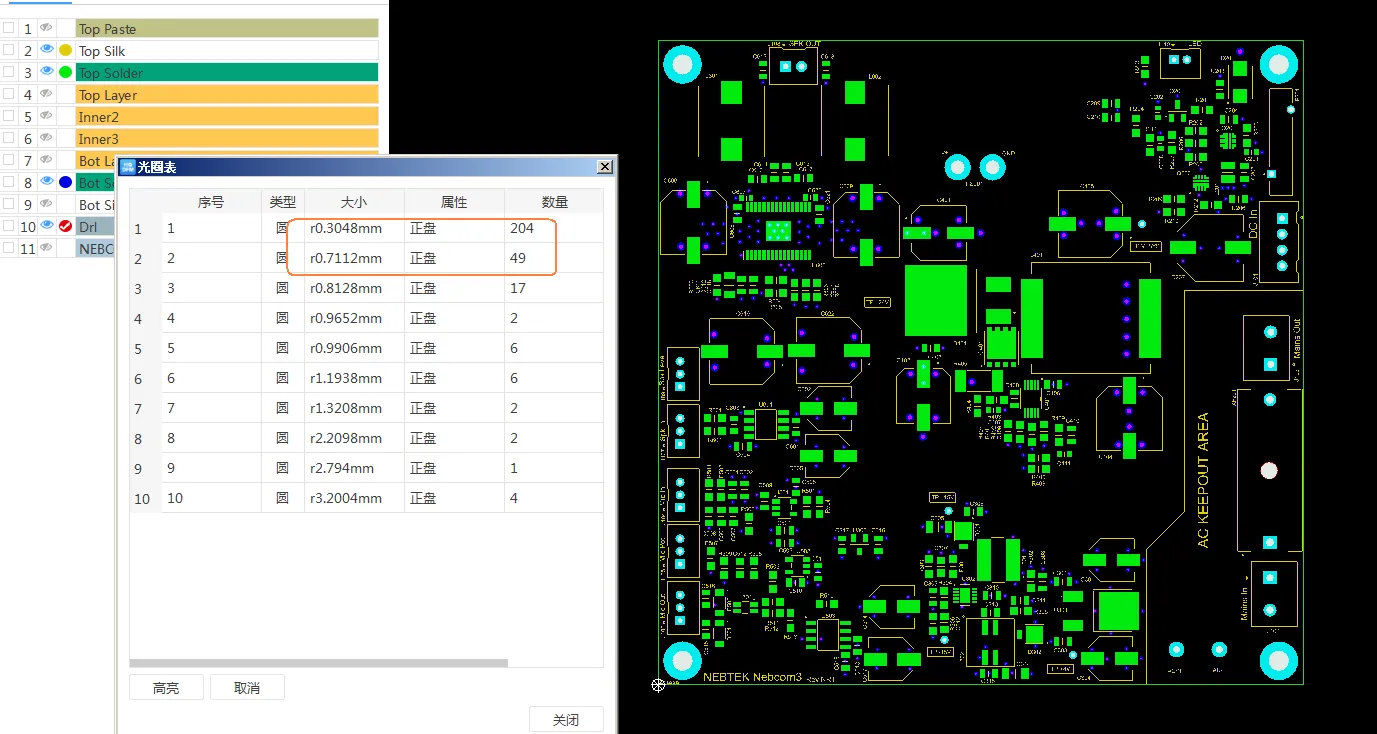
vias tenting for this order, but in the file, the vias are one side tenting and another side is solder mask opening
"Cover oil" is the wording on many order forms for mask over the via. Quote it. Do not treat it as a process name, and do not read it as plug. Plug is a separate process. If the same note says "cover oil" and plug, split those two words before anyone deletes mask openings or adds resin.
A via with no opening, covered by LPI, is also not automatic proof of IPC-4761 Type I dry-film tenting. Use Types I–VII only when the customer reply has to separate tent, plug, fill, and cap.
What the Drill-to-Mask Overlay Actually Shows
Plot the plated vias against the top and bottom solder mask layers. At each drill hit you can see whether mask is present or whether a solder mask opening sits on that pad, and you can see that on each side.
The plot only produces three pictures: opening on both sides; opening on one side and mask on the other; mask on both sides. CAD usually stores tenting as no solder mask expansion on that via. Gerber only stores whether an aperture is there. Neither file stores an IPC-4761 type.
"Tent vias" on the order does not list tool numbers. If the package has no via table, no drawing callout, and no attribute that marks which hits are tented, CAM cannot decide "cover these vias, leave those open."
Read the note for a via class — all vias, stitching vias, test vias. Read it again if it says "all holes." That wording also lands on component PTHs in the same drill file. If the note does not name a class, write that down. Do not assign one.
What the Overlay Measures
At each via, each side: solder mask or a solder mask opening. Whether those openings are individual clearances or part of a larger opening that includes the via. Whether every via looks the same, or the board already has more than one treatment. Whether the order note matches the whole plot or only some of the hits.
What the Overlay Does Not Measure
Why the CAD library left that via with or without a mask opening. Whether "cover oil" on the form meant LPI over the via or plug. Which vias have to stay open for flying probe, thermal vias, or rework. Whether a via drawn with no opening will actually tent or stay sealed after imaging and cure. Whether a pad in the via drill list is really a via or a component PTH — flag the pad, do not reclassify it.
| Overlay can show | Overlay cannot show |
|---|---|
| Mask or a solder mask opening at each via, each side | Why the library left that via with or without an opening |
| Open both sides, open one side, or covered both sides | Whether "cover oil" meant LPI over the via or plug |
| A clearance on that via vs a larger opening that includes it | Which vias must stay open for test or probe |
| Every via treated the same vs two or three treatments on one board | Whether a covered via will tent or stay sealed after imaging |
| That the order note does not match the mask plot | An IPC-4761 type |
| That "all holes" would also include PTHs in the same drill file | Via vs PTH when a pad was used as a via in CAD |
Tent or Plug Written on the Order, Solder Mask Openings in the Gerber
Most of these EQs look like this. The order says "tented vias," "cover oil," or "via plug." The top and bottom solder mask layers have openings on the via pads. The opposite package also shows up: the note says open, or says nothing, and the mask layers cover the vias. The review is the same with the two files swapped.
Copy the note wording into the EQ: tent, "cover oil," plug, cap, or fill. Check the fabrication drawing for the same line—or for wording that creates a resin plug and via tenting conflict. A via-in-pad note somewhere else only indicates that some openings may have been drawn intentionally; it does not settle whether the remaining vias should be tented or left open.
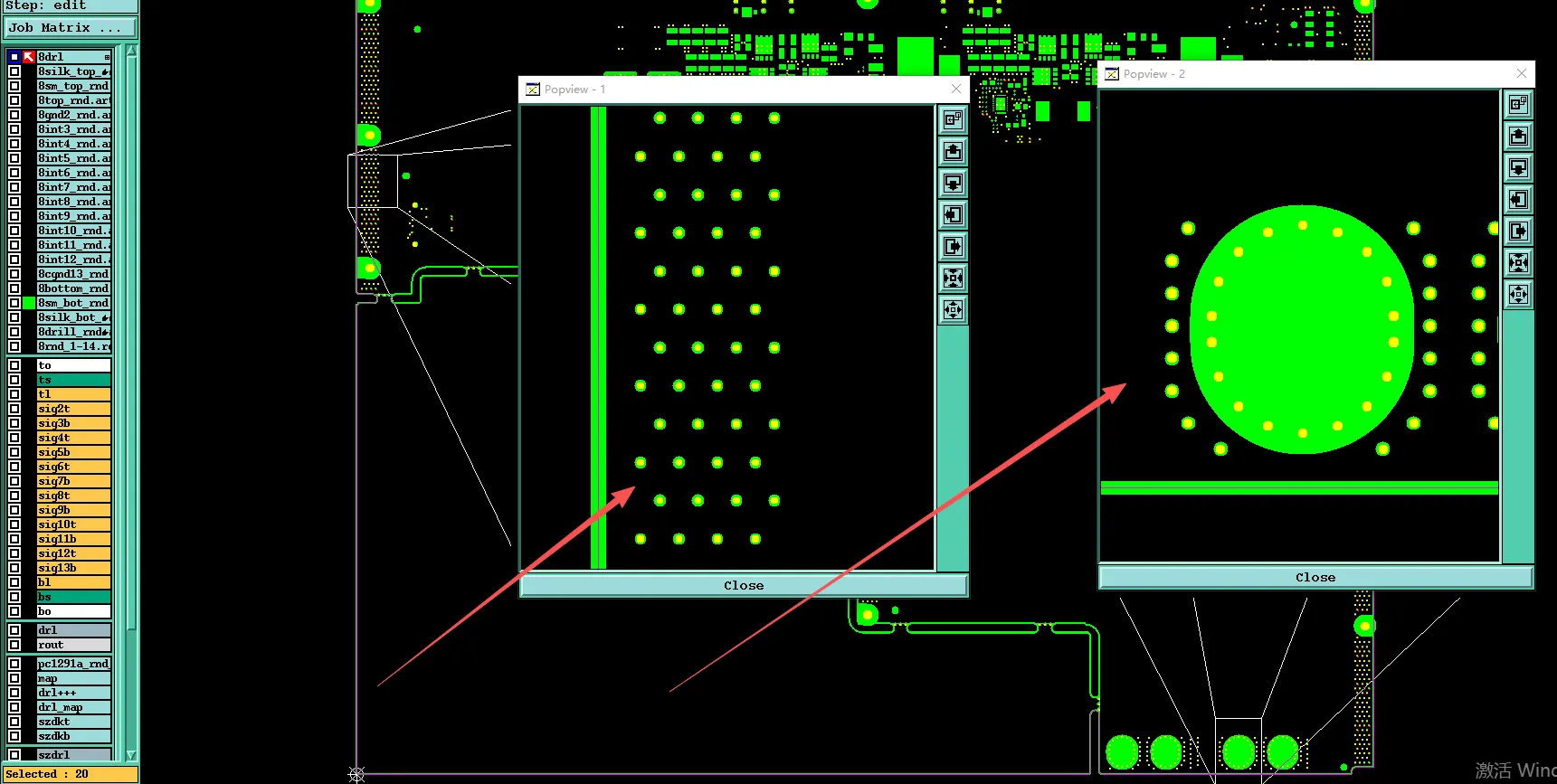
The notes required resin plug and tenting but the bottom solder-mask Gerber contained clear openings over the holes
Why You Cannot Default to the Note
Order-form remarks are often copied from the last job. Solder mask imaging uses the Gerber unless CAM is told to edit it. Delete the openings to match "tent vias" and you can cover hits that were left open for probe or assembly. The note does not list those hits.
Why You Cannot Default to the Gerber
The purchase order may still require tenting or plug. If the board ships with open vias against that note, assembly can reject exposed copper or solder in the holes against the order they placed. The mask layers show what will be imaged. They do not cancel the order line.
Some Vias Open Both Sides, Other Vias Tented
On this board, the overlay does not show a single consistent treatment. Some vias have openings on both the top and bottom, while others are covered on both sides. Some are open on one side only. Designers often tent stitching vias while leaving test or thermal vias open, and the same mixed treatment can also come from a library without a written rule. When reviewing via tenting and outgassing considerations, treat one-sided coverage as its own group rather than simply classifying it as "tented" or "open."
Do not apply the via note to component PTHs in the same drill file. If via-in-pad is already called out, use that only as a clue that some openings were intentional.
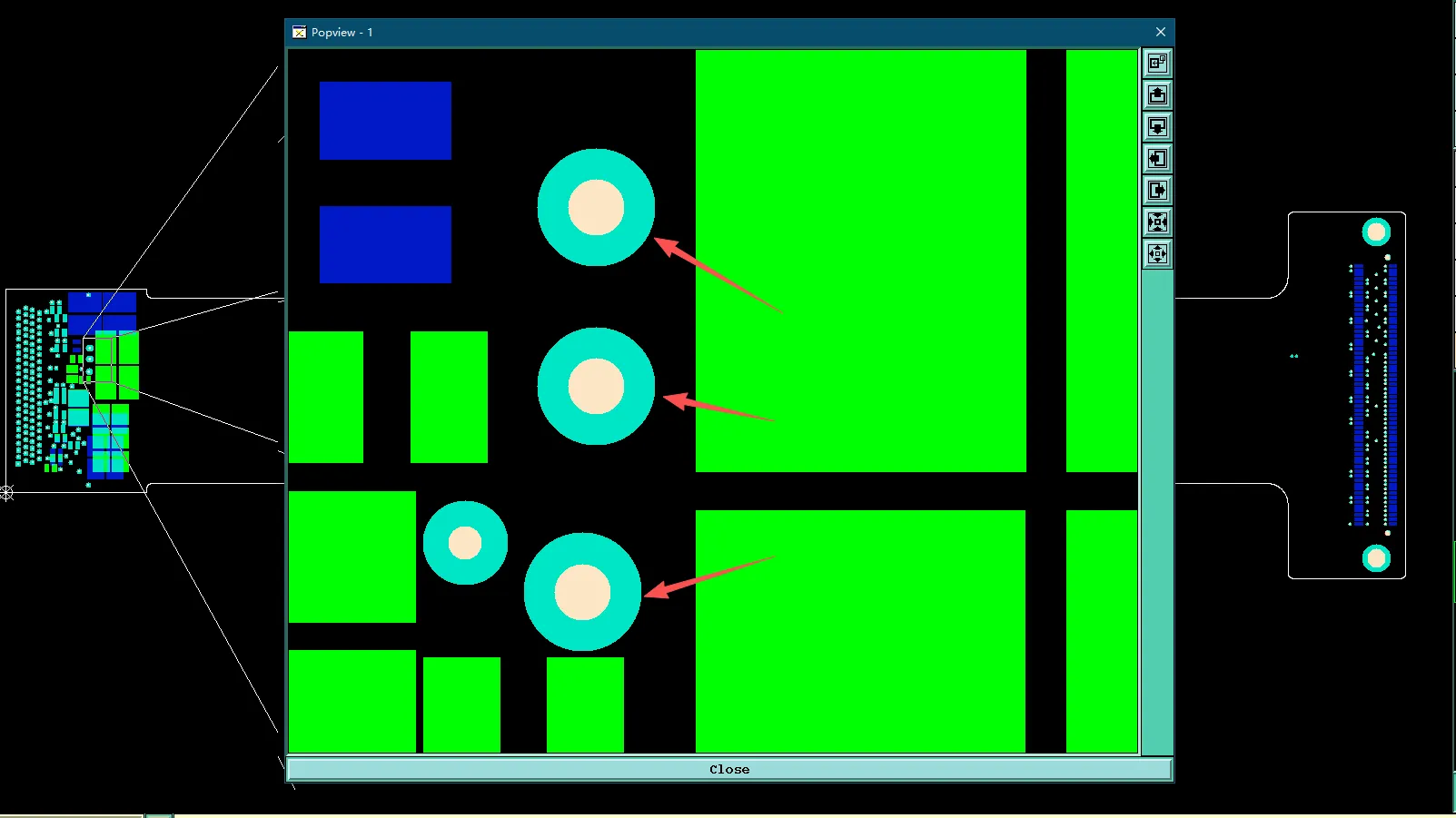
the original design shows double-sided via openings
A Global Tent Note on a Mixed Board
"Tent vias" matches only the covered hits. The mask layers match only part of the note. Hold the job there. Do not pick which group is the rule.
No Via Table in the Package
The customer has to mark which tool numbers or which hits stay open and which get covered. "Follow Gerber" closes the EQ only when that sentence is in the reply, because it overrides the order note.
What an Unresolved Via Treatment Does in Fabrication and Assembly
Solder mask is imaged once per side from one plot. The same via cannot be covered and open. If the note called for plug and the board ships with open vias or with mask-only cover, the shipped panel does not match the order.
On the assembly side, the complaints that belong to this finding are:
- solder wicking from a nearby pad into an open via
- solder balls in an open via when the order said the via was tented
- exposed via copper rejected against the customer's own cover note
Do not attach hole-size yield limits, plug-void criteria, or AQL to this EQ. Those are not in the files.
Solder in an Open Via When the Note Said Tented
If the mask openings ship against a cover note, the barrel is open to solder. That is the path that produces solder ball in via. It is not a claim about defect rate on a given drill size.
Tented Artwork When the Via Was Drawn Open
Removing solder mask openings to match the note changes the Gerber. Probe pads, thermal vias, and rework vias that were drawn open get covered with them. Do not delete those openings from the order text alone.
What the EQ Asks the Customer to Confirm
Quote the order line. State the overlay: every via open, every via covered, or mixed — and on which sides. Ask for one treatment per group of vias. Ask tent / "cover oil" and plug as separate questions. If the note says "all holes," ask whether that includes component PTHs.
The reply has to name which vias, which treatment, which side or sides, and whether the order note or the solder mask layers will be revised.
Questions on a Uniform Mismatch
Follow the note: CAM edits the solder mask openings, and adds plug only if the reply says plug. Or follow Gerber: the order note is corrected. Ask whether "cover oil" means mask over the via only, plug, or plug and cover.
A reply that works: "Follow Gerber. Remove the tent remark." Or: "Tent all vias both sides. Remove the mask openings on the via pads. No plug." "OK to proceed," with neither file chosen, does not close it.
Questions on a Mixed Board
Group the hits the overlay already shows: open both sides; covered both sides; open one side if that group exists. Ask which groups stay as drawn. Ask whether the global note is deleted, rewritten, or replaced by a via table. "Tent the small ones" is not a group. Drill tools or a marked set is.
How These Findings Usually Close
The job closes one of three ways. CAM does not choose the treatment. After the reply, write the chosen treatment on the traveler so the mask plot and the order record match.
Close Path — Follow Gerber, Correct the Note
The openings were drawn on purpose. The portal note was left over from another job. Leave the solder mask layers. Change the order note.
Close Path — Follow the Note, Edit the Mask
Tenting or plug was what was purchased. The library left openings on the via pads. Edit only the vias named in the reply. Add plug only when the note and the reply both require it.
Close Path — Split the Via Population
The overlay already shows more than one treatment. The customer supplies a via class or a marked set. Update the order note and the mask layers to that split. The overlay alone does not mean "tent the small drills."
| Close path | When it applies | What changes | What does not close it |
|---|---|---|---|
| Follow Gerber, correct the note | Mask openings were intentional; the order line was a leftover | Order note and traveler | Leaving tent / "cover oil" / plug on the order |
| Follow the note, edit the mask | The purchase was tent or plug | Solder mask openings on the named vias; plug only if both ask | Deleting openings with no named via list |
| Split the population | Two or three treatments on the overlay, no via table | Written class; note and mask layers both updated | "Tent the small ones" or "OK to proceed" |
Matching the Order Note to the Solder Mask Plot Before Release
Plot solder mask top and bottom together with the drill layer. Read the via line on the order form or fabrication note exactly as written. If that line covers all vias, the mask plot has to show the same treatment across all vias. If the plot already shows more than one treatment, the note has to specify which vias are tented and which remain open. When reviewing PCB solder mask and via design, if the note says plug, look for more than a simple mask-opening decision—raise the mismatch rather than assuming a plug construction. If the note says the vias are tented, the plot has to show whether the tenting is on one side or both. Do not let one sentence cover both vias and component PTHs.
Three Checks That Catch This Finding
- order line vs a plot that is all open or all covered
- order line vs a plot that already has more than one via treatment
- "cover oil" and plug written as if they were the same request
If one of those three fails, the package already has two instructions for the same holes.
FAQ
Q1: The order says tent or "cover oil," and every via has a solder mask opening. Which file wins?
A1: Neither file. The reply has to choose the note or the Gerber and revise the other.
Q2: Can CAM cover only the vias that are currently open if there is no via table?
A2: No. That split needs named tool numbers or a marked set.
Q3: Does "cover oil" mean plug?
A3: No. On the order form it means mask over the via. If the same note also says plug, ask those as two questions.
Q4: Some vias are open both sides and some are tented. Can we follow Gerber and ignore the global tent note?
A4: Only when the reply says follow Gerber. That sentence is what overrides the note.
Q5: If the mask is edited to match the tent note, what happens to test or thermal vias?
A5: Those solder mask openings are removed. Do not delete them from the order line alone.
Q6: The via is covered on one side only. Is that tented or open?
A6: It is covered on one side. If the note says tented, the reply has to say which sides.