Introduction
Flexible PCBs give engineers more freedom when space, weight, and mechanical movement are important. They can bend around components, connect moving parts, and fit into compact electronic assemblies where rigid boards are difficult to use. However, the materials, construction, and manufacturing processes used for flexible circuits can make their cost more difficult to estimate than that of a conventional rigid PCB.
Understanding flexible PCB cost optimization early in the design process can help avoid unnecessary expenses without compromising electrical or mechanical performance. Material selection, layer count, circuit complexity, board size, panel utilization, stiffeners, surface finish, tooling, and production volume can all influence the final flexible PCB cost.
This guide explains the main factors behind flexible PCB cost, how manufacturing decisions affect flex PCB price, and how engineers can optimize a flexible circuit before requesting a flexible PCB quote.
What Determines Flexible PCB Cost and Price?
The cost of a flexible PCB is not determined by one specification. A simple single-layer circuit with a straightforward outline may require relatively little processing, while a multilayer flex circuit with complex routing, multiple stiffeners, tight mechanical requirements, and specialized finishing can require considerably more work.
For this reason, the quoted price should be evaluated as the result of the complete design and manufacturing requirements rather than as a simple price per square inch or per board.
Key Factors That Affect Flexible PCB Cost
Several factors commonly influence flexible PCB cost, including:
- Base material and copper construction
- Number of conductive layers
- Circuit density and routing complexity
- Board dimensions and outline
- Coverlay requirements
- Stiffeners
- Surface finish
- Special fabrication requirements
- Tooling and setup
- Inspection and testing
- Production quantity
- Panel utilization
These factors are often connected. For example, increasing the layer count may require additional lamination and processing steps, while a more complicated mechanical design may require additional tooling or manufacturing controls.
The most effective approach is therefore to evaluate the complete design rather than trying to reduce one specification in isolation.
How Design Complexity Influences Flex PCB Price
The complexity of the flexible circuit design has a direct effect on flex PCB price because more complicated circuits generally require more manufacturing steps and tighter process control.
Dense routing, small features, complex board outlines, multiple bend areas, unusual cutouts, and demanding mechanical interfaces can all increase manufacturing difficulty. Tight tolerances can also add cost when they require additional process control or inspection.
This does not mean that every flexible PCB should be designed as simply as possible. The goal is to distinguish between features that are necessary for product performance and features that add complexity without providing a meaningful benefit.
A design review before FPC board fabrication can help identify unnecessary complexity while keeping important electrical and mechanical requirements intact.
How Material Selection Affects FPC Cost
Material selection is another major factor in FPC cost.
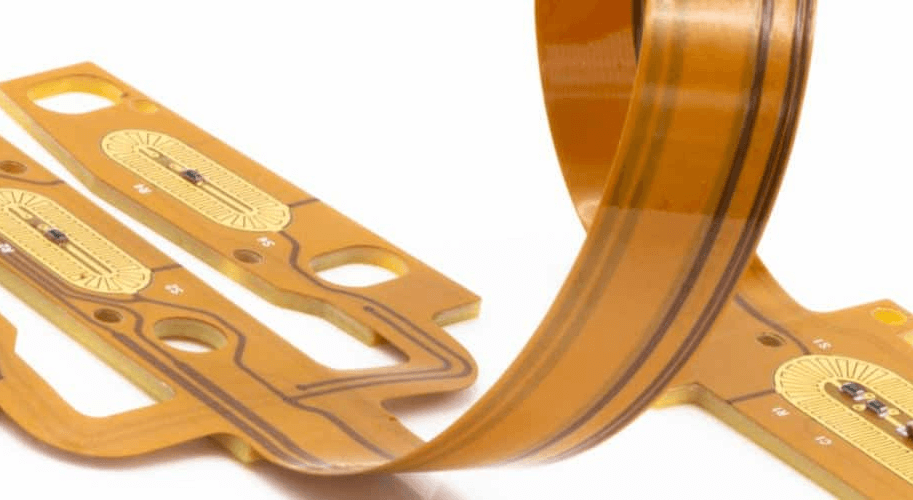
Flexible circuits commonly use materials such as polyimide, copper foil, coverlay, adhesives, and stiffeners. Different material constructions offer different combinations of flexibility, thermal performance, electrical characteristics, mechanical durability, and cost.
Polyimide is widely used when a flexible circuit needs good thermal and mechanical performance. Other material options may be appropriate for applications with different environmental or cost requirements.
The lowest-cost material is not always the most economical choice. A material that does not meet the application's thermal, bending, electrical, or reliability requirements can create additional redesign and manufacturing costs later.
Material selection should therefore begin with the actual application requirements rather than simply choosing the least expensive option.
Suggested Reading: PCB Material Costs: Choosing the Right Substrate to Balance Performance and Price
Layer Count and Circuit Complexity
Layer count is one of the most visible factors affecting flexible PCB pricing.
A single-layer flexible circuit generally requires a simpler manufacturing flow than a multilayer construction. Additional layers can increase material usage and introduce additional processing requirements.
Circuit density also matters. A design with straightforward routing and standard features is generally easier to manufacture than one that combines dense traces, small openings, complex geometries, and demanding mechanical requirements.
Before adding another layer, engineers should consider whether the same electrical function can be achieved through a simpler stack-up or routing approach.
Board Size and Panel Utilization
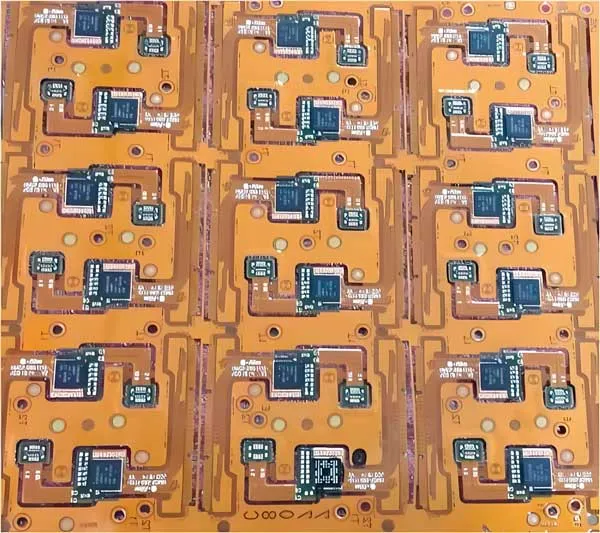
Board size affects both material consumption and how efficiently individual circuits can be arranged during production.
A design that leaves large unused areas around each circuit may result in lower material utilization. Better nesting can allow more boards to fit into a manufacturing panel, reducing material waste and improving production efficiency.
Panelization should therefore be considered during design rather than after the layout is completed.
For high-volume products, even a small improvement in panel utilization can have a meaningful effect on the overall manufacturing cost.
Stiffeners, Coverlay, and Additional Features
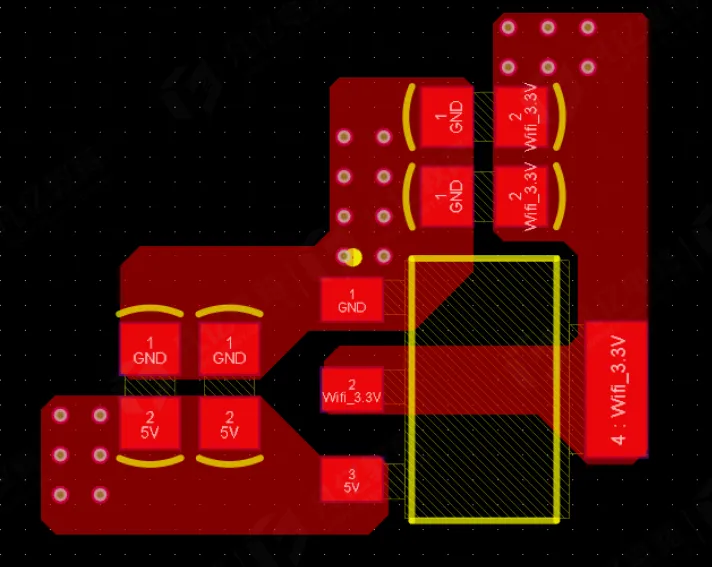
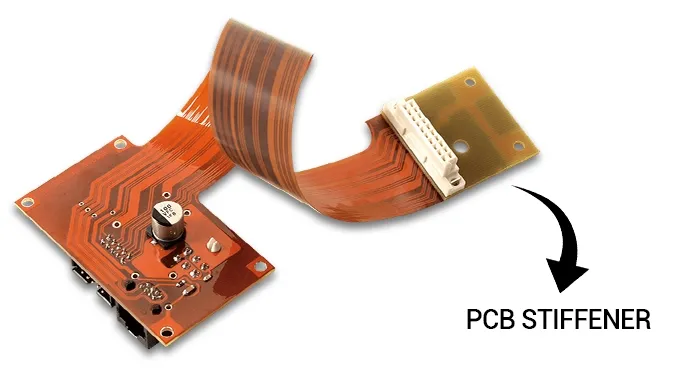
The flex PCB stiffener commonly used in flexible circuits to reinforce areas that need additional mechanical support, such as connector interfaces or component mounting areas.
They can be useful, but each additional stiffener introduces material and processing requirements. The same principle applies to complex FPC coverlay, shielding structures, special cutouts, and other additional features.
The goal is not to eliminate these features. Instead, they should be placed where they provide a clear functional benefit.
A well-designed flexible PCB uses reinforcement where mechanical requirements demand it while keeping the rest of the flexible area as simple as practical.
Suggested Reading: PCB Cost Calculator: How PCB and Assembly Pricing Is Estimated
Surface Finish and Processing Requirements
Surface finish affects both manufacturing cost and the suitability of a flexible circuit for its intended application.
The appropriate finish depends on factors such as soldering requirements, connector interfaces, storage conditions, and reliability expectations. Premium finishes may be appropriate for certain applications, while simpler options may be sufficient for others.
The same principle applies to other special processing requirements. Engineers should specify additional manufacturing processes only when they are required by the product.
This helps prevent the flexible PCB price from increasing because of specifications that do not contribute to actual product performance.
Production Volume and Tooling Costs
Production quantity has an important influence on the unit cost of a flexible PCB.
Prototype and low-volume production often carry setup and tooling costs that are distributed across a smaller number of boards. As production volume increases, these fixed costs can be spread across more units.
However, volume should not be increased simply to obtain a lower unit price. Production planning should be based on actual demand, product maturity, inventory requirements, and expected design changes.
A practical cost strategy is to keep early prototypes flexible enough for design validation and optimize production economics after the design has been proven.
Why Prototype Flex PCB Cost Can Be Higher
Prototype flex PCB cost can be influenced by several factors:
- Small production quantities
- Tooling or setup requirements
- Engineering review
- Material preparation
- Design changes
- Special processing
- Short production schedules
- Additional inspection or testing
Prototypes may also go through several design revisions before the final production version is released.
For this reason, engineers should not judge the long-term manufacturing economics of a flexible PCB solely from the price of the first prototype order.
How to Control FPC Cost During Prototyping
The prototype stage is a good opportunity to identify cost drivers before they become difficult to change.
Engineers can begin with a practical design that meets the essential electrical and mechanical requirements. Unnecessary complexity can be removed before the design moves into larger production.
It is also useful to review material selection, bend areas, stiffeners, panelization, and manufacturing tolerances before submitting the design for production.
When several design iterations are expected, planning the prototype process carefully can also reduce repeated setup and production expenses.
Flexible PCB Cost Optimization Strategies
Effective flexible PCB cost optimization starts before the manufacturing quotation is finalized. The earlier cost drivers are identified, the more options engineers have to change them.
Optimize Flex PCB Design Before Manufacturing
Design decisions often have a larger impact on cost than changes made after manufacturing has already started.
Start by reviewing whether the layer count is appropriate for the electrical requirements. Next, check whether the board outline, routing density, bend areas, stiffeners, and coverlay openings are necessary for the application.
Avoid unnecessarily tight tolerances when standard manufacturing capabilities are sufficient.
It is also useful to consider manufacturing panelization while creating the board outline. A design that is easier to nest can reduce material waste and improve production efficiency.
Select Materials Based on Actual Requirements
Material selection should balance performance, reliability, and cost.
Instead of automatically choosing the most advanced or expensive material, engineers should identify the actual requirements of the application. These may include:
- Operating temperature
- Flexing conditions
- Bend requirements
- Electrical performance
- Connector requirements
- Mechanical durability
- Environmental conditions
- Expected product life
Once these requirements are clear, the material stack-up can be selected accordingly.
This approach helps control FPC cost without treating material price as the only consideration.
Improve Panel Utilization
Panel utilization is an important but sometimes overlooked part of flex PCB cost optimization.
The shape and dimensions of the individual circuit can affect how efficiently multiple boards can be arranged for production. Large unused areas or inefficient board orientations can increase material waste.
During the design review, engineers and manufacturers can evaluate possible panel layouts and determine whether minor changes to the board outline or orientation could improve utilization.
This is particularly useful for production programs where the same design will be manufactured repeatedly.
Avoid Unnecessary Features and Tight Tolerances
Not every advanced feature improves product performance.
For example, unnecessarily tight dimensional tolerances, excessive stiffener coverage, complicated cutouts, or special finishes can increase manufacturing requirements without providing a corresponding benefit.
The better approach is to identify which specifications are critical and which can use standard manufacturing conditions.
This allows the design to maintain its important performance characteristics while avoiding unnecessary manufacturing complexity.
Plan Production Volume and Tooling Early
Production planning also plays a role in flexible PCB cost optimization.
If a product is expected to move from prototype to regular production, engineers should consider the future manufacturing process during the early design stage.
This can include reviewing:
- Expected production volume
- Tooling requirements
- Panelization
- Standard material availability
- Manufacturing process compatibility
- Inspection requirements
Early planning makes it easier to move from prototype production to a stable manufacturing process without redesigning the board solely for cost reasons.
Suggested Reading: Ways to Reduce PCB Manufacturing Costs
Balancing FPC Cost and Performance
Cost reduction should not mean removing features that are essential to product performance.
When the Lowest Flexible PCB Price Is Not the Best Choice
The lowest flexible PCB price may not always represent the lowest overall project cost.
A very low initial quotation may be associated with a material construction that does not fit the application, limited manufacturing options, or additional costs for required processes that were not included in the initial estimate.
Engineers should compare quotations based on the same technical requirements and production conditions.
Balancing Material, Reliability, and Manufacturing Cost
A successful flexible circuit needs to balance cost with electrical, mechanical, and environmental requirements.
For example, a material that is slightly more expensive may be appropriate if it provides the flexibility or thermal performance required by the application. Similarly, a stiffener may add cost but be necessary to ensure reliable connector assembly.
The objective of cost optimization is therefore not to minimize every individual specification. It is to achieve the required performance with the simplest practical manufacturing solution.
Conclusion
Understanding flexible PCB cost requires more than looking at material prices or board dimensions. Layer count, circuit complexity, materials, stiffeners, coverlay, surface finish, panel utilization, tooling, production volume, and manufacturing requirements all contribute to the final price.
The most effective flexible PCB cost optimization strategy is to address these factors during the design stage. Simplifying unnecessary complexity, selecting materials based on actual requirements, improving panel utilization, and reviewing manufacturability early can help reduce unnecessary expenses without compromising product performance.
For projects that require engineering support, a flexible PCB design service and early DFM review can also help identify potential cost issues before production begins.
When the design is ready, providing complete technical information allows a manufacturer to prepare a more accurate flexible PCB quote based on the actual requirements.
FAQs
Q1: What are the main flexible PCB cost drivers for engineers to consider?
A1: Flexible PCB cost drivers include material selection, layer count, design complexity, and manufacturing processes. Substrate choices like polyimide and features such as stiffeners add to expenses. Higher layer counts and intricate designs increase production time and material use. By understanding these factors, engineers can prioritize essential elements and simplify designs to manage costs effectively while meeting performance needs.
Q2: How can I reduce flex PCB manufacturing costs without losing quality?
A2: Reducing flex PCB manufacturing costs involves optimizing design for manufacturability. Use standard panel sizes to minimize waste, limit layer count, and avoid unnecessary features like excessive stiffeners. Select cost effective materials that still meet standards like IPC 6013D for performance. Early collaboration with manufacturing teams can also identify savings opportunities without compromising reliability or functionality.
Q3: What impacts prototype flex PCB cost during development?
A3: Prototype flex PCB cost is influenced by small batch sizes, custom tooling, and rapid turnaround needs. Limited production runs mean setup fees are not spread across many units, increasing per unit expenses. Non standard materials or expedited processing further elevate costs. Simplifying initial designs and batching multiple iterations can help manage expenses during this critical phase.
Q4: How does optimizing flex PCB design for cost improve project outcomes?
A4: Optimizing flex PCB design for cost ensures projects remain within budget while meeting technical requirements. Simplifying layer count, using standard sizes, and minimizing specialized features reduce expenses. This approach allows engineers to allocate resources to critical performance areas, enhancing reliability. Following guidelines like IPC 2223D supports cost efficient designs that maintain quality for successful outcomes.
Q5: What are the main flexible PCB cost drivers?
A5: The main flexible PCB cost drivers include material selection, layer count, circuit complexity, board size, panel utilization, stiffeners, coverlay, surface finish, tooling, testing, and production volume. The importance of each factor depends on the specific design.
Q6: How can I reduce flex PCB manufacturing costs without losing quality?
A6: You can reduce flex PCB manufacturing cost by simplifying the design where possible, selecting materials based on actual application requirements, improving panel utilization, avoiding unnecessary tight tolerances, and limiting special features to areas where they provide a clear benefit. Early DFM review can also identify potential savings before production.
Q7: How much does a flexible PCB cost?
A7: There is no single price for a flexible PCB. Flexible PCB cost depends on the material construction, layer count, board dimensions, circuit complexity, surface finish, stiffeners, tooling, production quantity, and other manufacturing requirements. A reliable estimate normally requires the actual design files or detailed specifications.
Q8: What is the difference between flexible PCB cost and flexible PCB price?
A8: Flexible PCB cost refers to the manufacturing and project costs involved in producing the circuit, while flexible PCB price is the amount quoted to the customer by a supplier. The quoted price may reflect materials, manufacturing, engineering, tooling, inspection, production volume, and other associated costs.
Q9: How can I get a flexible PCB quote?
A9: To request a flexible PCB quote, provide the PCB design files or available specifications, including board dimensions, layer count, material requirements, surface finish, stiffeners, quantity, and any special manufacturing requirements. More complete information allows the manufacturer to prepare a more accurate quotation.
Q10: Does production volume affect FPC price?
A10: Yes. Production volume can affect FPC price because setup, tooling, and other fixed costs are distributed across different quantities. Prototype and low-volume orders may have higher unit costs, while larger production runs can improve manufacturing efficiency and spread fixed costs across more boards.
Q11: What information is needed for a flexible PCB quote?
A11: A flexible PCB quote usually requires information about the board dimensions, layer count, material construction, copper requirements, surface finish, stiffeners, quantity, and special requirements. PCB design files are particularly useful because they allow the manufacturer to review the actual design and manufacturing requirements.
Q12: Can a flexible PCB design service help reduce cost?
A12: Yes. A flexible PCB design service can help identify unnecessary complexity before manufacturing. Reviewing the layer structure, material selection, bend areas, stiffeners, coverlay, tolerances, routing, and panelization early can help create a design that is easier and more economical to manufacture.
References
IPC 6013D — Qualification and Performance Specification for Flexible and Rigid Flex Printed Boards. IPC, 2017.
IPC 2223D — Sectional Design Standard for Flexible/Rigid Flex Printed Boards. IPC, 2016.
IPC A 600K — Acceptability of Printed Boards. IPC, 2020.