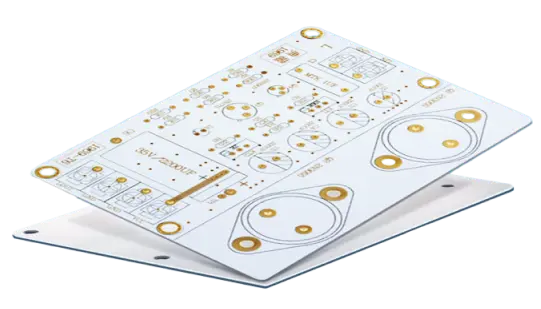
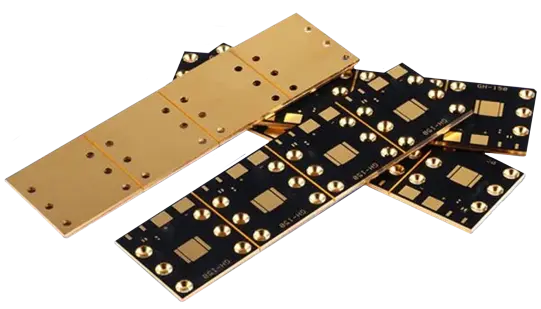
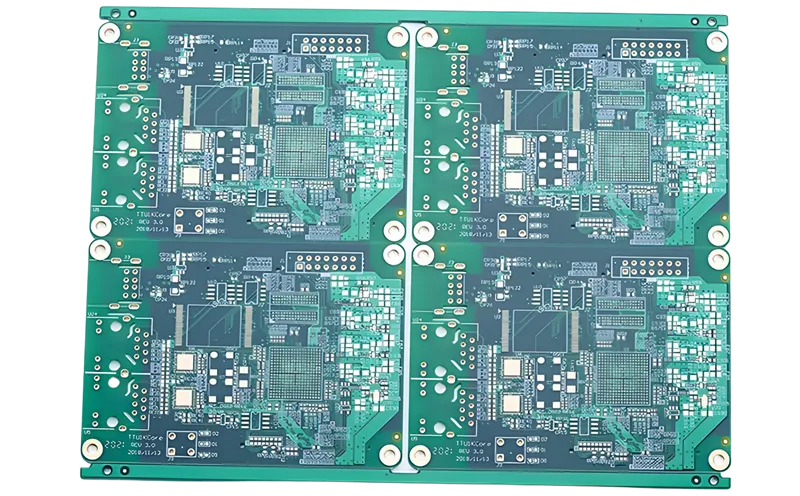
These boards deliver efficient thermal transfer for LED lighting, power modules, and automotive electronics through an aluminum substrate with dielectric insulation.
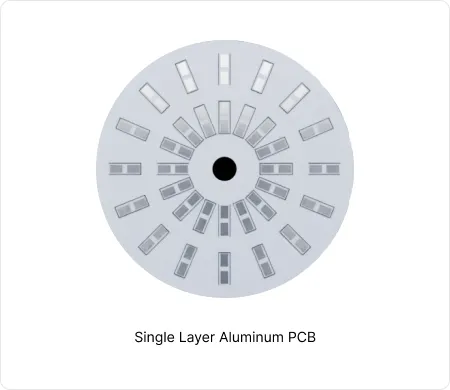
| Parameter | Typical Range |
|---|---|
| Layer count | 1 |
| Material type | Aluminum alloy base with dielectric layer |
| Surface finish | HASL, ENIG, OSP |
| Thickness | 0.8mm to 3.2mm |
| Solder mask | White, Black |
| Copper thickness | 1oz to 2oz |
| Special features | High thermal conductivity, exposed aluminum options, selective plating |
Material Preparation and Lamination
Aluminum sheets are cleaned then bonded with dielectric film and copper foil under controlled heat and pressure.
Patterning and Etching
Photoresist application, exposure, and etching define the circuit pattern on the copper layer.
Drilling and Plating
Precision drilling creates holes. Copper plating follows to establish electrical connections where required.
Surface Finish Application
Finish selection balances solderability, thermal performance, and environmental protection needs.
Process controls manage thermal expansion mismatch to prevent warping during lamination and assembly.
| Order Quantity | Order Proportion | Estimated Price Level | Typical Lead Time |
|---|---|---|---|
| Prototype (<=30 pcs) | 44% | From $1 | From 1 day |
| Small volume (30-200 pcs) | 28% | From $5 | From 1 day |
| Mass production (>200 pcs) | 28% | From $40 | From 1 day |
| Order ID | PCB Type | Layers | Dimensions | Solder Mask | Surface Finish | Quantity | Action |
|---|---|---|---|---|---|---|---|
| Loading... | |||||||
AIVON automotive electronics PCBs are designed for demanding vehicle environments. They withstand extreme temperatures, vibration, and harsh conditions, supporting ECUs, ADAS, infotainment, and EV modules. Featuring multilayer, rigid-flex, and high-frequency designs, AIVON PCBs meet IATF 16949 standards for safe and reliable automotive performance.
AIVON engineers rugged PCBs for industrial control systems demanding unwavering reliability in harsh environments. Featuring high-Tg materials, heavy copper, and conformal coatings, our solutions withstand extreme heat and vibration. We ensure superior signal integrity and long-term stability for PLCs, robotics, and drives, maximizing your operational uptime.
Maximize LED performance with our specialized metal-core PCBs (MCPCBs), engineered for superior thermal management in high-power lighting systems. We ensure extended lifespans for commercial applications, while our versatile flexible PCBs enable innovative, complex geometries. Achieve peak efficiency and design freedom with our advanced solutions.
Choose AIVON for single-layer aluminum PCBs with reliable thermal performance, consistent manufacturing quality, and flexible customization. From prototypes to volume production, we provide precise fabrication, engineering support, and strict quality control to help ensure your aluminum PCBs meet performance, reliability, and application requirements.
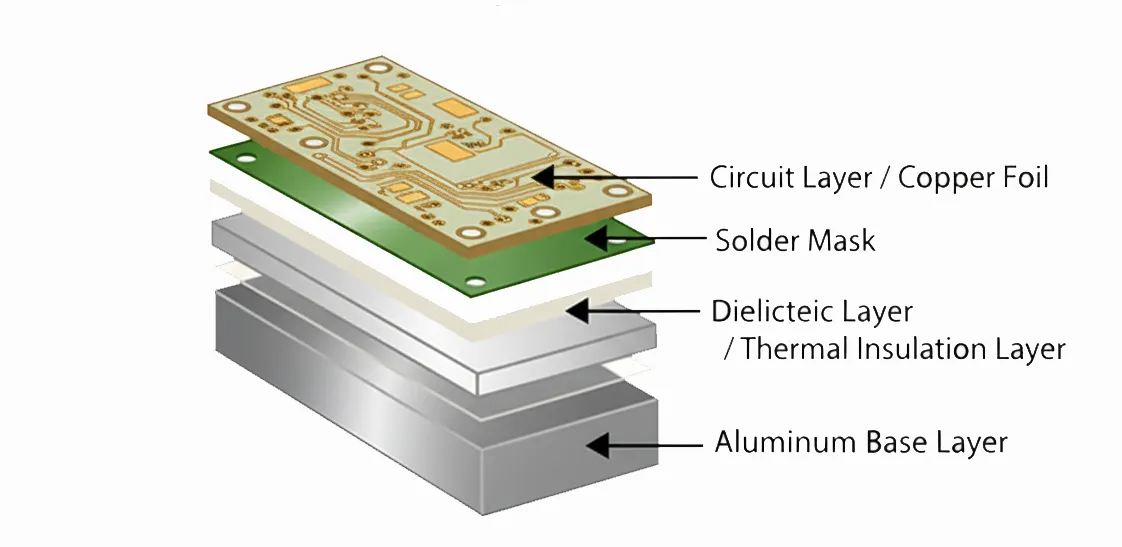
Discover what aluminum PCBs are, why they're used for thermal management in LED and power electronics, and their unique benefits and design considerations.
Read More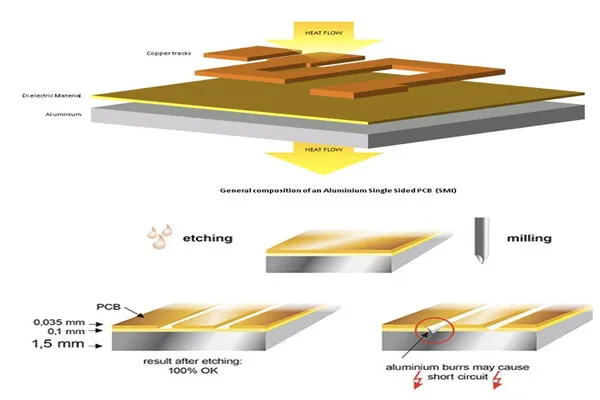
Aluminum pcb structure design guide for hobbyists. Learn about single layer aluminum pcb layouts, aluminum pcb stackup configurations, and how to implement an effective thermal via aluminum pcb structure.
Read More